

Financial crimes rarely dominate the news cycle in the way violent crimes do. Yet their impact may be more structurally damaging. Large scale fraud, corruption, sanctions evasion, tax evasion, money laundering, market manipulation, and corporate misconduct do not just harm individual victims. They alter the distribution of wealth. They shift resources away from workers, pensioners, taxpayers, and small businesses and into the hands of those willing to exploit opacity, complexity, and regulatory gaps.
Here we examine how the eight countries ranked highest for power by U.S. News & World Report handle financial crimes: the United States, China, Russia, the United Kingdom, Germany, France, Japan, and South Korea.
Source: https://www.usnews.com/news/best-countries/rankings/power
We are reviewing this because financial crimes are one of the forces holding society back. When enforcement is weak, inconsistent, or negotiable, the message is clear. Crime becomes a calculated business risk. Wealth concentrates. Trust erodes. And victims often wait years for partial recovery, if they receive anything at all.
We are not legal experts. Here we explore how these systems function, how punishment works, and why, across the board, prevention and meaningful accountability remain insufficient. The global system still allows financial crime to operate as a cost of doing business.
The United States: Aggressive on Paper, Negotiated in Practice
Structure
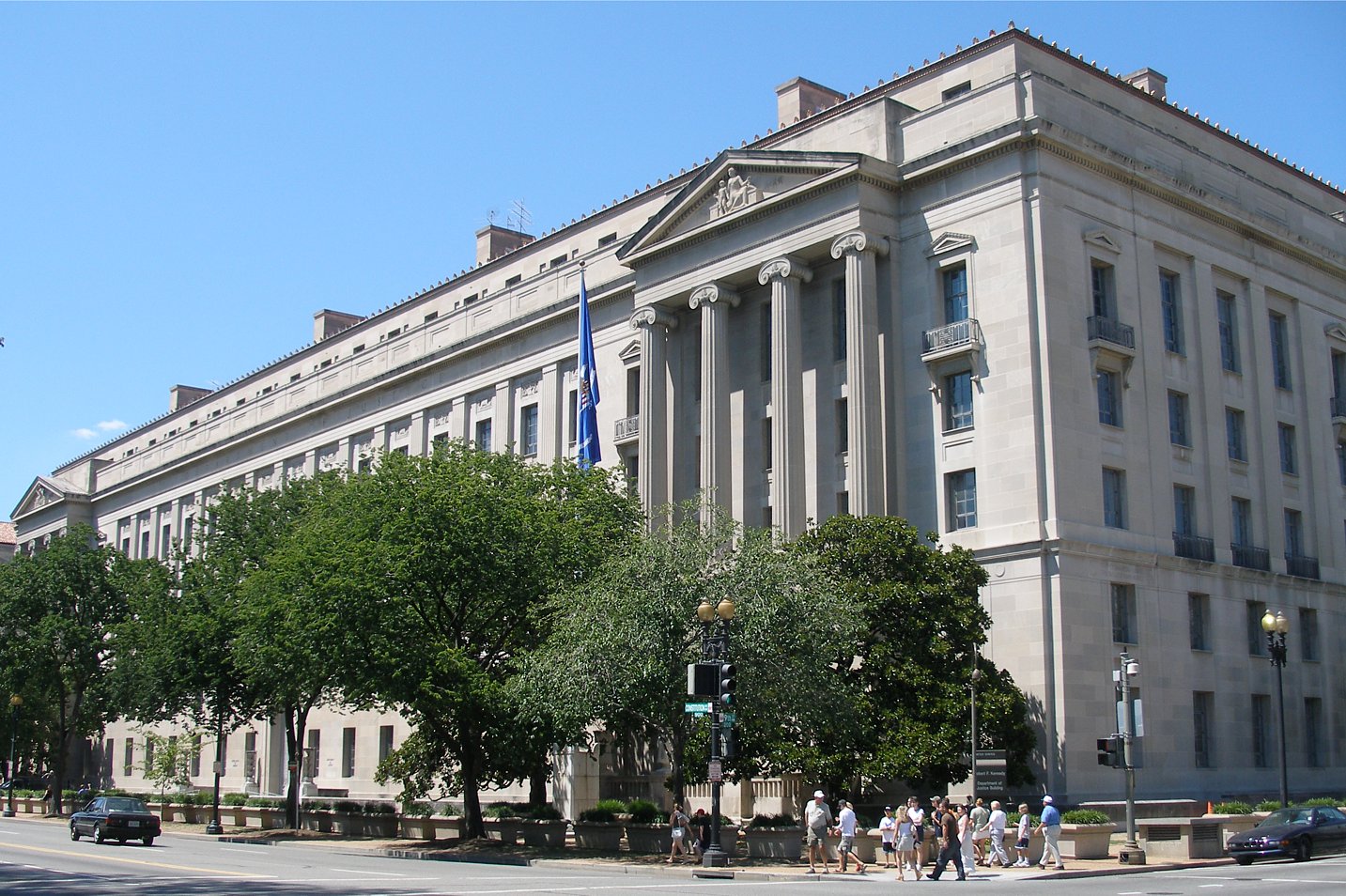
The United States has one of the most complex financial crime enforcement systems in the world. The Financial Crimes Enforcement Network (FinCEN) administers the Bank Secrecy Act framework and collects suspicious transaction data.
FinCEN overview: https://www.fincen.gov/about
Criminal prosecutions are led by the U.S. Department of Justice, often in partnership with the Federal Bureau of Investigation and IRS Criminal Investigation.
DOJ Criminal Division: https://www.justice.gov/criminal
Civil regulators like the Securities and Exchange Commission bring parallel enforcement actions.
SEC enforcement: https://www.sec.gov/enforcement
Punishment
Individuals can receive decades in prison for major fraud or money laundering cases. Corporations can face multibillion dollar fines and deferred prosecution agreements.
The Gap
Despite headline grabbing penalties, corporations frequently settle without admitting wrongdoing. Fines, even large ones, are often absorbed by shareholders rather than executives. Many firms treat regulatory penalties as financial risk modeling variables. They calculate exposure, reserve capital, and move forward.
For victims, restitution can take years. Class action settlements are often diluted by legal fees and procedural delays. Even when enforcement is strong, it is reactive. It occurs after harm has already spread.
The United States is powerful in enforcement capacity, but prevention remains incomplete. Accountability at the executive level is inconsistent. The system is punitive, yet financial crime continues at scale.
The primary gap in the U.S. system is the divide between aggressive statutory language and the reality of “negotiated justice.” While the Department of Justice (DOJ) can technically seek decades of prison time, the vast majority of high-level corporate cases end in Deferred Prosecution Agreements (DPAs) or Non-Prosecution Agreements (NPAs). These settlements allow corporations to pay massive fines without admitting guilt, effectively turning criminal behavior into a line-item expense on a balance sheet.
Furthermore, individual executive accountability remains the exception rather than the rule. Because U.S. law often requires proving “specific intent” or “willful blindness” at the highest levels of a complex hierarchy, CEOs rarely face the same handcuffs as the entities they lead. For the victims—pensioners, defrauded investors, or small businesses—restitution is a secondary priority to the government’s collection of fines. By the time a settlement is reached, the original harm has often cascaded through the economy, leaving victims with pennies on the dollar after years of litigation.
China: Severe Sentences, Selective Signaling
Structure
China criminalizes major fraud, corruption, and financial misconduct under its Criminal Law. Regulatory oversight is carried out by bodies such as the China Securities Regulatory Commission.
CSRC: http://www.csrc.gov.cn
Anti corruption enforcement intensified under Xi Jinping, with coordination through the National Supervisory Commission.
Punishment
China can impose life imprisonment and, in extreme corruption or financial crime cases, the death penalty.
Supreme People’s Court: https://www.court.gov.cn
The Gap
High punishment ceilings do not automatically translate into systemic prevention. Enforcement can be selective and politically influenced. Severe sentences may deter some actors but do little to reform structural incentives that enable financial misconduct.
Victim restitution is less transparent. Public signaling can be dramatic, yet financial misconduct persists across property markets, shadow banking, and local government financing structures.
China’s gap is defined by a paradox: extreme punishment coexists with a lack of institutional transparency. While the death penalty or life imprisonment for financial “disruptors” serves as a dramatic public deterrent, these sentences are often applied selectively. Enforcement frequently aligns with broader political shifts or “rectification” campaigns, such as those targeting the tech sector or the property market. This creates an environment of “compliance through fear” rather than “compliance through systems.”
Because the judiciary is not independent from the state, the definition of a financial crime can shift based on national policy priorities. This creates a “gray zone” where activities that were ignored for years—such as shadow banking or aggressive leverage—can suddenly become criminalized overnight. For victims of massive P2P lending scams or real estate collapses, the state’s priority is maintaining social stability and state control, not necessarily the transparent return of private capital. Harsh punishment, in this context, functions more as a tool of statecraft than a mechanism for fair victim restoration.
Russia: Centralized Intelligence, Uneven Accountability
Structure
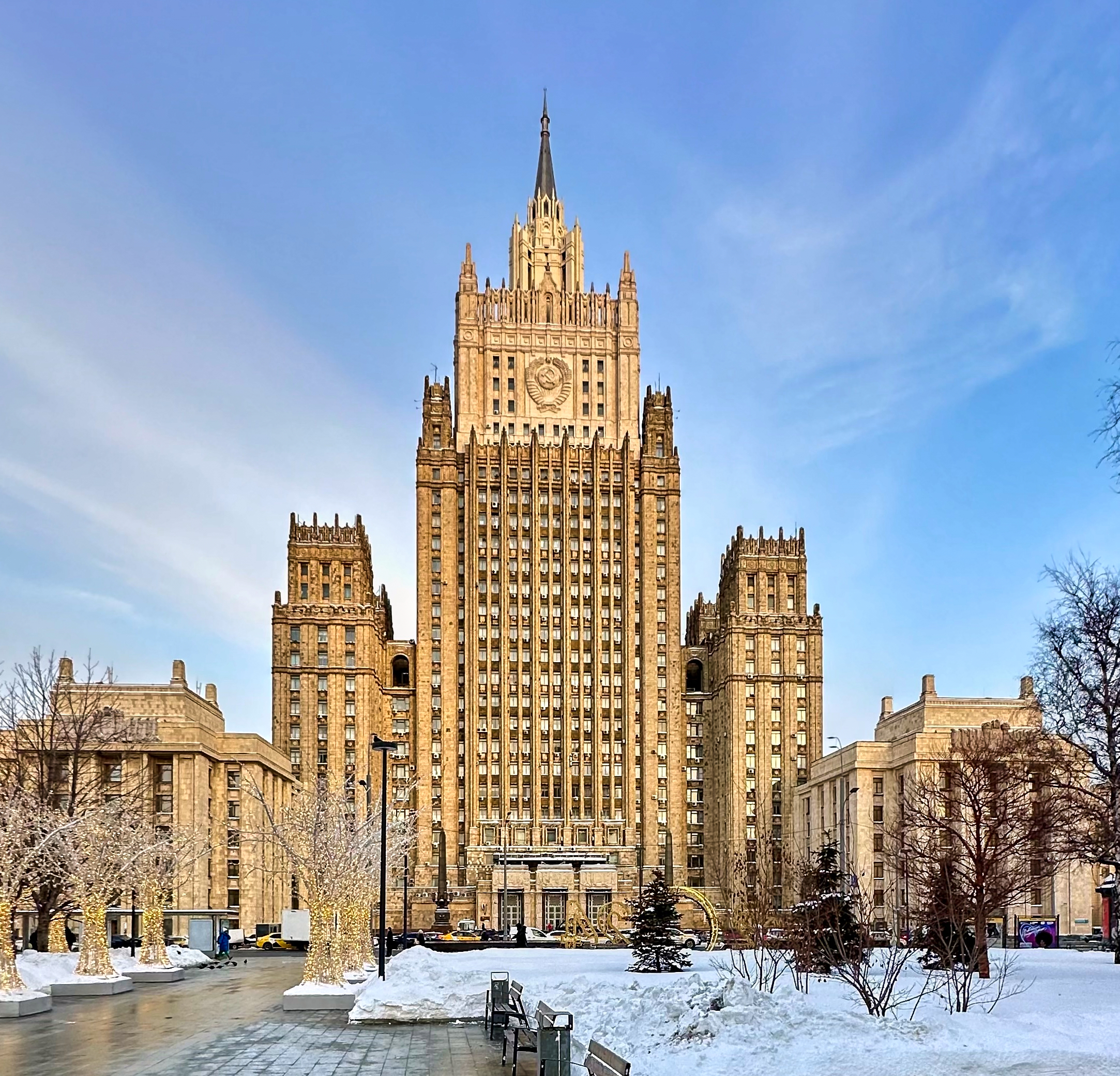
Russia’s financial intelligence body, Federal Financial Monitoring Service (Rosfinmonitoring), coordinates anti money laundering enforcement.
Rosfinmonitoring: https://www.fedsfm.ru
AML obligations are governed by Federal Law No. 115 FZ.
Punishment
Penalties include multi year imprisonment, confiscation, and professional bans. Threshold reforms in 2024 altered when conduct becomes criminal.
The Gap
International observers have noted corruption and selective enforcement. Russia was suspended in 2023 by the Financial Action Task Force, the global AML standard setter.
FATF statement: https://www.fatf-gafi.org
Selective enforcement undermines deterrence. Victims of politically connected actors may see little recovery. Severe punishment exists, but consistency and independence remain in question.
In Russia, the gap is characterized by the “weaponization” of financial law. While Rosfinmonitoring maintains a sophisticated technical apparatus for tracking money laundering, the application of the law is often uneven. International watchdogs have noted that financial crime statutes are frequently used to seize the assets of “unfriendly” business rivals or to silence dissent, while those within the orbit of state power operate with a degree of functional immunity.
This lack of independent oversight means that even when the laws are robust on paper, they are ignored in practice if the actor is politically connected. Since Russia’s suspension from the FATF, the gap between international standards and domestic reality has widened. For the average victim of corporate misconduct or fraud, there is little hope for a fair trial if the perpetrator holds political leverage. In this environment, financial crime is not just a “cost of doing business”—it is a byproduct of the power structure itself.
United Kingdom: Strong Regulators, Corporate Settlements

The Serious Fraud Office prosecutes complex financial crime.
https://www.sfo.gov.uk
The Financial Conduct Authority enforces compliance across financial markets.
https://www.fca.org.uk/firms/enforcement
Corporate deferred prosecution agreements have become common tools.
The Gap
Large fines are imposed, yet corporations often survive intact. Shareholders absorb penalties. Senior executives rarely face equivalent consequences. Financial institutions incorporate regulatory penalties into risk assessments.
For victims, compensation mechanisms exist but can be slow and partial. Prevention remains secondary to enforcement after the fact.
The United Kingdom’s gap lies in the “enforcement-resource” chasm. While London is a global financial hub with world-class regulators like the FCA and SFO, these agencies are often outgunned and outspent by the legal teams of the multi-national corporations they investigate. This leads to a heavy reliance on “self-reporting” and deferred prosecution, where the corporation essentially conducts its own investigation and negotiates a fee to move on.
The UK system is also plagued by the “enabler” problem; the professional services industry—lawyers, accountants, and formation agents—often provides the complexity needed to mask the origin of illicit funds. Despite recent reforms like “Unexplained Wealth Orders,” the burden of proof remains high and the pace of prosecution remains slow. For victims, the UK’s global reach means their assets are often moved through a web of offshore jurisdictions before the SFO can even open a case. The result is a system that is excellent at identifying “suspicious activity” but frequently struggles to convert those leads into meaningful convictions or full
Germany: Structured Reform, Limited Deterrent Shock

Germany’s regulator, Federal Financial Supervisory Authority (BaFin), supervises financial institutions.
https://www.bafin.de
Reforms followed major corporate scandals, strengthening oversight.
The Gap
Germany’s system emphasizes regulatory prevention and compliance culture, but structural weaknesses remain. Enforcement has historically been fragmented across federal states, which at times led to uneven expertise and slower coordination in complex financial cases.
The collapse of Wirecard exposed these weaknesses. Despite warning signs and audit concerns, billions went missing before regulators fully intervened.
German Finance Ministry overview:
https://www.bundesfinanzministerium.de/Content/EN/Standardartikel/Topics/Financial_markets/wirecard.html
Corporate fines can be significant, yet for large institutions they often function as financial events rather than structural turning points. Executive accountability varies, and victims frequently rely on lengthy civil proceedings to recover losses.
Germany’s reforms have strengthened oversight, but systemic financial crime remains possible because incentives at the top of corporations are not always aligned with long term accountability.
France: Prosecutorial Strength, Negotiated Outcomes

The Parquet National Financier prosecutes complex economic crimes.
https://www.justice.gouv.fr
The Autorité des marchés financiers oversees market integrity.
https://www.amf-france.org
France has imposed large corporate settlements in corruption cases.
The Gap
France has significantly strengthened its toolkit with the introduction of the Convention Judiciaire d’Intérêt Public (CJIP), a mechanism similar to the U.S. Deferred Prosecution Agreement. However, this shift toward “negotiated justice” creates a disconnect between massive corporate fines and individual accountability. While the Parquet National Financier (PNF) has successfully secured billion-euro settlements from global banks and aerospace giants, these deals often allow companies to avoid a criminal conviction.
For the public and the victims, this can feel like justice is being bought rather than served. Because these settlements prioritize the recovery of funds for the state treasury, the actual victims of corruption or tax evasion—often taxpayers or smaller competitors—rarely see direct restitution. Furthermore, the French system still struggles with the length of proceedings; complex financial investigations can span a decade, by which time the structural incentives that allowed the crime to occur have often remained unchanged. The “cost of doing business” remains a reality as long as settlements remain the primary path for high-profile cases.
Japan: Compliance Focused, Less Punitive

Japan’s Financial Services Agency supervises markets.
https://www.fsa.go.jp
The approach emphasizes administrative enforcement and institutional compliance.
The Gap
The primary gap in Japan’s enforcement lies in a regulatory culture that historically prioritizes institutional stability and “administrative guidance” over aggressive criminal prosecution. While the Financial Services Agency (FSA) is adept at issuing improvement orders, the punitive “shock” required to deter major misconduct is often missing. The Japanese legal framework often lacks the extraterritorial reach and the whistleblower protections seen in the West, making it difficult to uncover internal corporate rot until it reaches a breaking point.
When scandals do break—such as the high-profile cases involving major automotive or tech conglomerates—the fallout often focuses on the “shame” of the institution rather than the criminal liability of its directors. Maximum prison sentences for financial crimes remain relatively low, and the system relies heavily on corporate self-correction. For victims and minority shareholders, this means that while a company may apologize and bow publicly, the financial recovery process is buried in bureaucratic layers, and the lack of a strong class-action culture makes meaningful compensation a rare outcome.
South Korea: Intensifying but Still Reactive

The Financial Services Commission oversees financial oversight.
https://www.fsc.go.kr
South Korea has increased AML and corruption enforcement in recent years.
The Gap
Despite South Korea’s aggressive stance on high-level corruption—famously involving “Chaebol” executives and even former presidents—a persistent gap exists between sentencing and the actual serving of punishment. The tradition of “pardon culture,” where top executives receive presidential pardons for the sake of “national economic stability,” severely undermines the deterrent effect of the law. When the most powerful actors are deemed “too essential to jail,” the message is that financial crime is a negotiable offense for those at the top.
Technologically, South Korea faces a rapidly evolving frontier of crypto-currency fraud and sophisticated market manipulation that outpaces current regulatory frameworks. While the Financial Services Commission (FSC) can freeze assets quickly, the legal path to returning those assets to victims is fraught with hurdles. The system remains fundamentally reactive; it responds with public outrage and legislative patches after a crisis occurs, but it has yet to dismantle the close-knit ties between political power and concentrated capital that facilitate systemic financial misconduct.
The Shared Global Problem
Across all eight countries, a pattern emerges:
• Enforcement is reactive.
• Corporate penalties are often negotiated.
• Executives are insulated more frequently than corporations.
• Victim recovery is slow and incomplete.
• Prevention is under resourced compared to prosecution.
Even in systems with extreme punishment ceilings, financial crime continues. Severe penalties do not automatically produce structural reform. Meanwhile, in rule bound democracies, corporations often treat fines as operational expenses.
When financial crimes become calculable risks, inequality expands. Capital accumulates in opaque networks. Citizens lose trust in markets and institutions.
None of these systems have solved the core challenge: how to meaningfully deter financial crime without resorting to cruel or disproportionate punishment, and how to prioritize victim restoration over negotiated settlements.
True prevention would require:
Stronger executive accountability
Faster asset freezing and recovery mechanisms
International coordination without political selectivity
Corporate governance reform that changes incentives at the top
Transparent restitution systems that prioritize victims over treasury revenue
Across the world, we have significant work ahead. Financial crime is not just a legal issue. It is a distribution issue. It shapes who holds power and who bears risk.
Until prevention becomes as important as prosecution, and until corporations cannot simply absorb fines as costs of doing business, the cycle will continue.
Financial crime thrives in complexity. Accountability requires clarity, consistency, and courage.
Financial crime does not exist in isolation. It connects directly to the systems we explore across Interconnected Earth. If you want to go deeper into how power, policy, psychology, and global structures intersect, you can explore the following sections:
World Events
https://interconnectedearth.com/category/world/
Mental Health
https://interconnectedearth.com/category/mental-health/
Climate Change
https://interconnectedearth.com/category/climate-change/
Technology
https://interconnectedearth.com/category/technology/
Philosophy
https://interconnectedearth.com/category/philosophy/
Arts and Entertainment
https://interconnectedearth.com/category/arts-and-entertainment/
These issues are interconnected. Financial crime shapes global power dynamics, affects mental health through economic instability, influences climate outcomes through regulatory capture and corporate incentives, and is deeply tied to technology and governance. Exploring these categories helps connect the structural dots rather than viewing financial crime as an isolated legal problem.