
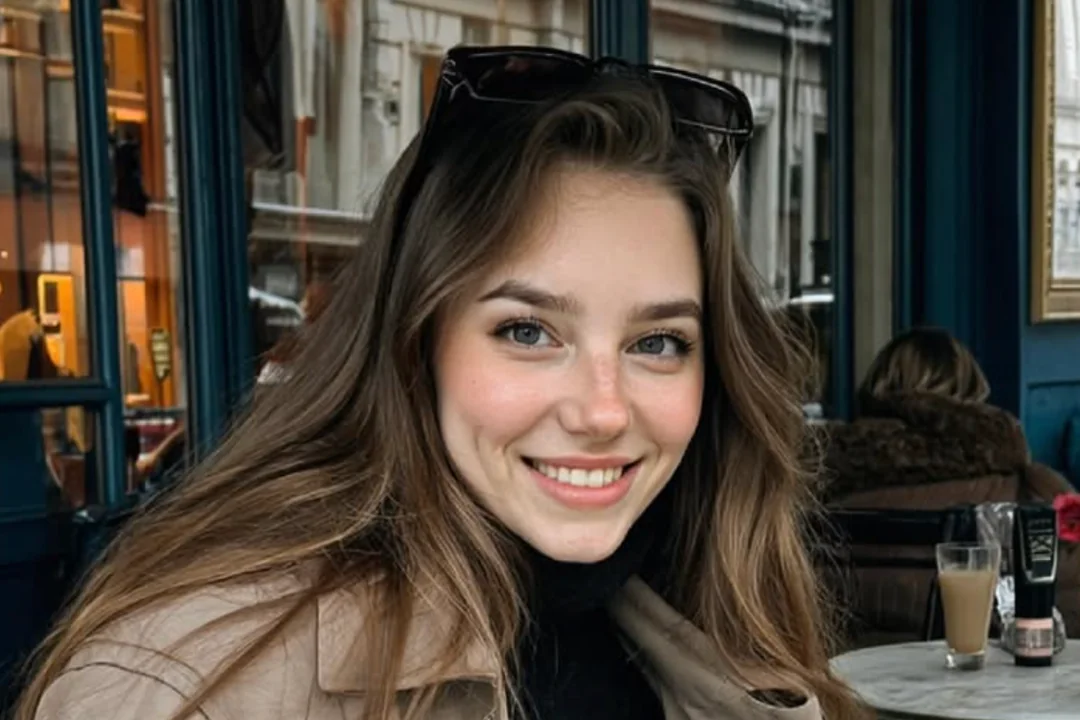
The world of entertainment is changing faster than most of us are comfortable acknowledging. At the center of that change this week stands Tilly Norwood — an entirely artificial-intelligence-generated “actress” developed by Xicoia (a division of production company Particle6). Her existence is not merely curious; it poses profound questions about what we believe acting is, what we believe creativity is, and how technology is rewriting the contract between storyteller and audience.
What’s happening with Tilly Norwood
Tilly Norwood was introduced not as a human performer, but as a digital persona: a British-accented young woman with an Instagram account, a debut “role” in a short AI-generated piece titled AI Commissioner, and public talk that she might be “represented” by a talent agency.
However, the reaction from the entertainment industry has been swift and sharp: the union SAG‑AFTRA condemned her creation, arguing she is “not an actor… a character generated by a computer program that was trained on the work of countless professional performers — without permission or compensation.”
In short: this is not just a novelty. It’s a provocation.
Why this matters in Hollywood and beyond
At first glance this might seem like a niche industry debate: human actors vs. digital actors. But the stakes are much larger. Let’s pull out three major threads:
1. Labor, rights and livelihoods.
If an AI‐generated performer begins to replace human actors — or even threatens the perception of human actors’ value — that has consequences for employment, for bargaining power, for the economics of storytelling. SAG-AFTRA’s objections weren’t rhetorical: they point to a future where human performers are de-valued.
2. Authenticity, human experience and what we value.
Acting has always been more than mimicking words on a page. It draws on life experience, feeling, nuance, vulnerability. If you begin to substitute that with “synthetic” performers, does the art change? The audience’s relationship to the story changes? Many critics of Tilly argue yes. “It has no life experience to draw from,” the union statement says.
3. Regulatory, ethical and creative frameworks.
Who owns the training data for these AIs? Whose faces, voices, movements are sampled? How are rights and consent handled? In Tilly’s case, critics claim she was built on thousands of real actors’ performances without consent or remuneration. The world news dimension is that this echoes broader debates around AI: bias, control, ownership, substitution, transparency.
The Ethics of Artificial Performers
Let’s explore some of the ethical dimensions in more depth:
- Consent and provenance. If an AI is trained on a dataset of actors (or images/videos) without their knowledge or payment, that raises serious questions of fairness and rights.
- Replacement vs augmentation. Are we using AI to help human creativity (assist lighting, assist VFX, assist editing)? Or are we replacing humans entirely in the role of “actor”? The latter triggers pushback.
- Transparency and attribution. Is the audience told “this is synthetic”? Do we blur the line between human and machine performance? Does that matter?
- Impact on diversity and representation. If AI actors are typically built to look durable, marketable, “safe”, who gets left out? Does this deepen inequities?
- Economic implications. If studios can cut costs by using synthetic actors (as Tilly’s creators suggest they might), does that squeeze budgets for real actors? Lower pay? Fewer jobs?
- Artistic integrity. Some might argue AI can open new forms of story, new kinds of “actor”. Others say the human element is irreplaceable — the soul of performance.
Tilly Norwood and the Bigger Picture
This moment matters far beyond Hollywood. The same forces driving synthetic talent appear elsewhere: in journalism (AI-generated text, deepfakes), in customer service (chatbots), in manufacturing (robots replacing humans). The Tilly Norwood case is a microcosm of society’s tension: can we automate excellence? should we? what is lost if we do?
And it intersects with world news in another way: the rising anxiety around AI employment displacement, intellectual property, authenticity, regulation. When influential industries like film start grappling publicly with these issues, it signals we’re on a frontier.
A Path Forward: What to Ask, What to Demand
For someone attuned to mental health, purpose, and the value of work, this raises some reflective questions:
- If performance and work become increasingly mediated by machines, what happens to human dignity?
- If storytelling becomes cheaper and less human-centric, are we depriving ourselves of the emotional connection that art provides?
- On the flip side: can AI open access? Could synthetic performers allow more inclusive representation (if built ethically)? Could cost savings route resources to underserved voices rather than replace them?
- What policies or frameworks do we need to protect human creative labour while encouraging innovation? (Guild rules, rights to one’s likeness, consent protocols, transparency).
- What is the mental health impact of a world where your work could be made redundant by a machine—especially in creative fields where identity and expression are central?
Final Thoughts
The creation of Tilly Norwood is more than an entertainment industry stunt—it’s a canary in the coal mine of a rapidly evolving technological era. She forces us to ask: what do we value in human performance? And if we begin to undervalue it, what are we trading away?
Technology and AI hold massive potential: new storytelling modes, new tools, new forms of human-machine collaboration. But we must not let “new” be a pass for “unethical” or “unchecked.” The hardest work lies not in the code, but in the values we embed around it.
In the coming years, the questions raised by Tilly will echo in many fields: art, work, identity, value, mental health. Because when machines begin to step into roles once reserved for humans—not just as assistants, but as “stars”—we are confronted with the nature of being human.
And perhaps that’s the most important role of all: reminding us that beyond the glitz, the camera, the algorithm, there is a deeply human story still worth telling—and protecting.