

Philosophy in Motion: How Ideas and History Shape Each Other
Philosophy is often imagined as something distant and abstract—an academic exercise confined to old books, lecture halls, or debates that feel removed from everyday life. For many people, it conjures images of ancient thinkers arguing over obscure questions, disconnected from the urgent realities of work, politics, survival, and change. But this perception misses the true nature of philosophy entirely.
In reality, philosophy has never lived solely in texts or institutions. It has always lived where people live. It has existed in the streets, the fields, the factories, the parliaments, and the homes of people struggling to make sense of their world. Philosophy emerges wherever human beings are forced to confront difficult questions: about justice and power, suffering and meaning, responsibility and hope.
Every major turning point in human history—every revolution, war, social movement, or cultural transformation—has been shaped not only by material conditions, but by ideas. Beneath every law, every protest, every system of governance, and every moral norm lies an answer—explicit or unspoken—to philosophical questions about what is real, what is right, and what it means to live a good life.
And just as philosophy shapes the world, the world reshapes philosophy in return. Ideas do not float freely above history; they are forged in response to it. Each crisis, discovery, and upheaval forces humanity to reexamine assumptions that once felt stable or self-evident. We do not merely inherit philosophical traditions—we revise them, challenge them, and transform them together through the friction of lived experience.
Philosophy is not static. It is a conversation across generations, carried forward by people who are trying, imperfectly, to understand themselves and the world they inhabit.
Philosophy as a Mirror of Its Time
To understand philosophy properly, we must understand it as a mirror of its historical moment. Philosophers do not ask timeless questions in isolation; they respond to the tensions, contradictions, and uncertainties of their era.
When Socrates walked through the streets of Athens questioning citizens about virtue, justice, and knowledge, Greece was experiencing profound political instability. Democracy was new, fragile, and contested. Traditional values were eroding under the pressures of war, wealth inequality, and shifting power. Socrates’ relentless questioning was not an abstract intellectual exercise—it was a response to moral confusion and civic decay. His philosophy emerged from a society unsure of what it believed anymore.
Centuries later, during the Enlightenment, thinkers like John Locke, Jean-Jacques Rousseau, and Immanuel Kant questioned monarchy, divine authority, and inherited hierarchy. Their ideas did not arise randomly. They emerged in a world marked by censorship, aristocratic privilege, and growing resentment toward systems that denied political participation to most people. The philosophical emphasis on reason, individual rights, and social contracts mirrored a society on the verge of revolution.
Philosophy, in these moments, was not neutral. It was dangerous. It threatened entrenched power structures precisely because it asked people to imagine alternatives. When philosophers questioned who had the right to rule or whether authority required consent, they were planting seeds that would eventually transform entire political systems.
This pattern repeats throughout history. Whenever societies experience upheaval—economic collapse, technological disruption, environmental crisis—philosophy intensifies. It becomes sharper, more urgent, and more concerned with lived reality.
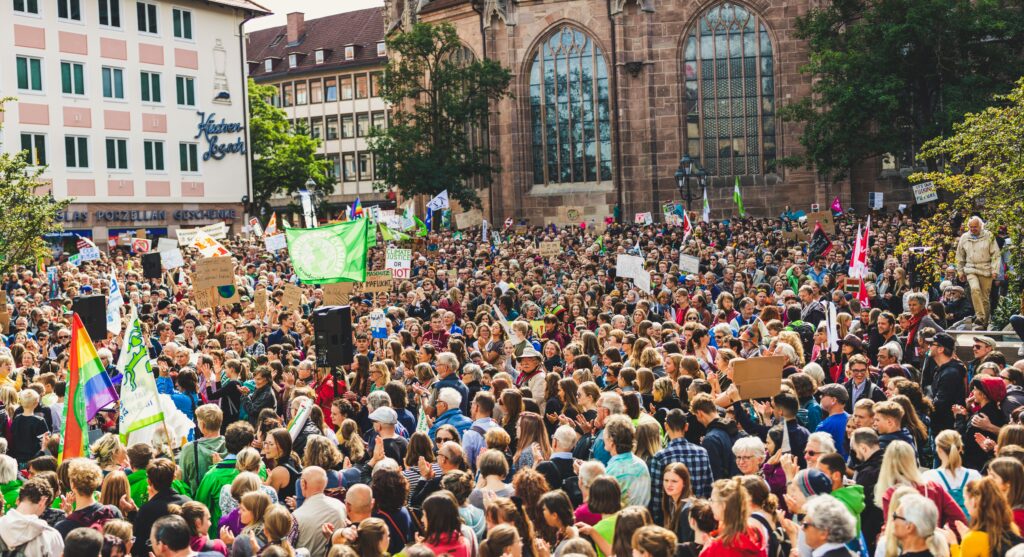
Ideas Forged in Crisis: Philosophy in the Modern World
The twentieth century offers some of the clearest examples of philosophy responding directly to catastrophe. After two world wars, mass industrialized death, and the collapse of long-standing moral narratives, many philosophers could no longer accept optimistic visions of inevitable progress.
Existentialists such as Jean-Paul Sartre, Albert Camus, and Simone de Beauvoir grappled with a world that felt absurd, violent, and indifferent to human suffering. They asked uncomfortable questions: If life has no inherent meaning, what responsibility do we have to create one? If systems fail and institutions betray us, what does ethical action look like? Their philosophy reflected a generation traumatized by war and disillusioned by the promises of modernity.
At the same time, postcolonial philosophers such as Frantz Fanon and Edward Said confronted the moral costs of imperialism. Their work challenged the philosophical assumptions that had justified empire, racial hierarchy, and cultural domination. They revealed how supposedly “universal” ideas of reason and civilization had been used to excuse exploitation and violence.
Philosophy, in this context, became a tool of resistance. It exposed how power operates not only through armies and economies, but through narratives—through ideas about whose lives matter, whose knowledge counts, and whose voices are heard.
Every era leaves behind a philosophical fingerprint: a record of how people tried to understand themselves in light of what the world was becoming. These fingerprints are not always coherent or comforting, but they reveal humanity thinking through its own transformation.
Belief Shapes Reality—and Reality Shapes Belief
Philosophy is not merely descriptive; it is constructive. Our beliefs do not stay inside our minds—they shape the societies we build.
The belief that “progress” is measured primarily through economic growth gave rise to modern capitalism, consumer culture, and industrial expansion—an assumption increasingly questioned by economists and institutions examining the limits of GDP as a measure of progress. This belief shaped labor systems, urban design, environmental policy, and even how people understand success and worth. It created extraordinary wealth while also producing inequality, ecological damage, and widespread alienation.
Conversely, the belief that human beings possess inherent dignity has fueled civil rights movements, labor reforms, and struggles for equality across gender, race, and class. When people assert that certain treatment is unjust or that certain lives are being devalued, they are making philosophical claims—claims about morality, responsibility, and the meaning of justice.
Every policy debate, every cultural conflict, and every social movement rests on competing philosophical assumptions. When societies argue about education, healthcare, or environmental responsibility, they are ultimately arguing about values: What do we owe each other? What kind of future is worth building? Who bears responsibility for harm?
But beliefs are not fixed. As material conditions change—economically, socially, environmentally—people are forced to reimagine their values. When climate change exposes the limits of endless growth, long-held assumptions about progress begin to crack. When technology reshapes work and identity, old ideas about purpose and labor lose their clarity.
This is philosophy in motion. It is not confined to academic debate; it unfolds in everyday choices, collective struggles, and cultural shifts.
Crisis as a Philosophical Moment
When people lose trust in institutions, it is not only a political crisis—it is a philosophical one, reflected in growing research on public trust in government. Distrust raises fundamental questions about truth, authority, and legitimacy. Who gets to decide what is real? Who is accountable for harm? What does justice look like when systems fail?
When people demand equality, they are engaging in moral reasoning as much as activism. They are asserting that existing arrangements violate ethical principles, even if those arrangements are legal or traditional. When communities debate how to use resources, respond to disasters, or care for the vulnerable, they are practicing philosophy—often without naming it as such.
Even seemingly personal decisions—how to define success, how to relate to others, how to balance ambition and compassion—reflect philosophical commitments. No one lives without philosophy. The only question is whether those beliefs are examined or inherited unquestioningly.
Moments of crisis force philosophy into the open. They make visible the assumptions that normally operate in the background. In this sense, crisis is not only destabilizing—it is revealing.

Growing Together in an Age of Acceleration
Today, humanity finds itself in a period of extraordinary transformation. Climate anxiety, technological acceleration, economic precarity, and political polarization are reshaping how people understand their place in the world. These are not just technical or political problems; they are deeply philosophical ones.
What does it mean to be human when machines can replicate cognitive tasks once thought uniquely ours—a question explored in the philosophy of artificial intelligence? What responsibilities do current generations owe to future ones in the face of environmental collapse? How should societies balance freedom, security, and collective well-being in an interconnected world?
The philosophical task of our time is collective. Unlike previous eras, the internet has made philosophical participation more widespread than ever before. Everyone with access to a platform can contribute to shaping the moral and intellectual climate. Ideas circulate faster, reach farther, and collide more often.
This democratization of philosophy is both empowering and destabilizing. The conversation is louder, more fragmented, and more polarized. Reflection often gives way to reaction. Certainty is rewarded more than humility.
Yet philosophy remains essential precisely because it slows us down. It encourages questioning rather than immediate judgment. It reminds us that uncertainty is not weakness—it is the starting point of understanding.
The Shared Evolution of Thought
We often measure progress in technological or economic terms, but the deeper story of humanity is philosophical. Each generation reexamines what the previous one took for granted. Each crisis forces new definitions of meaning, responsibility, and morality.
Over time, humanity refines not only its systems, but its capacity for wisdom. This process is uneven, marked by setbacks and contradictions. But it persists because the impulse to understand—to ask “why” and “how should we live”—is as fundamental as survival itself.
Philosophy is not something we leave behind as we advance. It evolves alongside us, adapting to new realities while drawing from ancient questions—questions at the core of what philosophy is. It is both memory and imagination, rooted in history yet oriented toward possibility.
When we choose empathy over fear, curiosity over certainty, and reflection over reaction, we participate in the same tradition that animated Socrates, Kant, Simone de Beauvoir, and countless unnamed thinkers throughout history. We continue the work of understanding ourselves and the fragile, extraordinary world we share.
Whether we recognize it or not, we are all philosophers in motion—thinking, questioning, and growing together as history unfolds around us.

Want more insights into philosophy? Check out the philosophy section of interconnected earth.