
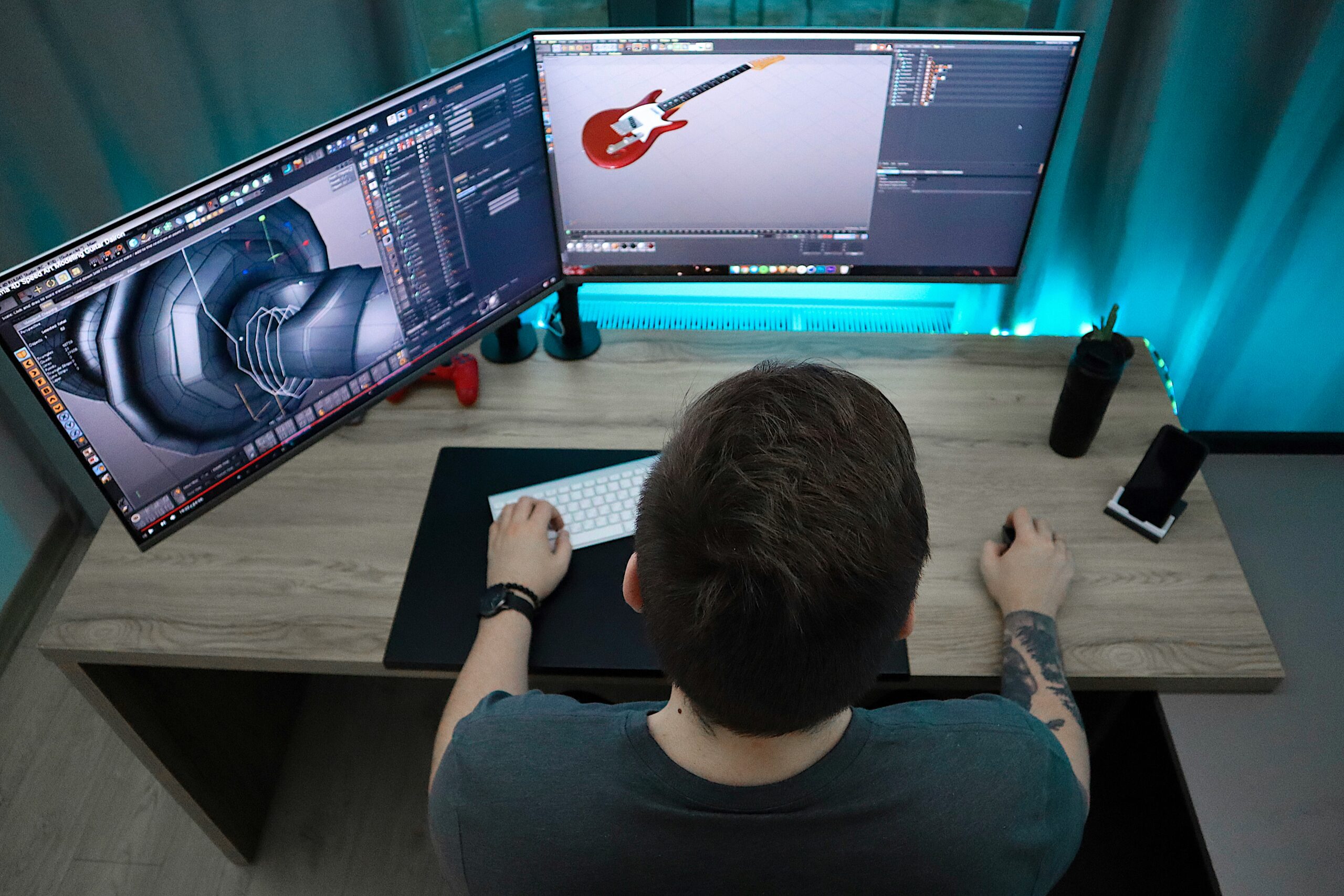
Artificial intelligence is no longer something animation studios are “experimenting with.” It is already embedded deep inside modern production pipelines, quietly reshaping how cartoons, animated series, and even feature films are made.
For some executives and toolmakers, AI in Animation represents efficiency, cost savings, and creative flexibility. For many working animators, it represents something far less abstract: job instability, compressed schedules, blurred authorship, and a growing sense that the ground beneath the industry is shifting faster than labor protections, copyright law, or creative norms can keep up.
This is not a distant future problem. AI is already changing who gets hired, how long productions take, and how much human labor is expected per project. And while AI is often framed as an “assistant” rather than a replacement, history suggests that assistants in capitalist production pipelines rarely stay assistants for long.
This article examines how AI is actually being used in animation today, where it is likely heading, and why the growing reliance on AI in animation may pose serious long-term risks to animators, studios, and the creative integrity of the medium itself.
AI Is Already Inside the Animation Pipeline — Not on the Sidelines
One of the most misleading narratives around AI in animation is that it exists as a separate category of tools: experimental apps, standalone generators, or novelty software used only by early adopters.
In reality, AI has been quietly integrated into the same professional software animators already rely on.
According to Autodesk, AI is now embedded across its Media & Entertainment toolset, including Maya and MotionBuilder, with features designed to automate facial animation, motion cleanup, previs, and asset workflows
https://www.autodesk.com/solutions/media-entertainment/ai-animation
This matters because it means AI in animation adoption is not optional. Animators are not “choosing” to work with AI in many cases — it is simply becoming part of the default toolchain.
Current AI Uses in Animation Production
Across studios and pipelines, AI is already being used in several key areas:
Lip-Sync and Facial Animation
Autodesk’s FaceAnimator and similar systems can generate facial animation and lip-sync directly from audio, producing editable animation curves inside Maya. The animator’s role shifts from creating performance to correcting it
https://www.creativebloq.com/3d/autodesk-just-unveiled-ai-tools-that-redefine-animation-at-au-2025
While marketed as a time-saver, this also reduces demand for junior animators who traditionally handled these tasks.
Motion Capture and Cleanup
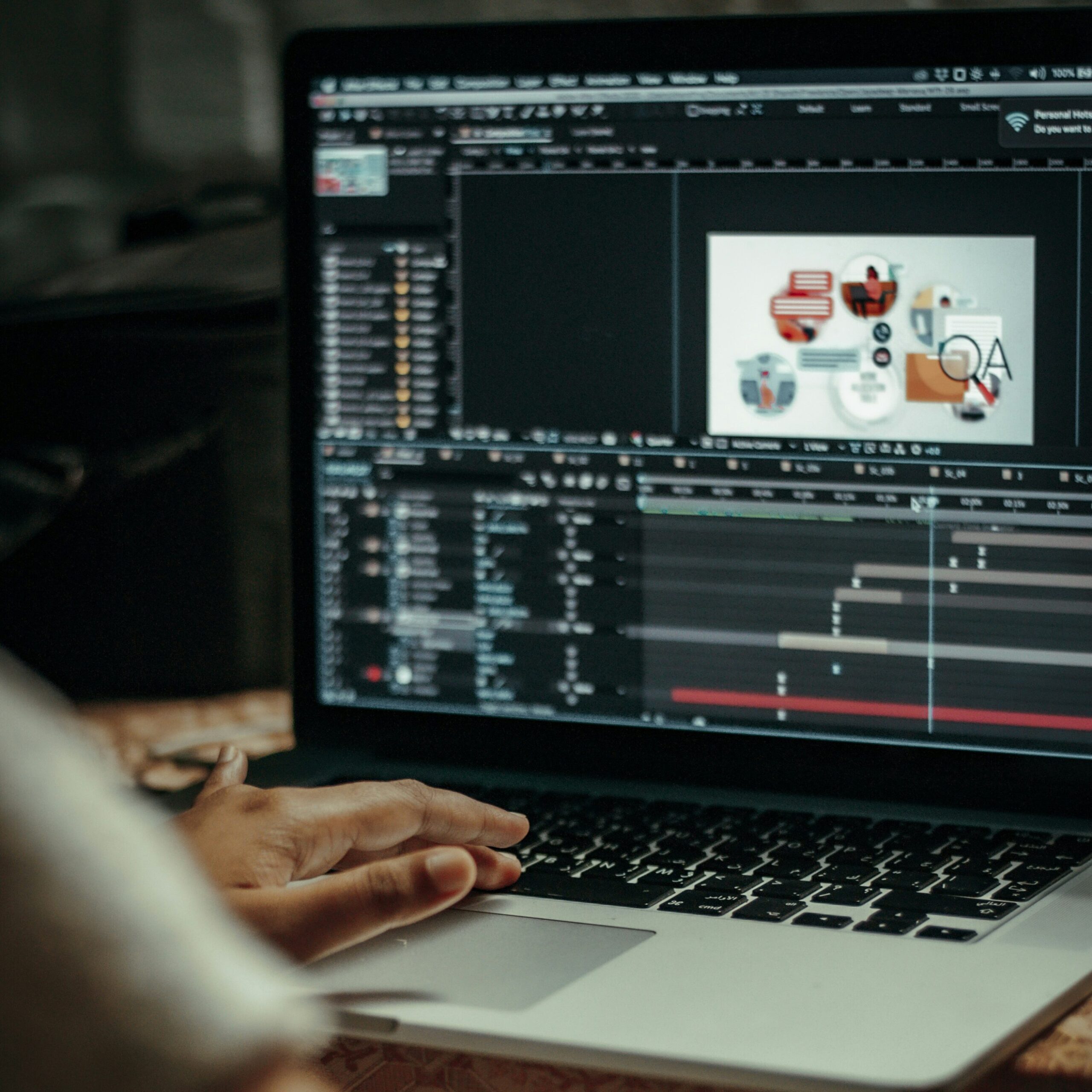
AI-assisted motion systems convert live-action footage into CG animation, smoothing jitter, fixing arcs, and auto-correcting physics errors. Tasks that once took days of manual cleanup can now be completed in hours.
This efficiency is often cited as a win — but it also means fewer people are needed per shot.
In-Betweening, Coloring, and Rotoscoping
In 2D animation especially, AI tools now auto-generate in-betweens, fill flat colors, and assist with rotoscoping. Frame-by-frame labor becomes “approval and correction” work.
As Cartoon Brew notes, this fundamentally changes the labor profile of animation jobs, shifting work away from craft and toward supervision
https://www.cartoonbrew.com/tech/animation-jobs-in-the-age-of-ai-revelations-from-luminate-intelligences-2025-special-report-253718.html
Asset Generation and Previsualization
Generative tools can quickly create backgrounds, props, and rough animatics, allowing directors to iterate before full production begins. While useful, these tools also blur the line between concept art, layout, and final assets.
The Future Pipeline: Fewer Hands, More Automation
Industry roadmaps suggest AI in animation will not remain limited to individual tasks. Instead, it is moving toward end-to-end production integration, where AI tools communicate across departments.
Style-Aware Animation Systems
Studios are already experimenting with training AI models on a show’s existing assets — rigs, shots, character performances — so that tools can suggest poses, camera moves, or acting choices that remain “on-model.”
This raises uncomfortable questions:
- Who owns the trained model — the studio or the artists whose work trained it?
- What happens when a show’s “style” becomes automated?
- Does this reduce the need for experienced animators over time?
One-Person Studios and the Illusion of Democratization
Platforms like Tripo AI and similar systems promise text-to-animation workflows: auto-modeling, auto-rigging, and auto-animation from prompts or sketches.
While often framed as democratization, this trend also threatens to devalue professional labor by flooding the market with AI-generated content that competes with traditionally produced work — often at a fraction of the cost.
As Screen Daily reports, outsourcing combined with AI in animation acceleration is already putting the U.S. animation sector under heavy pressure
https://www.screendaily.com/features/why-outsourcing-and-ai-means-the-us-animation-sector-is-facing-hefty-challenges-in-2025/5199989.article
New Roles — and Fewer Traditional Ones
AI in animation proponents often argue that jobs will not disappear, but evolve. New roles like:
- Prompt animators
- AI workflow designers
- Dataset curators
While these roles are real, they are fewer in number and often require technical skills that many traditional animators were never trained for.
Job Loss Is Not Theoretical — It’s Already Being Modeled
One of the clearest warning signs comes from labor research itself.
A guild-commissioned report cited by Cartoon Brew and Variety estimates that approximately 21% of film, TV, and animation jobs in the U.S. could be consolidated, eliminated, or replaced by AI in 2026
https://variety.com/2025/film/news/ai-divisive-animation-anime-luminate-report-1236504906/
This prediction does not require full automation. It only requires:
- Smaller teams
- Faster schedules
- AI-assisted workflows that reduce headcount per project
Which is exactly what studios are already pursuing.
The Animation Guild has acknowledged that AI in animation is already affecting hiring plans, job scopes, and production timelines
https://animationguild.org/ai-and-animation/
Faster Production Often Means More Stress, Not Less
AI is frequently sold as a way to reduce crunch. In practice, it often does the opposite.
Time Saved Is Rarely Given Back
Case studies in motion graphics and animation report 30–50% reductions in project timelines when AI in animation is used for rotoscoping, motion cleanup, and asset generation
https://www.sae.edu/gbr/insights/the-role-of-ai-in-assisting-animation-production-unlocking-new-creative-possibilities/
But when tasks get faster, studios typically respond by:
- Shortening deadlines
- Increasing output expectations
- Reducing buffers
The result is that animators are expected to do more, faster, even if the tool is doing some of the work.
A Different Kind of Error Load
AI in animation does not eliminate errors — it changes them.
Common AI-introduced issues include:
- Off-model poses
- Uncanny facial expressions
- Continuity glitches across shots
Animators increasingly function as quality-control supervisors, fixing artifacts under tighter deadlines. When schedules shrink too far, these errors slip through — and audiences notice.
Copyright Law Is Lagging Behind Production Reality
Perhaps the most dangerous instability created by AI in animation is legal uncertainty.
Human Authorship Still Matters — For Now
The U.S. Copyright Office has repeatedly ruled that works created entirely by AI are not eligible for copyright protection. Only human-authored elements qualify, and creators must disclaim AI-generated content when registering
https://ipwatchdog.com/2024/12/30/ai-developments-u-s-copyright-office-2024/
This creates a paradox for studios:
- AI is encouraged internally to reduce costs
- But the more AI contributes, the weaker copyright claims may become
Training Data Transparency Is Still Unresolved
The proposed Generative AI Copyright Disclosure Act of 2024 would require AI developers to disclose what copyrighted works were used to train their models
https://copyright.byu.edu/new-generative-ai-copyright-disclosure-act-of-2024-introduced
While not yet law, the proposal reflects mounting pressure from artists and rights holders — and signals future compliance costs for studios relying heavily on generative tools.
Infringement Risk Remains High
There is no settled federal standard for determining when AI-generated outputs are “substantially similar” to copyrighted works. This uncertainty puts studios at legal risk, especially when AI generates characters, backgrounds, or animation that closely resemble existing IP.
The Emotional Toll on Animators Is Already Visible
Beyond economics and law, there is a human cost.
Surveys cited in the Luminate Intelligence report show that more than half of entertainment workers expect AI to significantly impact animation jobs within two years
https://www.cartoonbrew.com/tech/animation-jobs-in-the-age-of-ai-revelations-from-luminate-intelligences-2025-special-report-253718.html
Commonly reported effects include:
- Anxiety about replacement
- Pressure to upskill constantly
- Fear of becoming “obsolete” mid-career
- Frustration at being held to higher output standards
As The New York Times notes, AI’s rapid integration into animation is reshaping creative labor faster than workers can adapt
https://www.nytimes.com/2025/05/21/business/media/ai-cartoons-animation.html
The Central Tension: Efficiency vs. Creative Integrity
AI undeniably makes animation faster and cheaper. But speed is not neutral.
When production becomes optimized primarily around efficiency:
- Creative risks shrink
- Style homogenizes
- Labor becomes interchangeable
Jeffrey Katzenberg has suggested that future animated features could be produced with less than 10% of the historical labor. If true, this is not just a technical shift — it is a restructuring of the industry itself.
And history suggests that once labor is reduced, it is rarely restored.
Conclusion: An Industry at a Crossroads
Given the current trajectory — driven by cost cutting, outsourcing, and speed — risks turning AI into a force that hollows out the profession rather than supports it.
The key question is not whether AI will be used in animation. It already is.
The real question is who benefits from the time saved, who bears the risk, and whether creative labor will be protected — or quietly optimized out of existence.
In animation, as in so many creative industries, AI is revealing an old truth in new form: technology does not determine outcomes. Power, incentives, and labor policy do.
And right now, those forces are not aligned in favor of the people who actually make the work.
Like this post? Explore others like it on the World News, Technology, and Arts and Entertainment sections of Interconnected Earth.
REALLY like this article? Consider joining us on our Patreon. By supporting us on Patreon you are helping to support our future growth.
One thought on “AI in Animation: Faster Pipelines, Fewer Jobs, and a Creative Industry Under Pressure”