
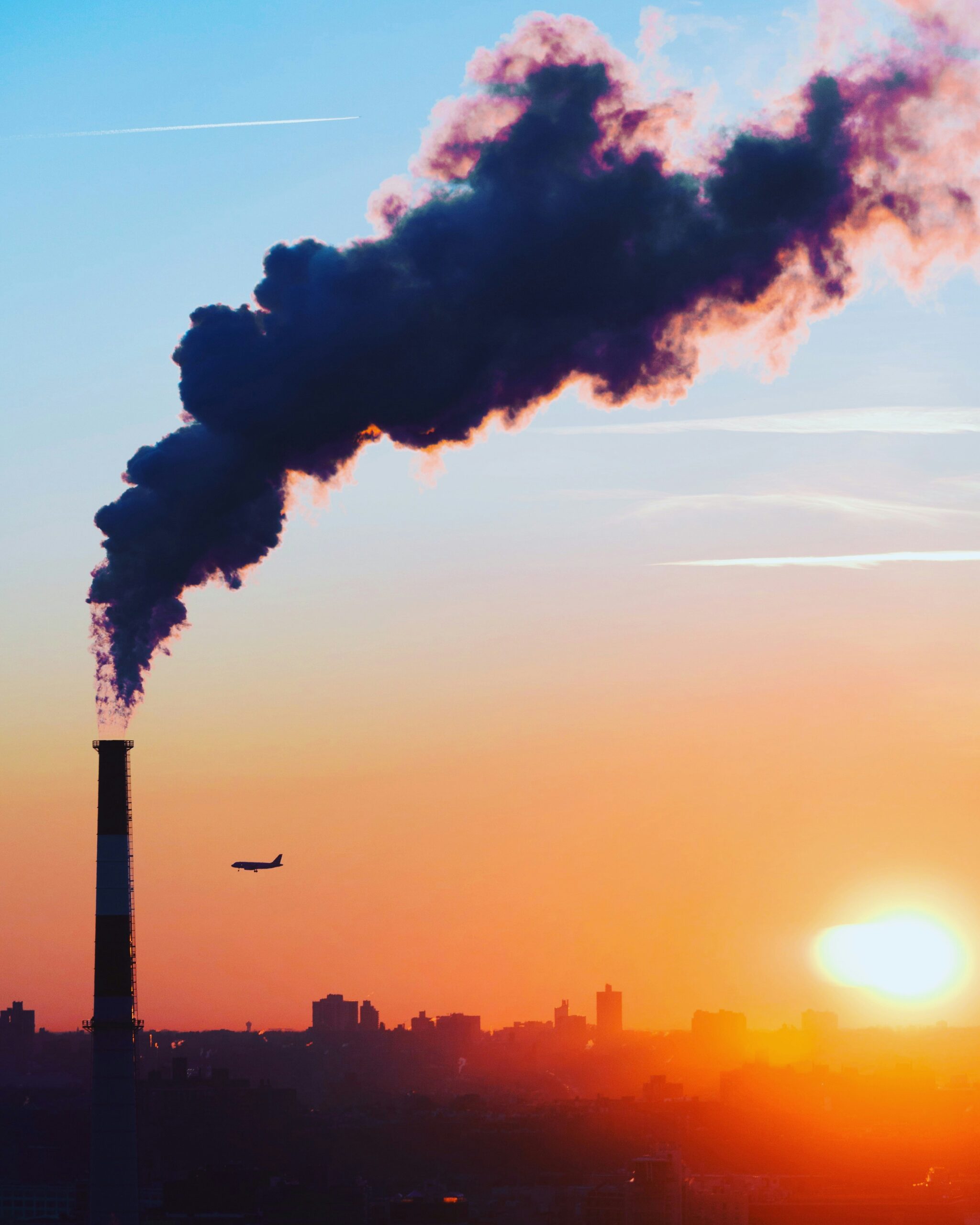
When we talk about climate change, responsibility is often framed around individual behavior or national borders. We are told to recycle more, drive less, and make greener consumer choices. While those actions matter, they obscure a far more consequential reality. The overwhelming majority of global carbon emissions are not the result of billions of independent decisions, but of deliberate, centralized production choices made by a relatively small group of corporations and state-controlled entities.
Here we explore who the world’s top polluters really are, how power and profit shape their decisions, who sits at the top of these organizations, and what the psychological and emotional landscape of that leadership may look like under the weight of planetary-scale consequences.
The Carbon Majors Reality
One of the most important shifts in climate accountability has come from the Carbon Majors database, maintained by the think tank InfluenceMap. Rather than focusing on consumption, this dataset traces emissions back to the polluters themselves: the companies and state entities that extract coal, oil, gas, and manufacture cement at industrial scale.
According to the most recent Carbon Majors reporting, just 57 entities are responsible for roughly 80 percent of global carbon dioxide emissions since the Paris Agreement came into effect in 2016. This reframing matters because it highlights a small, identifiable group of decision-makers whose choices lock in emissions for decades.
InfluenceMap’s full methodology and datasets can be explored here: https://influencemap.org
Who the World’s Biggest Polluters Are
At the top of the list sit fossil fuel giants that dominate global energy systems. Many are state-owned enterprises, while others are investor-owned corporations traded on global stock markets.
Saudi Aramco consistently ranks as the single largest corporate contributor to global emissions. Owned by the Saudi state, the company functions not only as an energy producer but as the financial backbone of the country itself. Close behind are Gazprom of Russia, Coal India, Iran’s National Iranian Oil Company, and China’s CHN Energy as some of the biggest polluters.
Among investor-owned firms, familiar names dominate: ExxonMobil, Shell, BP, Chevron, and TotalEnergies are the biggest polluters. These companies operate across continents, shape energy infrastructure worldwide, and wield enormous political influence.
While China and the United States are often labeled the world’s biggest polluters at a national level, these corporations are the industrial engines behind those statistics. Countries do not emit carbon in isolation. Extraction and combustion occur because companies decide how much fossil fuel enters the global system.
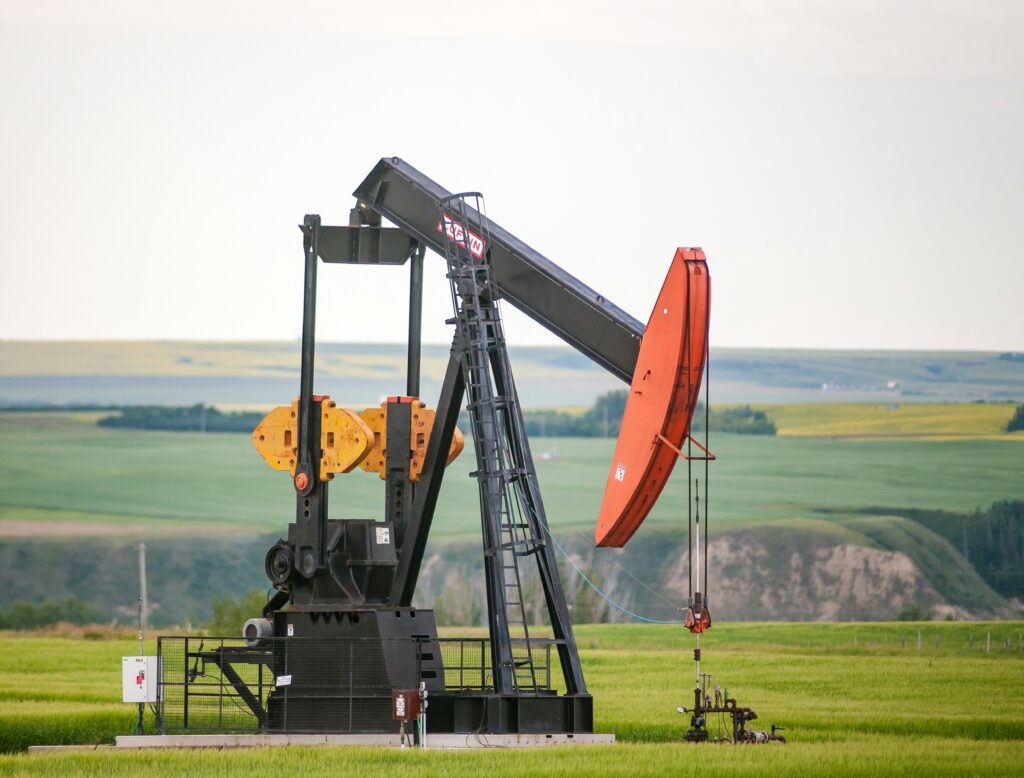
State-Owned Power and Political Lock-In As Polluters
State-owned fossil fuel companies occupy a unique position. They are not simply businesses seeking profit but institutions deeply embedded in national governance. In Saudi Arabia, Aramco revenues fund public wages, infrastructure, and social stability. In Russia, Gazprom underpins both the economy and geopolitical leverage. In countries such as Iran, Venezuela, and Nigeria, oil and gas revenues are tied directly to regime survival.
This creates a form of political lock-in. A rapid decline in fossil fuel production would not merely reduce profits; it could destabilize entire societies. As a result, international climate pledges often collide with domestic economic realities.
The International Energy Agency has repeatedly warned that meeting global climate targets requires no new oil and gas development. Yet state-owned producers continue expanding output as polluters. The IEA’s net-zero roadmap can be found here: https://www.iea.org
Investor-Owned Giants and Shareholder Pressure
Private fossil fuel corporations operate under a different but equally constraining logic. Companies such as ExxonMobil, Shell, BP, and Chevron are legally bound by fiduciary duty to maximize shareholder value. Environmental responsibility is only considered insofar as it affects long-term profitability or regulatory risk.
Investigations by journalists and researchers have shown that many of these firms understood climate risks decades ago. Rather than pivoting, they often funded misinformation efforts while continuing to expand production. Reporting by Inside Climate News and academic institutions has documented this history in detail. (https://insideclimatenews.org)
The financial incentives remain clear. Oil and gas projects can deliver returns exceeding 15 percent, while renewables often produce margins closer to 5 to 8 percent. As long as this imbalance persists, executives face constant pressure to prioritize fossil fuel expansion which means they will remain polluters.

Why Emissions Keep Rising
Climate inaction is rarely about ignorance. It is driven by structural inertia. Fossil fuel companies have invested trillions of dollars in pipelines, refineries, liquefied natural gas terminals, and mines designed to operate for decades. Shutting them down early would mean accepting massive losses in the form of stranded assets.
Energy density also plays a role. Fossil fuels remain portable, reliable, and deeply embedded in global logistics systems. While renewable energy has advanced rapidly, large-scale storage and grid stability remain unresolved challenges.
For state-owned producers, fossil fuels function as national revenue streams. For investor-owned firms, they are the foundation of shareholder returns. In both cases, walking away is economically and politically destabilizing. And so the polluters continue their work as before.
Who Runs These Companies
Behind these entities are individuals who hold extraordinary power over the planet’s future. CEOs, ministers, and government-appointed executives make decisions that influence global emissions more than entire populations.
Saudi Aramco is led by Amin H. Nasser, a figure deeply tied to Saudi economic and political strategy. ExxonMobil is headed by Darren Woods, who has repeatedly emphasized oil and gas expansion even as climate risks intensify. Shell’s Wael Sawan and BP’s Murray Auchincloss operate under mounting investor pressure while publicly committing to transition narratives.
In state-owned firms, leadership is often appointed by governments, blurring the line between corporate strategy and national policy. In investor-owned firms, CEOs answer to boards and institutional investors whose priorities are financial performance and market dominance.
The Mental and Emotional Landscape of Power
It is important to be clear: we cannot diagnose individuals, and any discussion of mental health at this level is necessarily speculative. However, research into executive psychology offers insight into the environment these leaders inhabit.
Studies published in outlets such as Harvard Business Review (https://hbr.org) suggest that executives experience disproportionately high levels of stress, isolation, and burnout. More than a quarter of senior executives report symptoms consistent with clinical depression, a rate higher than that of the general population.
Decision-making at this scale often relies on psychological compartmentalization. Leaders may frame their work as providing energy security, economic growth, or national stability, separating those narratives from the long-term environmental damage their products cause.
Research in organizational psychology has also identified elevated levels of psychopathic traits among corporate leaders compared to the general population. Traits such as reduced empathy, superficial charm, and high risk tolerance can be advantageous in competitive environments. They may also make it easier to prioritize quarterly earnings over long-term planetary consequences. Summaries of this research are available through the American Psychological Association: https://www.apa.org
Whether driven by stress, detachment, ideology, or institutional pressure, the emotional reality of leadership matters. Decisions made under extreme pressure, isolation, and reward structures skewed toward short-term gain are unlikely to favor long-term ecological stability.

Green Energy, Greenwashing, and Limited Transitions
Major fossil fuel companies frequently promote their investments in renewable energy and low-carbon technologies. While these investments exist, they typically account for a small fraction of total capital expenditure, often less than 5 to 10 percent.
Critics argue that such initiatives function as reputational buffers rather than genuine transitions. Environmental organizations have documented extensive greenwashing, where marketing outpaces meaningful change. Reports from Greenpeace and regulatory bodies in Europe and the United States have raised concerns about misleading climate claims: https://www.greenpeace.org
At the same time, companies argue that renewables alone cannot yet provide stable baseload power at global scale. This tension is often used to justify continued fossil fuel expansion, even as emissions targets slip further out of reach for these polluters.
Why This List Matters
The Carbon Majors framework shifts the climate conversation away from individual guilt and toward structural power. Consumers do not choose whether their electricity grid runs on coal or wind. They do not decide whether new oil fields are approved or pipelines expanded. They do not choose to be polluters by their energy use or not.
Those choices are made upstream by a small group of entities and leaders who control production. By focusing on them, accountability becomes clearer and climate solutions more realistic.
Expansion After the Paris Agreement
Perhaps the most troubling finding in recent Carbon Majors research is that most top polluters have increased production since 2016. Around 65 percent of state-owned companies and more than half of investor-owned firms have expanded output during a period when emissions were supposed to fall.
This exposes the weakness of voluntary pledges and net-zero promises that lack enforcement, timelines, or penalties.
Power, Accountability, and the Path Forward
If climate goals are to be met, action must address supply, not just demand. This includes production caps, removal of fossil fuel subsidies, mandatory transition plans, and legal accountability for misleading climate disclosures.
Institutions such as the United Nations Environment Programme emphasize the need for a managed decline of fossil fuel production paired with protections for workers and communities. This concept, known as a just transition, is outlined here: https://www.unep.org
Climate litigation is also accelerating worldwide. Lawsuits against fossil fuel companies and governments are challenging decades of expansion and misinformation. Ongoing cases are tracked by the Sabin Center for Climate Change Law at Columbia University: https://climate.law.columbia.edu
Reframing Responsibility
Understanding who the world’s biggest polluters are is not about vilifying individuals within these systems. It is about recognizing where power truly resides.
A relatively small group of corporations and state entities decide how much carbon enters the atmosphere. Their leaders operate under immense pressure, shaped by economic incentives, political realities, and psychological constraints.
Until climate action directly confronts these producers and the systems that reward them, emissions will continue to rise regardless of individual consumer behavior.
Here we see that the climate crisis is not only an environmental issue. It is a story about power, psychology, economics, and the institutions that define modern life. Any meaningful response must begin there.
Like this article? We have a new section specifically related to climate change on Interconnected Earth. Check it out for more climate related news.
One thought on “The World’s Top Polluters: Power, Profit, And The Corporations Driving The Climate Crisis”