
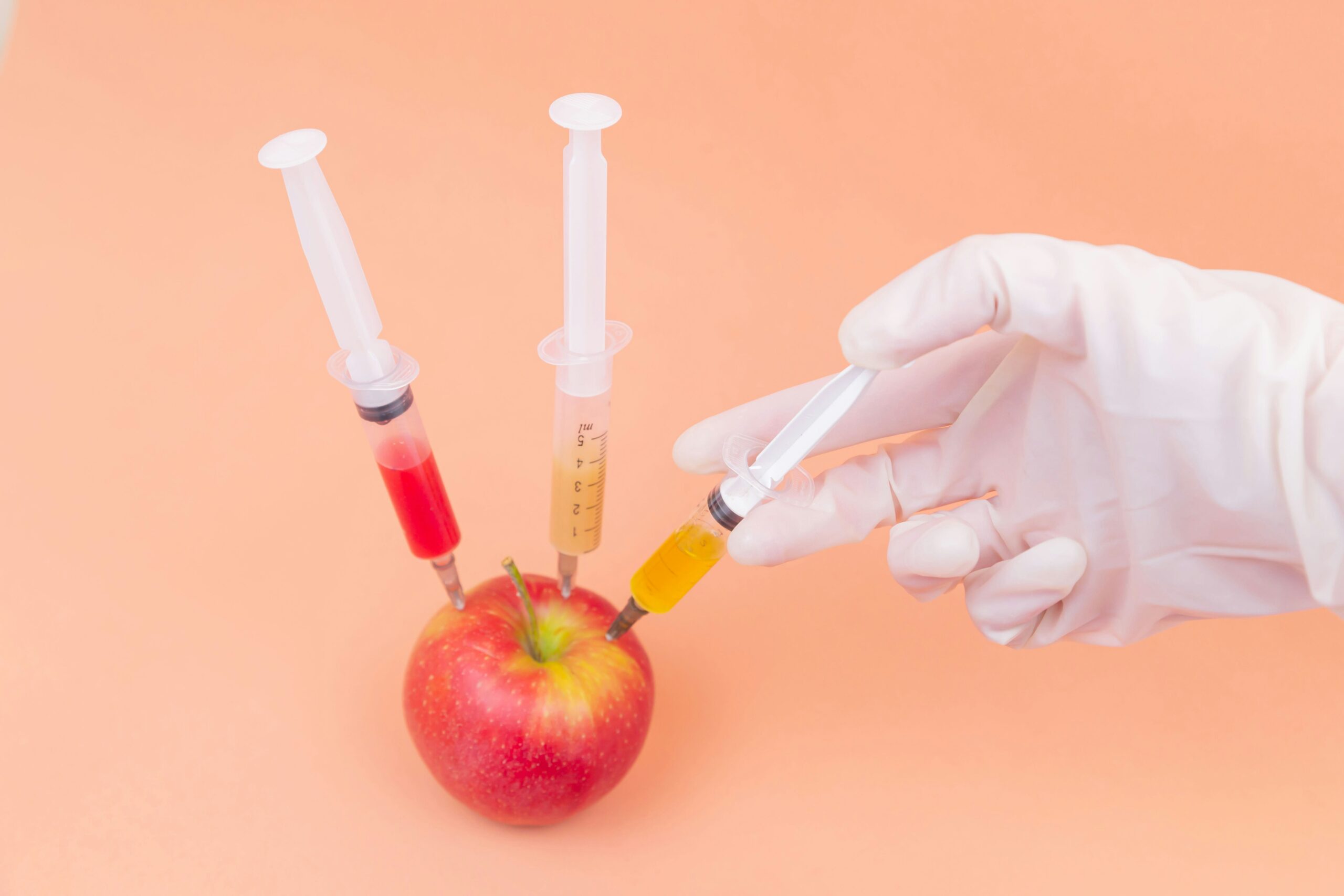
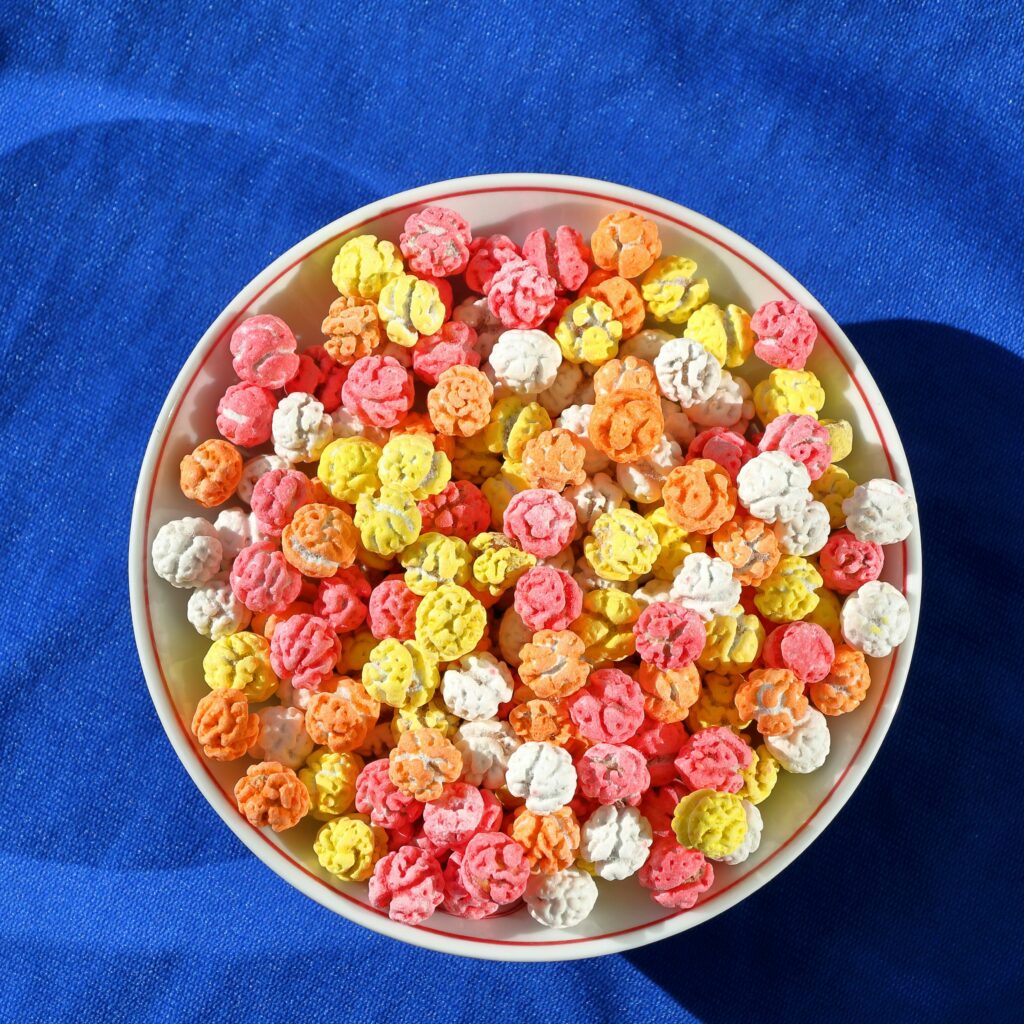
Walk down any American grocery aisle and you are surrounded by color. Neon reds, radioactive blues, fluorescent yellows—foods engineered to look louder than nature ever intended. These colors are not incidental. They are synthetic food dyes, petroleum-derived chemicals designed to make processed food more appealing, more marketable, and more addictive.
For decades, they have been treated as harmless, regulated curiosities—ingredients approved long ago and rarely revisited. But that era is ending. Across the United States, lawmakers, regulators, and public-health advocates are questioning whether these dyes should still be allowed at all. Several states are moving to ban or limit them. Federal agencies are advancing regulatory efforts to phase them out. At the same time, industry groups are mobilizing aggressively to slow or stop those changes, warning of higher costs, vague laws, and unintended consequences.
This debate is not just about food aesthetics. It is about health, mental well-being, environmental damage, regulatory inertia, and the deeper cost of an ultra-processed food system that prioritizes appearance over nourishment.
What Synthetic Food Dyes Actually Are
Most synthetic food dyes used in the United States are derived from petroleum. Common examples include Red 40, Yellow 5, Yellow 6, Blue 1, Blue 2, and Green 3. These dyes are chemically synthesized through multi-step industrial processes involving crude oil byproducts, solvents, acids, and trace heavy metals.
The FDA classifies these dyes as “certified color additives,” meaning every batch must be tested before it enters the food supply. That certification, however, does not mean the dyes meet modern standards of long-term safety evaluation. Many were approved decades ago, based on limited toxicological data and assumptions that low-dose exposure posed minimal risk.
In recent years, the FDA has acknowledged growing concern by publicly tracking voluntary industry pledges to remove petroleum-based dyes—an implicit recognition that these additives are increasingly out of step with evolving health expectations
https://www.fda.gov/food/color-additives-information-consumers/tracking-food-industry-pledges-remove-petroleum-based-food-dyes

Why the Issue Is Re-Emerging Now
Several forces are converging at once.
At the state level, lawmakers are moving where federal regulators historically hesitated. West Virginia passed one of the most aggressive state bans on synthetic food dyes, particularly in school meals. The measure was celebrated by public-health advocates and immediately challenged by industry groups. A federal judge later halted the ban, citing concerns over vagueness in the law rather than disputing the underlying health concerns
https://wchstv.com/news/local/federal-judge-halts-west-virginias-synthetic-dye-ban-citing-laws-vagueness
At the federal level, lawmakers are also applying pressure. Representative Mike Lawler introduced legislation aimed at limiting synthetic food dyes in federal food purchases, including meals served to children, service members, and patients
https://midhudsonnews.com/2025/12/28/lawler-introduces-bill-to-limit-synthetic-food-dyes-in-federal-purchases/
Meanwhile, the national conversation around ultra-processed food has intensified. Reporting from Politico shows that food dyes have become entangled in broader debates about affordability, nutrition, and regulatory reform, particularly as high-profile figures push for chemical reduction in the food system
https://www.politico.com/news/2025/12/25/ultraprocessed-food-rfk-affordability-maha-00692808
At the federal agency level, action has moved beyond open-ended discussion. Regulatory efforts are now clearly oriented toward phasing out petroleum-based synthetic dyes, reflecting a growing consensus that the long-standing approach to food coloring is no longer sustainable
https://www.usatoday.com/story/news/health/2025/04/23/food-dyes-banned-phased-out-rfk-fda-hhs/83230760007/
Mental Health, Behavior, and the Dye Debate
One of the most contentious aspects of the food dye debate centers on mental health—particularly in children. For decades, parents have reported behavioral changes linked to artificial coloring, including hyperactivity, irritability, mood instability, and attention difficulties.
While early research was often dismissed as anecdotal, more recent studies suggest a consistent pattern: synthetic dyes may not cause ADHD outright, but they can worsen symptoms in children who are already sensitive. Rutgers University researchers note that the evidence is strong enough to justify caution, especially given the volume and frequency of exposure in American diets
https://www.rutgers.edu/news/will-banning-food-dyes-improve-our-health
European regulators took this evidence seriously enough to mandate warning labels on foods containing certain dyes, stating that they “may have an adverse effect on activity and attention in children.” The United States has never adopted a comparable labeling requirement.
Even small behavioral effects, when repeated daily across millions of children, carry real consequences for learning, emotional regulation, and family stress.

Physical Health and Long-Term Risk
Beyond mental health, synthetic food dyes raise broader concerns about allergic reactions, inflammation, and long-term metabolic health. Some dyes are known to trigger hypersensitivity reactions, including hives and asthma-like symptoms. Others have raised concerns in animal studies related to tumor development, though human evidence remains debated.
What complicates the issue is not just toxicity, but exposure. Synthetic dyes appear almost exclusively in foods already associated with poor health outcomes—sugary snacks, sweetened beverages, processed desserts, and brightly colored cereals. In that sense, food dyes function as markers of ultra-processed food consumption, which is linked to higher rates of obesity, diabetes, cardiovascular disease, and depression.

Climate Change and Environmental Impact
Food dyes are rarely discussed in environmental terms, but they are deeply linked to pollution and climate change through their petrochemical origins. Most synthetic food dyes used in the United States are derived from petroleum, tying their production directly to fossil fuel extraction, refining, and chemical manufacturing. These processes are energy-intensive and generate greenhouse gas emissions that contribute to climate change
https://lifestyle.sustainability-directory.com/term/environmental-impact-of-dyes/
Beyond carbon emissions, dye manufacturing produces hazardous waste and wastewater effluents that can persist in the environment if not properly treated. Studies have shown that synthetic dye effluents can contaminate water systems and harm aquatic ecosystems due to their chemical stability and toxicity
https://pmc.ncbi.nlm.nih.gov/articles/PMC11261106/
Natural color alternatives—such as beet juice, turmeric, spirulina, or paprika extract—are not impact-free. They require land, water, and agricultural inputs. However, they generally avoid the petrochemical lifecycle that defines synthetic dyes and tend to be more biodegradable. When companies argue that dye bans would be environmentally disruptive, they rarely acknowledge the ongoing climate and pollution costs of maintaining petroleum-based additives.
Just How Processed Are These Dyes?
Synthetic food dyes represent one of the clearest examples of ultra-processing. They do not occur in nature and are not simple modifications of natural substances. They are engineered to withstand heat, light, acidity, and long shelf lives—qualities prized by manufacturers but largely irrelevant to nutrition.
This durability is precisely what raises concern. These dyes are designed to persist, both in food systems and potentially in the environment, reinforcing their role as industrial inputs rather than food ingredients.
The Cost Argument: What Industry Doesn’t Like to Say
Industry opposition to dye bans consistently centers on cost. Companies argue that reformulation would increase prices, strain supply chains, and disproportionately affect low-income consumers.
But this argument weakens when examined globally. Major food manufacturers already sell dye-free versions of the same products in Europe, Canada, and other markets. Reporting from The New York Times shows that companies like Kraft Heinz and Jell-O have successfully reformulated abroad while resisting similar changes in the United States
https://www.nytimes.com/2025/06/17/business/kraft-heinz-chemical-food-dyes.html
https://www.nytimes.com/2025/06/29/business/jell-o-artificial-food-dye.html
The real cost is not feasibility—it is marketing risk. Companies fear that altering color will disrupt brand recognition and consumer expectations, even when the product itself remains unchanged.
Other Countries Have Already Acted
The United States is increasingly an outlier when it comes to food dyes.
Many countries ban or restrict dyes that remain legal in American food, while others require warning labels or strict usage limits. Numerous everyday U.S. products are either banned outright or sold in reformulated versions overseas
https://stacker.com/stories/food-drink/15-common-us-foods-are-banned-other-countries
https://www.eatthis.com/american-foods-banned-in-other-countries/
https://www.womenshealthmag.com/food/a63606676/food-dye-additives-united-states-vs-europe/
Rather than chaos or shortages, these countries have seen supermarket shelves gradually reshaped—products reformulated to rely less on synthetic chemicals and more on natural alternatives.
The Pushback: Vagueness, Preemption, and Delay
Legal and lobbying efforts against dye bans often avoid engaging directly with health science. Instead, they focus on regulatory authority, legal clarity, and federal preemption. The challenge to West Virginia’s law, for example, centered on statutory language rather than the safety of dyes themselves
https://wchstv.com/news/local/federal-judge-halts-west-virginias-synthetic-dye-ban-citing-laws-vagueness
This strategy reflects a familiar pattern: delay reform long enough to preserve existing systems.
What the Evidence Actually Suggests
The science surrounding synthetic food dyes is not absolute, but it is consistent enough to justify precaution. There is credible evidence of behavioral effects, allergic reactions, and environmental harm, paired with overwhelming agreement that these dyes provide no nutritional benefit.
As Rutgers researchers note, banning food dyes will not fix America’s health crisis. But it would remove one unnecessary petrochemical layer from an already overprocessed food system
https://www.rutgers.edu/news/will-banning-food-dyes-improve-our-health
A Question of Priorities
The fight over food dyes is ultimately about values. It asks whether visual appeal and brand familiarity should outweigh public health, environmental responsibility, and global regulatory norms.
The United States has the technical capacity to reformulate its food supply and the economic capacity to absorb the transition. What has been missing is political urgency.
As dye bans advance and resistance hardens, the underlying question becomes unavoidable: if much of the world can feed itself without petroleum-based food coloring, why can’t the United States?
The brightest ingredients in American food may soon fade—and that may be exactly what progress looks like.
This Interconnected Earth article is linked to, and interconnected with, our World News, Climate Change, and Mental Health sections of our site. For more articles similar to these please check out those sections of our website.
We are so grateful you have chose to spend your time learning and growing together with us today.
One thought on “Are Food Dyes Dying Out? Why America Might Finally Be Trading Chemicals for Science”