
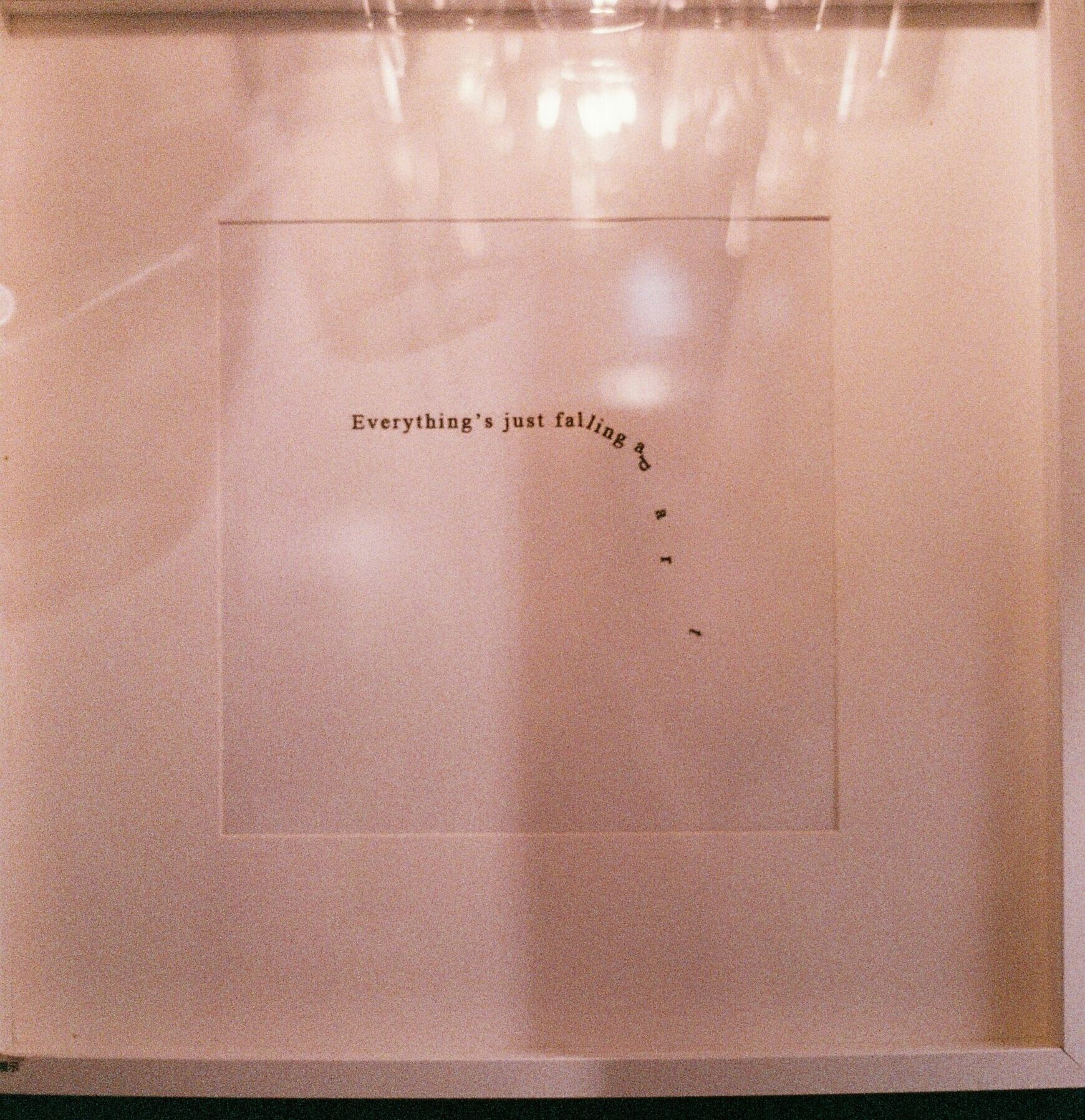
Across human history, moments of profound loss, uncertainty, and upheaval have repeatedly given rise to art. Long before formal language, institutions, or recorded history, people turned to image, sound, and story to process the world around them. Here we explore how creative expression has functioned not simply as entertainment or documentation, but as a collective response to grief, fear, and transformation.
The earliest known cave paintings, such as those found at Lascaux in France (https://whc.unesco.org/en/list/933/), suggest that prehistoric humans were already using symbolism to understand their place within a dangerous and unpredictable environment. These images were not passive records of daily life. They were acts of meaning-making at a time when survival itself was uncertain.
Ancient and Medieval Responses to Catastrophe
Even in the ancient world, art frequently emerged in response to crisis. Early civilizations used myth, sculpture, and ritual performance to explain famine, war, and natural disaster. These creative responses were not abstract exercises but tools for survival, helping communities frame suffering within shared narratives.
This instinct became especially visible during the Black Death of the 14th century. As plague swept across Europe, killing an estimated third to half of the population, art shifted dramatically in both tone and subject. Death was no longer symbolic or distant; it was immediate and unavoidable.
One of the most enduring artistic responses from this period is the Danse Macabre, or “Dance of Death,” which depicted skeletal figures leading people from all social classes to the grave. These images reinforced a grim truth: status, wealth, and power offered no protection.
https://en.wikipedia.org/wiki/Danse_Macabre
Religious art also intensified. Figures such as Saint Roch, believed to protect against plague, became central subjects as communities sought meaning and intercession through visual devotion.
https://en.wikipedia.org/wiki/Saint_Roch
Art from this era did not soften reality. Instead, it reflected a world overwhelmed by loss, functioning as both confrontation and consolation. In the absence of medical understanding or institutional stability, art became a shared language for fear, grief, and endurance.
Revolution, War, and the Cost of Bearing Witness
Periods of political upheaval have consistently reshaped artistic expression. During the French Revolution and its aftermath, artists confronted violence, state power, and human suffering directly. Francisco Goya’s The Third of May 1808 rejected heroic depictions of war in favor of raw terror and moral indictment.
https://en.wikipedia.org/wiki/The_Third_of_May_1808
Goya’s later series, The Disasters of War, extended this confrontation, documenting civilian suffering with unfiltered brutality.
https://en.wikipedia.org/wiki/The_Disasters_of_War
World War I further intensified this trajectory. Art produced during and after the war reflected disillusionment with industrialized violence and the failure of institutions meant to protect human life. In many cases, artists became chroniclers of trauma rather than celebrants of victory.
At times, this expression came at a real cost. During the McCarthy era in the United States, artists and writers were pressured into silence or forced to obscure meaning beneath allegory and metaphor. Careers were destroyed, and expression itself became a liability.
https://www.artforum.com/features/the-suppression-of-art-in-the-mccarthy-decade-214149
COVID-19 and the Art of Isolation
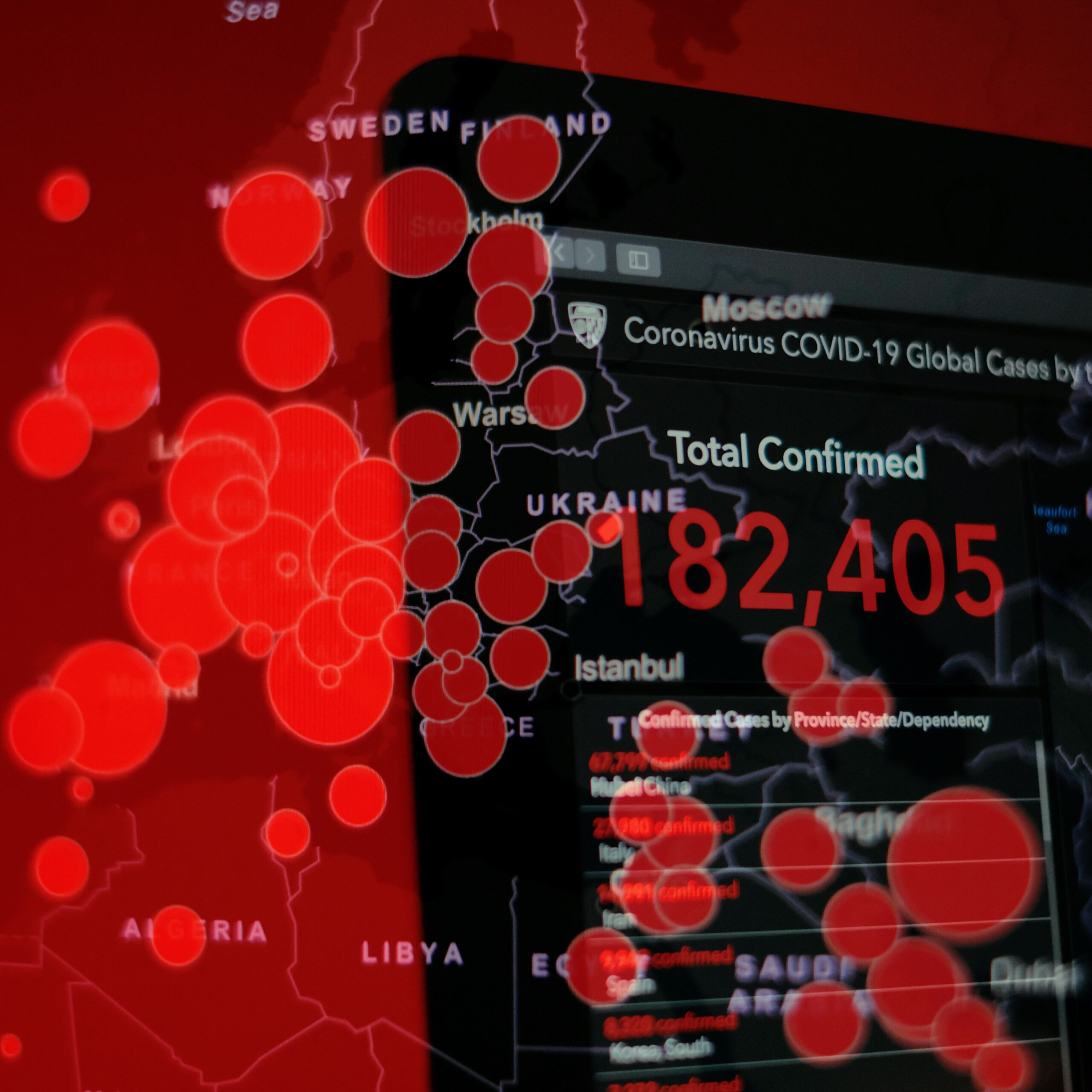
The COVID-19 pandemic marked one of the most globally shared traumatic experiences in modern history, and the artistic response reflected that scale. Confined to homes and cut off from routine social contact, people turned to creativity as a way to process isolation, fear, and uncertainty.
Visual artists documented empty streets, masked faces, and domestic spaces reshaped by quarantine.
Music became communal despite physical separation. In cities across Italy and beyond, people emerged onto balconies to sing together, creating spontaneous moments of collective release.
https://www.nytimes.com/2020/03/14/world/europe/italy-coronavirus-sing.html
Elsewhere, nightly rituals emerged as people banged pots and pans to honor healthcare and service workers, transforming sound into solidarity.
https://www.bbc.com/news/world-europe-52024033
Masks themselves became symbolic. For some, they represented care and responsibility. For others, they became a site of denial or resistance. Even this divide generated art and commentary reflecting deeper anxieties about control, trust, and identity.
Comedy became another outlet. Bo Burnham’s Inside blurred performance and vulnerability, capturing the mental strain of isolation.
https://en.wikipedia.org/wiki/Bo_Burnham:_Inside
Banksy and Explicit Political Commentary
Banksy’s work during recent crises illustrates how art can intervene directly in public discourse. His COVID-era piece Game Changer honored healthcare workers and raised funds for medical charities.
https://www.banksy.co.uk/gameChanger.html
Other works addressed Black Lives Matter protests, nationalism, and political leadership, using public space as both canvas and confrontation.
https://www.bbc.com/news/entertainment-arts-52998837
https://www.tate.org.uk/art/artists/banksy-780
Banksy’s approach bypasses institutions entirely, forcing engagement rather than requesting it.
Music, Protest, and the Search for Peace
Music has long served as a vehicle for protest, healing, and shared identity. Artists such as Mon Rovîa focus explicitly on peace and human connection, emphasizing empathy during prolonged instability.
Songs like FTD by YG reflect a broader pattern in which music responds not just to specific events, but to sustained emotional climates shaped by uncertainty. The same as the song Hostile Government Takeover AGiftFromTodd and Vinny Marchi which hit the Billboard charts.
Earlier cultural touchstones like Childish Gambino’s This Is America continued to shape interpretation of violence, spectacle, and racial injustice.
https://en.wikipedia.org/wiki/This_Is_America_(song)
Cartoons and Animation as Cultural Filters
Animated shows such as The Simpsons, South Park, and Family Guy occupy a unique position in cultural critique. By removing real human faces, animation creates distance that allows for sharper satire and riskier commentary.
This abstraction enables creators to exaggerate social norms, political figures, and media dynamics while maintaining accessibility. Animation suspends disbelief just enough to explore subjects that might otherwise be rejected or ignored.
These also because of their nature often end up being just as culturally relevant at later times when metaphors are employed. The medium sometimes works across decades to stand in for different events when the event itself is not directly mentioned.
https://journals.openedition.org/ejas/10318
Satire, Late-Night, and Comedy as Processing Tools
In the modern media landscape, the boundary between “the news” and “the late-night monologue” has blurred into a singular, vital space for civic sense-making. We often treat satire as a secondary reaction to the primary event—a comedic “dessert” to the main course of hard journalism—but for a growing segment of the public, satire has become the primary cognitive filter. In a world characterized by the “polycrisis,” where environmental, political, and economic upheavals occur simultaneously, the sheer volume of data can be paralyzing. Traditional news, with its emphasis on breaking alerts and objective detachment, can inadvertently trigger a “freeze” response in the human nervous system. Satire, however, offers an alternative: it functions as a psychological translator, taking the leaden weight of systemic crises and converting them into something buoyant. By framing the terrifying or the absurd through the lens of a joke, creators like Jon Stewart, John Oliver, or the new wave of social media satirists create a “play frame.” Within this frame, audiences can confront grim realities—from climate change to democratic erosion—without the psychological burnout that typically leads to total disengagement.
This process is less about escaping reality and more about finding a way to endure it. Humor acts as a necessary pressure valve; the punchline provides a moment of physiological release that lowers cortisol and allows for a “re-entry” into complex topics. When we laugh at a satirical breakdown of a convoluted tax law or a hypocritical political stance, we are doing more than just being entertained—we are engaging in a form of collective validation. This validation is a crucial antidote to the isolation of the digital age, as it reassures the viewer that their perception of the world’s absurdity is shared by others. Consequently, the satirist has evolved from a mere jester into a moral arbiter and a civic educator. By using humor to sustain the audience’s attention for twenty minutes on a single, dense topic, comedy achieves a level of depth that traditional sound-bite journalism often misses. Ultimately, satire serves as the “connective tissue” of modern engagement, providing the cognitive endurance required to remain an informed citizen in an era that frequently feels designed to make us look away. It transforms “doomscrolling” into a directed, critical, and shared experience, ensuring that even when the news is at its most overwhelming, we remain anchored to the conversation.
Media as a Barometer of Change
Art and media often act as the early warning systems of a culture, registering tremors of stress long before they fracture formal institutions. They serve as a sensitive mirror, reflecting the quiet accumulation of emotional undercurrents, emerging collective fears, and the slow migration of moral values. When a society begins to shift, that movement is first felt in the stories we tell, the images we circulate, and the aesthetics we embrace. In this way, media does not merely document history; it anticipates it.
Social platforms have fundamentally compressed this cycle. Information—and the emotional charge attached to it—now travels at the speed of light, amplifying both our sense of global connection and the potential for profound distortion. In this hyper-accelerated environment, the “barometer” can become erratic. While media has the power to illuminate shared human experiences and bridge divides, it is equally susceptible to manipulation.
When the lines between organic sentiment and manufactured narrative blur, the barometer no longer just measures the weather—it begins to dictate the climate.
What This Tells Us About Ourselves
Across eras, humans return to art as a way to externalize internal states. It functions as coping, documentation, protest, and reflection. Yet art remains subjective. The meaning intended by the creator does not always align with the viewer’s interpretation, and that tension is both its strength and its limitation.
Art matters deeply, but it is not a final destination on the path to or from change. It does not resolve crisis on its own, nor does it always light the spark. What it does is mark where we are, how we feel, and what we are struggling to understand—leaving behind evidence that even in moments of profound uncertainty, expression persists.
Want more to know more about where arts and entertainment intersect with mental health, world events, and more? Check out the Arts and Entertainment section of Interconnected Earth.