
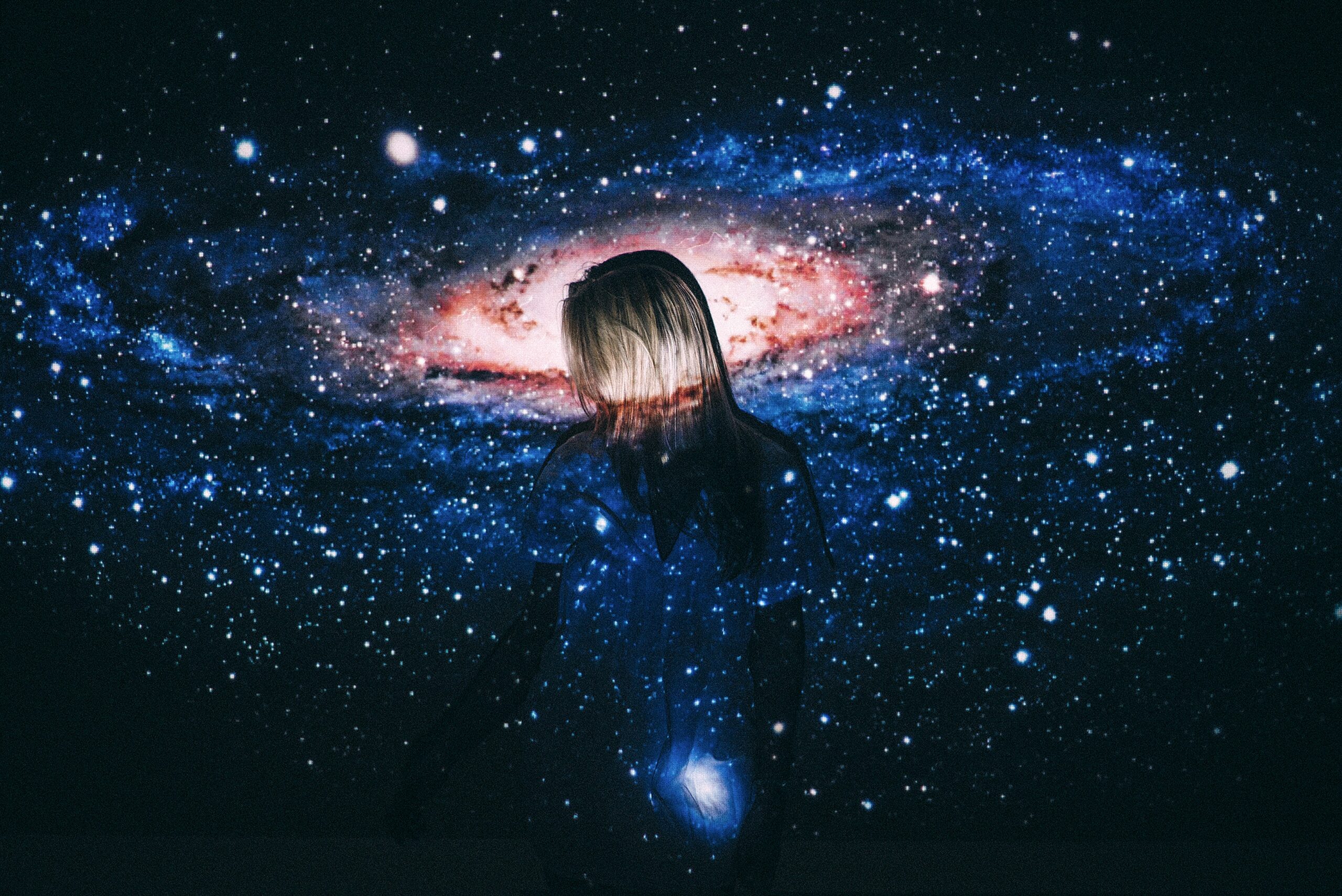
This is not our normal subject matter.
Most of the time here we explore economics, climate systems, global inequality, technology, or the way social structures shape human lives. Yet one of the most fundamental forms of interconnectedness is not economic or environmental. It is experiential. Everything we know about the world comes through the experience of consciousness.
The way humans experience reality shapes every system we create. Governments, markets, technology, art, religion, and science all begin with the same phenomenon: a conscious mind attempting to understand the universe around it.
So here we explore something slightly different. We examine the science of consciousness, the philosophical arguments about meaning and interconnectedness, the growing technological attempts to measure awareness, and the way television and film have tried to grapple with the same ideas.
We also start with an important reality. No one actually knows the final answer. Consciousness is one of the deepest unsolved questions in science and philosophy. Our understanding will continue to evolve. Sometimes that evolution will improve our understanding. Sometimes it will reveal that earlier interpretations were incomplete or wrong.
For now, the best we can do is explore the evidence, the ideas, and the ways humans are attempting to interpret the experience of being alive.
Cause and Effect: Is Anything Truly Random?

Many people who spend time observing nature eventually reach a similar realization. Everything appears connected through cause and effect.
A leaf does not fall randomly from a tree. It falls because the structure connecting it to the branch weakens over time. Wind introduces force. Gravity pulls it downward. Cellular changes in the plant trigger the process of abscission that eventually separates the leaf from the tree.
None of that is random.
The process is understood scientifically. Researchers studying plant physiology have documented the biochemical signaling that causes leaves to detach as part of seasonal cycles or environmental stress responses.
https://www.ncbi.nlm.nih.gov/pmc/articles/PMC5462010/
Physics, biology, and chemistry explain the mechanisms involved. But the existence of those mechanisms raises another question that science alone does not fully answer.
Why do the laws governing those processes exist at all?
Physicists can describe how gravity works or how energy moves through systems, but the deeper question of why the universe has laws that behave so consistently remains a philosophical issue.
The fact that we can discover mathematical rules that predict natural behavior with extraordinary precision is one of the central mysteries of the universe.
Nobel Prize–winning physicist Eugene Wigner famously called this phenomenon the “unreasonable effectiveness of mathematics in the natural sciences,” noting how surprising it is that abstract mathematics maps so perfectly onto physical reality.
https://www.jstor.org/stable/98663
If everything operates through cause and effect, the universe becomes less like chaos and more like a vast interconnected system.
That realization is where science and philosophy begin to intersect.
The Idea That the Universe Is Experiencing Itself
Some philosophers and scientists have suggested that consciousness might be more than an accidental byproduct of biology.
Astronomer Carl Sagan expressed a famous version of this idea when he wrote that humans are “a way for the cosmos to know itself.”
https://www.loc.gov/exhibits/carl-sagan/biography.html
The concept does not necessarily imply mysticism. Instead it highlights a simple observation.
The universe existed for billions of years before conscious life appeared. But once conscious beings emerged, the universe gained the ability to observe itself.
Humans study stars, measure gravity waves, and analyze the chemical composition of distant galaxies. In doing so, matter in the universe is literally examining other matter in the same universe.
Philosophers have explored similar ideas for centuries.
Baruch Spinoza argued in the 17th century that humans and nature are part of the same unified substance, not separate entities observing an external world.
https://plato.stanford.edu/entries/spinoza/
Modern philosophers sometimes describe consciousness using metaphors like droplets returning to an ocean or individual nodes within a larger system.
These analogies attempt to capture a possibility: that individual consciousness may be temporary expressions within a larger process of universal experience.
At this stage, however, such ideas remain philosophical interpretations rather than scientific conclusions.
The Scientific Problem of Consciousness
In neuroscience, consciousness remains one of the hardest questions to explain.
Researchers understand many aspects of brain function. They can measure electrical activity in neurons, observe how different brain regions communicate, and even identify neural patterns associated with specific thoughts or sensations.
But explaining how subjective experience emerges from physical processes is far more difficult.
Philosopher David Chalmers famously called this challenge “the hard problem of consciousness.”
https://consc.net/papers/facing.pdf
The hard problem asks a simple question:
Why does neural activity produce an inner experience at all?
When light enters the eye, the brain processes visual information. But the subjective experience of seeing color, feeling emotion, or being aware of existence itself is not easily explained by electrical signals alone.
Despite decades of research, scientists still cannot fully explain how subjective awareness arises.
Some theories suggest consciousness emerges from complex information processing in the brain. Others argue it may be a more fundamental property of reality.
Panpsychism and the Possibility of Universal Awareness
One philosophical theory gaining renewed attention is panpsychism.
Panpsychism proposes that consciousness, or at least the potential for it, may exist in some form throughout the universe.
This does not mean that rocks think or that trees have human-like thoughts. Instead it suggests that basic forms of awareness or information processing may be present in matter itself.
Philosopher Philip Goff has written extensively about this idea, arguing that panpsychism could help bridge the gap between physical processes and conscious experience.
https://philpapers.org/archive/GOFPAT.pdf
The theory remains controversial.
Many scientists reject it because there is currently little empirical evidence supporting universal consciousness. However, the idea continues to attract attention because it attempts to address a problem that purely material explanations struggle to resolve.
If consciousness emerges suddenly at a certain level of complexity, where exactly is the threshold?
Why would subjective awareness suddenly appear only when neural networks reach a specific level of complexity?
Panpsychism attempts to solve this by suggesting consciousness is not created from nothing but instead emerges gradually from more fundamental properties.
Again, this remains an open debate rather than a proven theory.
Animal Minds and Expanding Definitions of Consciousness
One area where scientific understanding has clearly evolved is the study of animal consciousness.
For many years animals were treated as biological machines reacting purely to instinct. That view has changed dramatically.
Research shows many animals display complex cognitive abilities, emotional responses, and problem-solving skills.
Octopuses can solve puzzles and escape complex enclosures. Ravens demonstrate planning and tool use. Dolphins show evidence of self-awareness.
A group of neuroscientists formally acknowledged this evidence in the Cambridge Declaration on Consciousness, which concluded that many animals possess neurological structures capable of generating conscious experience.
https://fcmconference.org/img/CambridgeDeclarationOnConsciousness.pdf
The implication is significant.
If consciousness exists across a wide range of species, it may be less rare and more fundamental than previously assumed.
Humans may not be the only organisms experiencing the world in meaningful ways.
Plants, Signals, and the Debate Over Plant Intelligence

An even more controversial question involves plants.
Plants clearly respond to their environment. They communicate chemically through root systems and airborne signals. They adjust growth patterns based on light, moisture, and threats from herbivores.
Scientists studying plant communication have documented complex signaling networks within ecosystems.
https://www.nature.com/articles/ncomms5732
However, whether this constitutes consciousness remains heavily debated.
Most botanists argue plants lack the neural structures required for subjective awareness. Others suggest plant signaling networks may represent a different form of information processing that humans do not yet fully understand.
Technologies attempting to translate plant electrical signals into sound, such as devices inspired by plant biofeedback systems, have fueled public curiosity about the subject.
These tools do not prove plant consciousness, but they do illustrate how little we currently understand about the internal signaling systems of living organisms.
The broader point remains: the definition of consciousness is still evolving.
Technology and the Attempt to Measure Consciousness
As neuroscience advances, technology is increasingly used to study consciousness directly.
Brain imaging techniques such as functional MRI allow researchers to observe patterns of activity associated with thoughts, emotions, and decision-making.
One promising approach is Integrated Information Theory (IIT), which attempts to mathematically measure how much information a system integrates. The theory proposes that systems with higher integrated information may possess higher levels of consciousness.
Neuroscientist Giulio Tononi has developed mathematical frameworks attempting to quantify this property.
https://www.nature.com/articles/nrn.2016.44
Other researchers are exploring whether consciousness could eventually be detected in artificial systems.
Artificial intelligence has made enormous progress in pattern recognition and language processing, but there is currently no evidence that AI systems possess subjective awareness.
Still, the rapid development of AI raises new philosophical questions about whether consciousness requires biological structures or whether sufficiently complex systems might one day experience something similar.
Consciousness in Film and Television
Human culture has long explored these ideas through storytelling.
Some of the most influential science fiction films and television series revolve around questions of consciousness and reality.
The film The Matrix explores the possibility that humans are unknowingly living within a simulated reality.
The television series Westworld examines artificial beings gradually becoming self-aware.
The film Arrival explores how different forms of consciousness might experience time and language in radically different ways.
Another example is 2001: A Space Odyssey, which explores artificial intelligence and human evolution through the character HAL 9000 and the mysterious monoliths influencing human development.
These stories resonate because they mirror real philosophical questions scientists are still attempting to answer.
Science fiction often acts as a laboratory for exploring possibilities before science has the tools to test them.
Meaning, Evolution, and the Drive to Exist
One philosophical argument often raised in discussions about consciousness involves the human search for meaning.
Why do humans seek purpose at all?
From a purely evolutionary perspective, behaviors like cooperation, reproduction, and curiosity increase survival chances. Natural selection favors organisms that pursue goals and respond to threats.
Evolutionary biologists explain these drives through genetic adaptation and survival advantage.
Richard Dawkins describes evolution as a process where genes replicate through natural selection, shaping behaviors that help organisms survive and reproduce.
https://global.oup.com/academic/product/the-selfish-gene-9780198788607
However, even within this framework the existence of conscious awareness remains unusual.
Evolution explains why behaviors persist. It does not fully explain why organisms experience those behaviors subjectively.
Why do we feel curiosity instead of simply executing survival programs?
That question remains open.
The Possibility That Our Understanding Will Change

History suggests one clear lesson about humanity’s attempts to understand reality.
Our models change.
Ancient civilizations believed Earth was the center of the universe. Later discoveries showed Earth orbiting the sun. Modern cosmology now describes a universe filled with dark matter and dark energy that we still do not fully understand.
Scientific progress often involves replacing older models with new ones that better explain observed evidence.
The same process will likely occur with consciousness research.
New discoveries may dramatically reshape how humans understand awareness, intelligence, and the relationship between mind and matter.
Some theories may prove correct. Others may be abandoned.
That uncertainty is not a weakness of science. It is part of how knowledge advances.
The Interconnected Question
At its core, the exploration of consciousness raises a broader question about interconnectedness.
Every system we study, from ecosystems to economies to neural networks, shows patterns of interaction.
Particles interact through physical forces. Organisms interact through ecosystems. Humans interact through societies and technology.
Conscious beings observing these systems add another layer to the process. The universe becomes not just a set of physical events but also a collection of experiences.
Whether consciousness is a fundamental property of reality or a complex byproduct of biological evolution remains unknown.
What we do know is that conscious experience shapes everything humans build.
Our understanding of reality emerges through observation, interpretation, and reflection. Those processes themselves are part of the universe unfolding.
As research continues, our understanding will evolve.
Some changes will deepen our understanding. Others may force us to reconsider assumptions we once believed were certain.
For now, the question remains open.
And that uncertainty may be exactly what drives humans to keep exploring.
Sources
https://www.ncbi.nlm.nih.gov/pmc/articles/PMC5462010/
https://www.jstor.org/stable/98663
https://www.loc.gov/exhibits/carl-sagan/biography.html
https://plato.stanford.edu/entries/spinoza/
https://consc.net/papers/facing.pdf
https://philpapers.org/archive/GOFPAT.pdf
https://fcmconference.org/img/CambridgeDeclarationOnConsciousness.pdf
https://www.nature.com/articles/ncomms5732
https://www.nature.com/articles/nrn.2016.44
https://global.oup.com/academic/product/the-selfish-gene-9780198788607
Explore more interconnected topics across the planet:
Climate Change – https://interconnectedearth.com/category/climate-change/
Mental Health – https://interconnectedearth.com/category/mental-health/
Technology – https://interconnectedearth.com/category/technology/
World Events – https://interconnectedearth.com/category/world-events/
Arts & Entertainment – https://interconnectedearth.com/category/arts-and-entertainment/
Philosophy – https://interconnectedearth.com/category/philosophy/