

Shrinkflation has become one of the most persistent and least transparent forces shaping household budgets in the United States. Unlike rent hikes or interest rate increases, it does not arrive as a single shock. There is no clear moment when it “hits.” Instead, it embeds itself into daily life through smaller packages, shorter product lifespans, and faster replacement cycles. The price on the shelf often looks familiar. The value inside the package does not.
Shrinkflation occurs when companies reduce the size, weight, or quantity of a product while leaving the price unchanged or only marginally higher. The economic effect is straightforward: the price per unit rises. What makes shrinkflation different from conventional inflation is that it bypasses the visual cues consumers are trained to notice. Most people do not calculate price per ounce or per sheet every time they shop. They remember what something “usually costs.” Shrinkflation exploits that memory.
The U.S. Bureau of Labor Statistics has acknowledged this dynamic and has explained that shrinkflation can affect inflation measurement when package size changes are detected and adjusted for in the Consumer Price Index. But the agency has also been clear that these adjustments are incomplete and difficult to implement consistently, particularly when products are reformulated, rebranded, or replaced entirely (https://www.bls.gov/opub/btn/volume-12/measuring-shrinkflation-and-its-impact-on-inflation.htm).
That gap between measurement and experience is where the real cost of shrinkflation lives.
Why Shrinkflation Expanded After 2019
Shrinkflation did not suddenly appear during the pandemic, but the period from 2019 onward created ideal conditions for it to spread. Supply chain disruptions, labor shortages, rising commodity prices, and sharply higher transportation costs all placed pressure on manufacturers. Ocean freight rates more than quadrupled at their peak in 2021, domestic trucking costs surged, and packaging inputs such as paper pulp, plastics, and aluminum became more expensive.
Raising prices outright carried risk. Consumers were already facing higher rents, energy costs, and healthcare expenses. Shrinking the product offered an alternative. By reducing quantity rather than increasing price, companies could preserve margins while minimizing immediate consumer backlash. Financial analysts openly discussed shrinkflation as a pricing strategy during this period, noting that consumers are far more sensitive to sticker prices than to package size changes (https://www.nasdaq.com/articles/what-is-shrinkflation-and-how-does-it-affect-consumers).
What is notable is that shrinkflation did not reverse as some cost pressures eased. Shipping rates fell dramatically from their peak. Certain commodity prices stabilized. Yet package sizes largely remained smaller. This persistence suggests that shrinkflation shifted from a temporary response to a normalized business practice.

How Shrinkflation Shows Up in the Data
Official inflation statistics tend to understate shrinkflation’s impact because it is diffuse. The Government Accountability Office examined grocery products affected by downsizing between 2019 and 2023 and found that while only a minority of products shrank in any given year, those that did often experienced substantial increases in price per unit (https://www.gao.gov/blog/what-shrinkflation-and-how-has-it-affected-grocery-store-items-recently).
The GAO found that for downsized products, unit prices rose by an average of nearly eight percent beyond what would have occurred from price changes alone. In some categories, the increase was much larger. Coffee products that shrank saw per-unit price increases exceeding thirty percent after accounting for reduced package sizes. Paper goods and household supplies experienced similarly elevated unit-price growth.
Consumer-facing research reinforces these findings. LendingTree analyzed dozens of common household products and found that roughly one-third had shrunk in size over recent years. In many cases, the price per unit increased even when the shelf price stayed the same or declined slightly (https://www.lendingtree.com/credit-cards/study/shrinkflation-report).
These studies establish that shrinkflation is not anecdotal. The harder question is what it costs.
What It Costs to Buy the Same Amount as Before
Shrinkflation only becomes fully legible when it is translated into dollars. Percentages describe direction, but households feel budgets.
Paper Goods
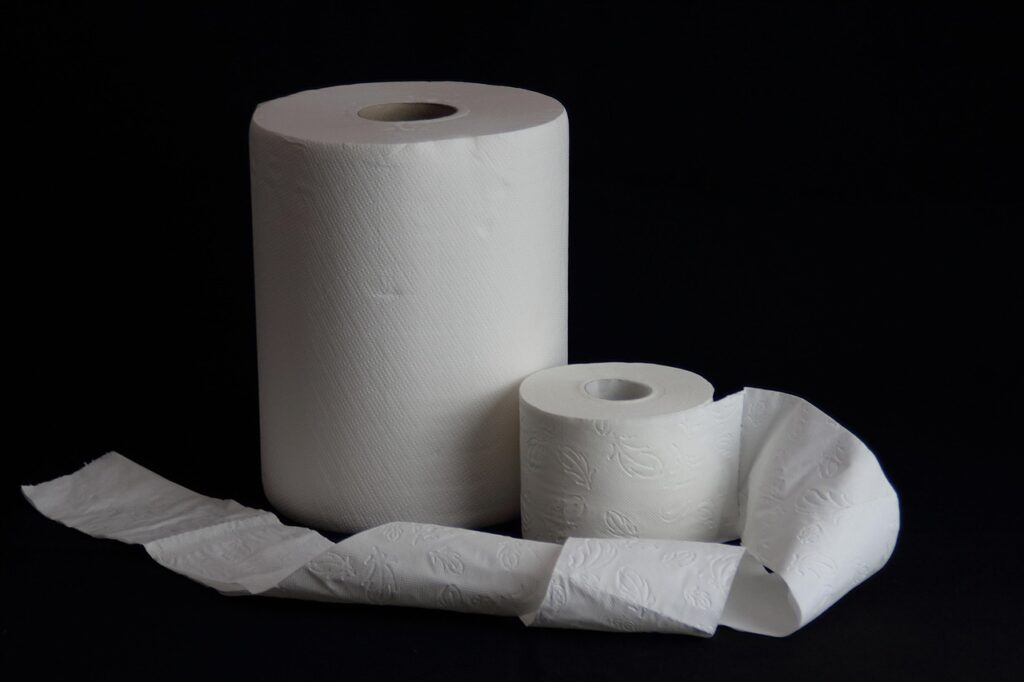
Paper goods provide one of the clearest examples because usage is relatively fixed. People do not decide to use less toilet paper because packages are smaller. They buy more rolls. LendingTree documented that Angel Soft toilet paper reduced sheet counts per roll from 429 to 320 over several years, a reduction of roughly twenty-five percent (https://www.lendingtree.com/credit-cards/study/shrinkflation-report). Similar reductions were observed across competing brands.
A household that previously consumed about 43,000 sheets per year would have needed roughly 100 rolls under the old sizing. At current sizes, that same household must purchase approximately 134 rolls to maintain the same usage. At an average per-roll price of about $1.10 to $1.20, that translates into an additional $35 to $45 per year spent solely to replace lost quantity. This increase is not driven by higher quality or increased consumption. It is the mechanical result of smaller packages.
Paper towels follow the same pattern. The GAO found that downsized paper towel products experienced unit price increases of roughly twelve percent (https://www.gao.gov/blog/what-shrinkflation-and-how-has-it-affected-grocery-store-items-recently). For a household that previously spent around $180 per year on paper towels, purchasing the same number of sheets now costs approximately $200 to $205. That is another $20 to $25 annually attributable to shrinkflation rather than visible price inflation.
Food
Food categories amplify these costs because of frequency. Groundwork Collaborative found that shrinkflation accounted for roughly seven to ten percent of effective price increases in packaged consumer staples such as snacks, cereal, and household food items between 2019 and 2023 (https://groundworkcollaborative.org/work/big-profits-in-small-packages).
The average U.S. household spends close to $900 per year on snacks and packaged convenience foods. Applying a conservative seven percent shrinkflation impact means households are spending roughly $60 to $65 more per year to obtain the same number of servings. At the upper end of the estimate, the figure approaches $90 annually.
Breakfast foods show a similar pattern. Major cereal brands reduced box sizes by two to four ounces across multiple product lines. GAO-adjusted price data shows that these reductions increased price per ounce by approximately five to eight percent across the category. For households spending around $300 per year on cereal and related breakfast items, that translates into an additional $15 to $25 annually.
Coffee stands out because of the magnitude of unit-price change. The GAO documented per-unit price increases exceeding thirty percent for downsized coffee products (https://www.gao.gov/blog/what-shrinkflation-and-how-has-it-affected-grocery-store-items-recently). While not every household consumes coffee, those that do typically spend $250 to $300 per year on packaged coffee. Replacing lost quantity now costs an additional $50 to $75 annually for many households, depending on brand and consumption level.
Cleaning and Personal Care
Cleaning products and personal care items add another layer. Laundry detergent, dish soap, shampoo, and body wash have all undergone package size reductions and concentration changes that do not always translate into equivalent usage. Consumer pricing data suggests that maintaining the same number of washes or uses now costs roughly five to ten percent more across these categories. For a household spending about $500 per year on these products, that equates to $25 to $50 annually.
When these categories are combined, the picture becomes clearer. Toilet paper and paper towels add roughly $55 to $70 per year. Snacks and packaged foods contribute $60 to $90. Breakfast foods add $15 to $25. Coffee adds $50 to $75. Cleaning and personal care products add $25 to $50. Conservatively, that places the direct cost of shrinkflation at approximately $205 to $310 per household per year for households purchasing primarily national brands.
Households that rely more heavily on private-label products experience lower costs, but not zero. Even at the lower end, shrinkflation costs most households between $120 and $180 per year. These figures align with the GAO’s conclusion that shrinkflation is a small share of total inflation but a meaningful share of price increases in specific everyday categories (https://www.cato.org/commentary/new-bls-data-confirms-shrinkflation-false-panic).

The National Cost Hidden in Plain Sight
When these household costs are scaled nationally, shrinkflation’s impact becomes difficult to dismiss. The United States has approximately 130 million households. Even a conservative average cost of $150 per household translates into nearly $20 billion per year spent simply to maintain previous consumption levels. At the higher end of the range, the figure exceeds $35 to $40 billion annually.
This is why shrinkflation matters even if it does not dominate inflation statistics. It is not evenly distributed across the economy. It is concentrated in necessities. It functions as a quiet transfer of purchasing power from households to producers, one that compounds over time and disproportionately affects lower- and middle-income families.
Why the CPI Does Not Capture the Full Burden
Economists at the Cato Institute are correct when they note that shrinkflation contributes only a small fraction to headline CPI inflation (https://www.cato.org/commentary/new-bls-data-confirms-shrinkflation-false-panic). But that framing misses how inflation is experienced. People do not consume the CPI basket. They consume groceries, paper goods, and household supplies.
Shrinkflation accelerates product replacement cycles. Smaller packages mean more frequent purchases. More frequent purchases make spending feel less controllable. This is why surveys consistently show that consumers feel worse about inflation than headline numbers suggest. LendingTree found that more than seventy percent of Americans report noticing shrinkflation, and many describe it as deceptive or unfair (https://www.lendingtree.com/credit-cards/study/shrinkflation-report).
Corporate Pricing Power and Permanence
One of the most important questions surrounding shrinkflation is whether it will reverse. History suggests it will not. Once consumers adjust to smaller packages, companies have little incentive to restore previous sizes. In fact, smaller packages often reduce shipping costs, increase margins, and allow for future “value restoration” marketing when sizes are increased marginally and advertised as a benefit.
Research from the Groundwork Collaborative and Federal Reserve analyses suggests that corporate margin expansion played a significant role in post-pandemic inflation. Shrinkflation operates as one channel for that expansion, particularly once input costs stabilized but package sizes did not.

The Real Bottom Line
Shrinkflation is not a curiosity. It is not a rounding error. It is a persistent, structural cost embedded in everyday life. When translated into dollars, it costs the average American household hundreds of dollars per year. Nationally, it drains tens of billions of dollars annually from consumer purchasing power.
Most importantly, it does so quietly. There is no receipt line item labeled “shrinkflation.” There is only the feeling that money does not stretch as far as it used to, even when prices seem familiar. That disconnect is not imagined. It is built into the system.
Want more news about World Events? Check out the World Events section of Interconnected Earth.