

To think about labor and wealth in regards to cheesecake may seem strange. A slice of cheesecake is a deceptively simple object. Cream cheese, sugar, flour, dairy, lemon juice, packaging, and distribution converge into a $3–$6 retail dessert, or a roughly $4 homemade pie. But embedded in that slice is a global economic architecture that determines who lives comfortably, who lives precariously, and who accumulates wealth at scale.
Here we examine worker pay, executive compensation, shareholders, and profit margins through a specific example: Philadelphia Cream Cheese, owned by Kraft Heinz. We use this case to explore the widening wealth divide, the structural difference between ancient reciprocal economies and modern financialized supply chains, and what it would realistically take to make the system more equitable without collapsing productivity or retirement systems.
Before focusing on cream cheese, it is necessary to zoom out. Cheesecake is not a single product. It is a bundle of industrial processes stitched together by markets, logistics, and corporate ownership structures.
Cheesecake as a Composite Economic System
A typical cheesecake requires more than just dairy and sugar. It involves multiple layers of production, packaging, transport, and retail infrastructure.
At the ingredient level, cheesecake commonly includes cream cheese, heavy whipping cream, sugar, flour, butter, eggs, and lemon juice. The crust often involves graham crackers or biscuits, which themselves contain wheat, sugar, fats, and additives.
At the packaging and tooling level, there are aluminum tins or foil pans, plastic tubs and film packaging for dairy products, cardboard boxes, and printed labels.
At the retail and distribution level, there are grocery stores, warehouses, refrigeration systems, trucking fleets, and digital inventory systems, all staffed by workers and managed by corporate hierarchies.
At the household level, there is transportation fuel to reach the store, electricity or gas to refrigerate and bake the cheesecake, water for cleaning, and waste systems for packaging disposal.
Each of these components has its own supply chain, its own labor force, its own management tiers, and its own shareholders. Cheesecake is therefore not a single commodity but a dense intersection of agriculture, manufacturing, logistics, retail, energy, and finance.
Cream cheese is only one node in this network.

The Hidden Labor in Each Cheesecake Component
Milk and dairy production involve farm labor, veterinarians, feed crop agriculture, processing plant technicians, and quality control staff. Heavy cream and butter are processed in separate facilities that require additional energy, equipment, and logistics.
Sugar comes from sugarcane or sugar beet farms, often in monoculture systems with seasonal labor, heavy mechanization, and global commodity trading markets.
Flour and graham crackers depend on wheat farming, milling, baking factories, packaging lines, and brand licensing agreements. Lemon juice requires citrus agriculture, harvesting labor, processing plants, and international shipping networks.
Aluminum tins require bauxite mining, refining, smelting, rolling mills, and manufacturing facilities. Plastic tubs and films originate from petrochemical refineries, polymerization plants, and molding factories.
The grocery store itself employs cashiers, stockers, managers, warehouse workers, and corporate administrators while generating profit for shareholders and, increasingly, private equity investors.
Even driving to the store implicates oil extraction, refining, fuel distribution, automotive manufacturing, and public infrastructure.
A homemade cheesecake therefore represents cooperation among thousands of workers across industries who will never meet one another socially, even though they collaborate economically.
Why Cream Cheese Is Only a Fraction of Cheesecake Economics
Cream cheese is often one of the most expensive single ingredients in a cheesecake, but it is still only a fraction of the total economic system embedded in the dessert.
For a homemade cheesecake costing roughly $4 in ingredients, a rough breakdown might look like:
- Cream cheese: $1.50–$2.00
- Butter and heavy cream: $0.50–$1.00
- Sugar, flour, eggs, lemon juice: $0.50–$1.00
- Crust components: $0.50–$1.00
The remaining costs—transportation, packaging, retail labor, energy, corporate overhead, and capital returns—are embedded upstream and downstream. They do not appear on the grocery receipt, but they dominate the macroeconomic value flow.
This means that analyzing cream cheese economics reveals only one layer of a multi-layer system. The same dynamics apply across every cheesecake input.
Household Income, Reality, and the Fragility of “Middle Class”
The median U.S. household income was about $74,580 in 2022 and roughly $76,000–$77,000 by 2023–2024, depending on inflation adjustments.
Source: U.S. Census Bureau, “Income in the United States” reports:
https://www.census.gov/library/publications/2023/demo/p60-279.html
If a married household earns $100,000 gross, that implies roughly $50,000 per earner on average. After federal, state, payroll taxes, healthcare premiums, housing, childcare, and debt servicing, disposable income compresses rapidly.
The Bureau of Labor Statistics reports average annual household expenditures exceeding $72,000 in recent years, driven primarily by housing, transportation, healthcare, and food.
https://www.bls.gov/cex/tables.htm
This means that even households above the median often feel financially constrained—not because they are poor, but because the cost structure of modern life is financialized. Middle incomes fund capital accumulation elsewhere in the system.

Ancient Village Economics vs Modern Supply Chains
In a pre-industrial village economy, production and consumption were visible and socially constrained. A dairy farmer, baker, seamstress, and carpenter depended on one another in a network of reciprocity. Surplus existed, inequality existed, but extraction was bounded by social norms and logistical constraints.
In contrast, modern supply chains are geographically fragmented, organizationally layered, financially abstracted, legally shielded, and optimized for shareholder value.
This abstraction allows wealth extraction to scale far beyond what would be tolerated in small communities. Social feedback loops are replaced by corporate governance and capital markets.
In other words, the modern economy did not eliminate village-style cooperation; it monetized and financialized it. Everyone is still cooperating to make cheesecake—but the distribution of gains is no longer negotiated socially. It is dictated by ownership structures.
Philadelphia Cream Cheese and Kraft Heinz: Corporate Structure
Philadelphia Cream Cheese is owned by The Kraft Heinz Company, one of the largest food conglomerates globally.
Kraft Heinz generated approximately $26.6 billion in net sales in 2023, with gross margins around 35% and operating margins around 20% depending on product mix.
Source: Kraft Heinz 2023 Form 10-K:
https://www.kraftheinzcompany.com/investors.html
Cream cheese sits within the dairy and spreads segment, which benefits from brand premiums, high-volume production, and relatively stable demand.
Executive Compensation vs Worker Pay at Kraft Heinz
Kraft Heinz CEO Carlos Abrams-Rivera received total compensation of approximately $10.7 million in 2023, including salary, bonuses, stock awards, and incentives.
Source: Kraft Heinz proxy statement (DEF 14A), SEC filings:
https://www.sec.gov/ixviewer/documents/2024
Median employee pay at Kraft Heinz was reported around $63,000–$70,000 depending on geography and methodology.
This implies a CEO-to-median-worker pay ratio roughly in the range of 150:1 to 170:1, consistent with broader U.S. corporate averages.
For comparison, the Economic Policy Institute estimates the average CEO-to-worker pay ratio in the U.S. exceeded 300:1 in recent years.
https://www.epi.org/publication/ceo-pay-in-2022/
The key structural feature is that executive compensation is largely tied to stock performance, not wages, product quality, or worker well-being.

How Much Does Cream Cheese Actually Cost to Make?
Exact cost breakdowns are proprietary, but industry analysts provide ranges.
Typical packaged dairy product cost structure (simplified):
- Raw milk and ingredients: 25–35%
- Processing, packaging, logistics: 15–25%
- Labor: 5–10%
- Marketing and SG&A: 15–25%
- Profit and shareholder returns: 10–20%
Source: IBISWorld dairy processing industry reports and USDA agricultural cost analyses.
https://www.ibisworld.com
https://www.ers.usda.gov
Labor is a surprisingly small share of total cost, especially in automated food processing.
How Many Workers Make Cream Cheese?
A modern cream cheese plant is highly automated. A single large facility can process tens of thousands of pounds of dairy per hour with a few dozen line workers, technicians, and supervisors.
Food manufacturing productivity has increased dramatically over the last century. Output per labor hour in U.S. food manufacturing has more than doubled since the 1980s.
Source: Bureau of Labor Statistics, Labor Productivity and Costs:
https://www.bls.gov/lpc/
This means fewer workers produce vastly more product, but productivity gains are not shared proportionally with labor. They flow primarily to capital owners and executives.
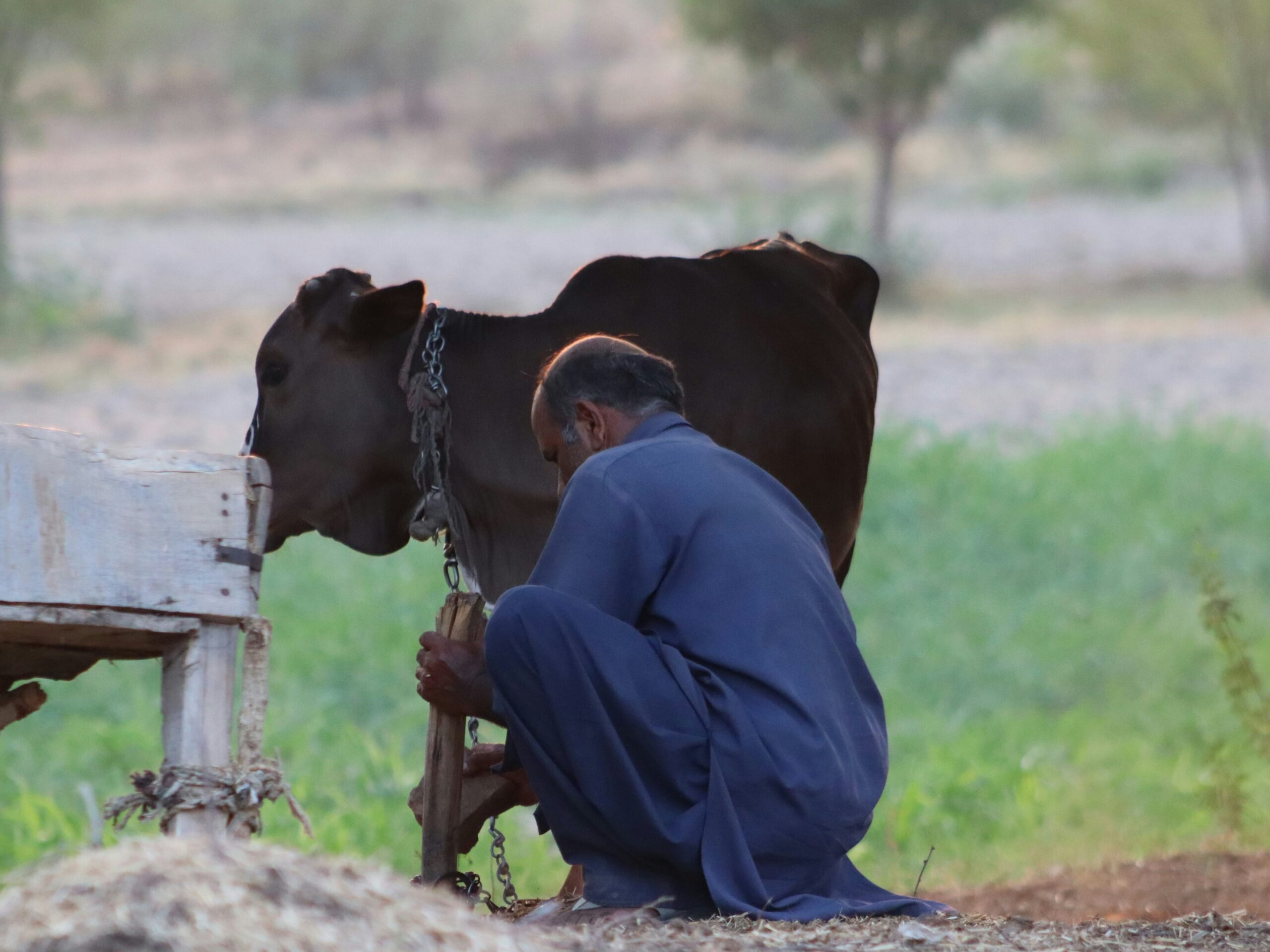
Who Wins the Most in the Cream Cheese Market?
Three groups capture most of the economic surplus:
Executives and top management
Shareholders and institutional investors
Brand owners and intellectual property holders
Workers, farmers, logistics staff, retail clerks, and packaging manufacturers capture a small fraction of final value relative to capital owners.
For example, dairy farmers often receive only 20–30% of the retail price of dairy products, with margins compressed by processors and retailers.
Source: USDA Agricultural Marketing Service and farm income reports:
https://www.ams.usda.gov
Retail grocery workers earn median wages around $30,000–$40,000 annually, often with limited benefits.
Source: Bureau of Labor Statistics Occupational Employment Statistics:
https://www.bls.gov/oes/
Meanwhile, asset managers and shareholders receive dividends and capital gains untethered from labor hours.
The Wealth Divide: The 1%, Managers, and Workers
The top 1% of households in the U.S. hold roughly 32–35% of national wealth, while the bottom 50% hold around 2–3%.
Source: Federal Reserve Distributional Financial Accounts:
https://www.federalreserve.gov/releases/z1/dataviz/dfa/
Income and wealth are distinct: high managers and professionals may earn $150,000–$500,000 annually, but the ultra-wealthy derive income primarily from ownership rather than labor.
This creates a tiered hierarchy:
Workers (labor-dependent)
Managers and professionals (high labor income, limited capital income)
Capital owners (capital-dependent, uncapped income)
The cheesecake supply chain reproduces this hierarchy across agriculture, manufacturing, retail, and corporate governance.
What Fraction of Cheesecake Value Goes to Workers vs CEOs?
If a $3 package of cream cheese retails for $3, the breakdown might look like:
- $0.75 raw milk
- $0.45 packaging, energy, logistics
- $0.30 labor across processing and retail
- $0.75 marketing, corporate overhead, and SG&A
- $0.75 profit, dividends, buybacks, and retained earnings
The CEO’s share per package is minuscule individually, but enormous in aggregate due to scale. Millions of packages sold annually generate a compensation structure that concentrates surplus at the top.
The worker’s share is capped by wage bargaining power. The CEO’s share is leveraged by capital markets.
The same structural distribution applies to butter, flour, sugar, aluminum tins, plastic packaging, and retail margins. Cheesecake is not one extraction mechanism—it is many layered on top of each other.

Why the Divide Keeps Widening
Several structural mechanisms drive divergence:
Financialization: Firms prioritize shareholder returns over wages.
Automation: Productivity gains accrue to capital, not labor.
Globalization: Labor bargaining power is weakened by global labor markets.
Monopoly and branding: Brand power allows price premiums disconnected from labor costs.
Tax structures: Capital gains and dividends are taxed more favorably than wages.
Thomas Piketty and Emmanuel Saez’s research demonstrates that capital returns often exceed economic growth, leading to wealth concentration absent redistribution.
https://eml.berkeley.edu/~saez/
Oxfam reports that the richest 1% captured nearly two-thirds of new wealth created since 2020.
https://www.oxfam.org/en/research/survival-richest
Why It Wouldn’t Look Like This in a Small Village
In a village economy, production scale is small, surplus is socially negotiated, labor is visible, ownership is diffuse, and social norms constrain extraction.
A baker could not pay themselves 300× the farmer. The community would intervene socially.
Modern corporations remove this social constraint through legal abstraction. The corporation is a legal person without moral or social reciprocity obligations beyond regulation.
Is the System Necessary for Cheesecake to Exist?
No, but scale and convenience depend on it.
Industrial systems enable cheap dairy, year-round availability, global distribution, food safety standards, and massive product variety.
However, the inequality embedded in the system is not technologically necessary. It is a governance and ownership choice.
Does Individual Consumption Matter?
Individual consumption matters marginally, not systemically.
A single consumer’s purchasing decisions influence demand signals only when aggregated. Ethical consumption is necessary but insufficient.
However, individuals with higher income and social influence have disproportionate impact via investment decisions, career decisions, advocacy, cultural signaling, and policy engagement.
Marginal changes by high-income individuals scale socially, even if they do not immediately alter corporate behavior.
How Could the System Be Made More Even Without Collapse?
Executive compensation ratios tied to worker pay
Profit-sharing mandates for employees
Worker equity funds
Tax reform equalizing labor and capital income
Antitrust enforcement reducing monopoly rents
Public cost stabilization in housing, healthcare, and childcare
Cultural shifts that stigmatize extreme pay gaps
These reforms would not eliminate cheesecake, corporations, or stock markets. They would redistribute surplus upward less aggressively.
Conclusion: The Whole, Not Just a “Slice” of The Picture
A slice of cheesecake is not just dessert. It is a compressed representation of global labor, corporate governance, financial markets, environmental externalities, and social inequality.
The wealth divide embedded in that slice is not inevitable. It is the product of policy, ownership, and incentives.
The system could distribute surplus more evenly while preserving productivity and convenience. The barrier is not technical feasibility but power.

Related Interconnected Earth Categories:
World Events – https://interconnectedearth.com/category/world-events/
Mental Health – https://interconnectedearth.com/category/mental-health/
Climate Change – https://interconnectedearth.com/category/climate-change/
Technology – https://interconnectedearth.com/category/technology/
Philosophy – https://interconnectedearth.com/category/philosophy/