

For years, the video game industry was treated as one of the few “unstoppable” sectors of the global economy. Even when other industries slowed, gaming continued to grow. More players, more revenue, more studios, more investment. By the early 2020s, video games were bigger than film and music combined.
So why does the industry now feel so unstable?
Why are developers being laid off in record numbers, major projects canceled mid-development, and players increasingly frustrated with the games being released — even as total industry revenue continues to rise?
The answer is uncomfortable but simple: the industry is experiencing a long-overdue correction after a decade of unsustainable assumptions about growth, technology, and consumer behavior.
This isn’t a temporary slump or a single bad year. It’s a structural shift in how games are made, sold, and played — and it’s exposing weaknesses that were hidden during years of cheap money, pandemic demand, and unchecked expansion.
A Record-Breaking Industry That Feels Broken
On paper, the numbers for the video game industry look strong. Global video game revenue is projected to approach $197 billion in 2025, continuing a long upward trend
https://www.statista.com/topics/868/video-games/
But revenue alone doesn’t tell the full story. Much of that growth is concentrated in a small number of massive titles, platforms, and regions. Meanwhile, thousands of developers have lost their jobs, studios have closed, and creative risk has steadily declined.
For workers inside the industry — and for players who feel stuck choosing between $70 sequels or nothing — it doesn’t feel like growth. It feels like contraction.

The Post-Pandemic Reality Check
The pandemic years reshaped gaming in ways that are still unfolding.
Between 2020 and 2021, gaming engagement surged as people stayed home. The video game industry took note. Studios expanded rapidly, assuming those habits would continue. Hiring accelerated, projects grew in scope, and companies invested heavily in long-term development pipelines.
But once lockdowns ended, time — not interest — became the limiting factor.
People returned to offices, travel, social events, and competing forms of entertainment. Gaming didn’t disappear, but it normalized. Engagement flattened instead of continuing its exponential rise.
Companies that had scaled for permanent pandemic-level growth suddenly found themselves overextended.
The result has been waves of layoffs across nearly every major publisher and platform, documented throughout 2023, 2024, and continuing into 2025
https://www.polygon.com/24177290/video-game-industry-layoffs-studio-closures-record/
What makes this moment particularly painful is that many of these layoffs followed record profits — reinforcing the sense that the industry optimized for shareholder expectations, not long-term sustainability.
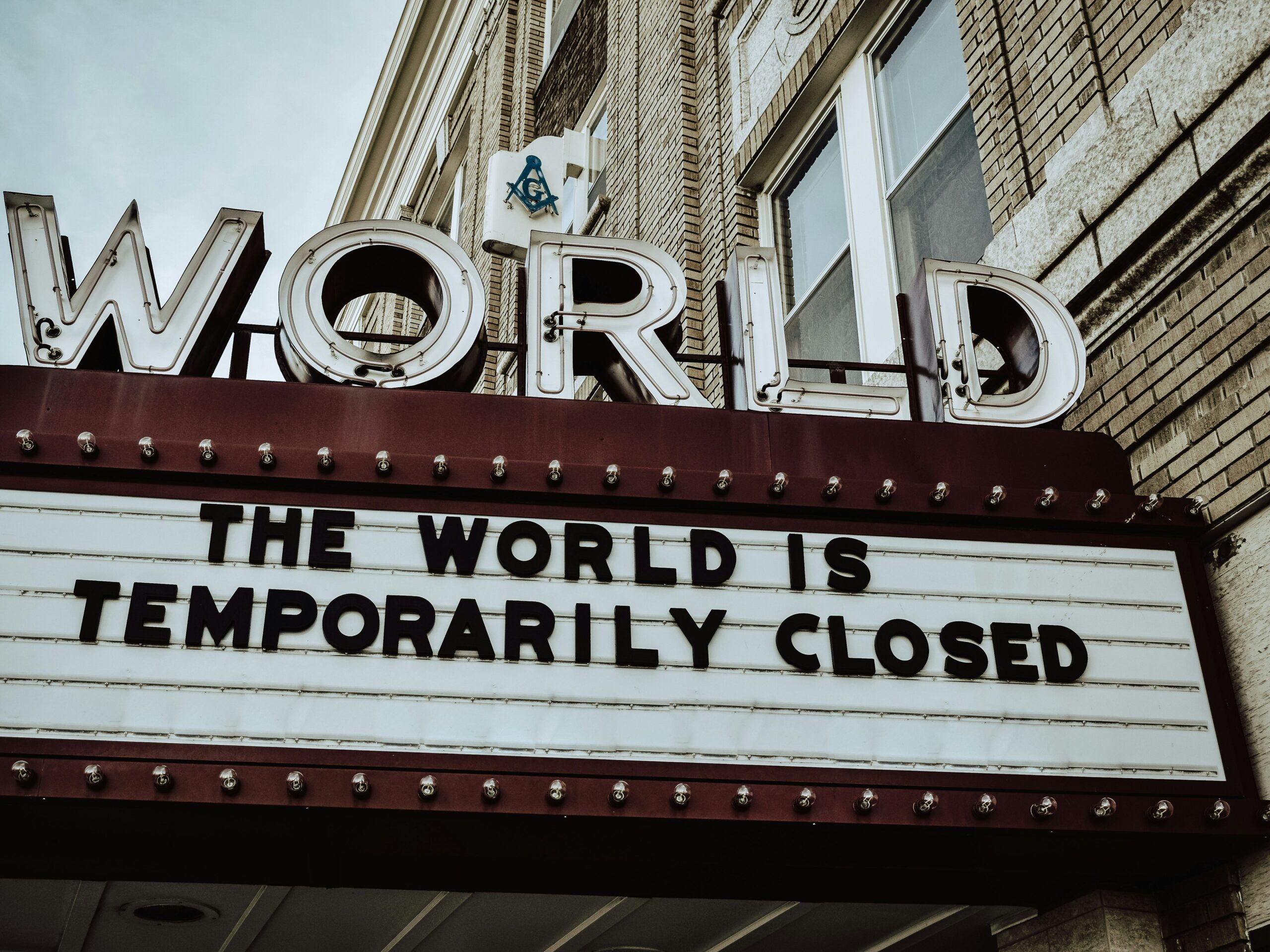
The End of Cheap Money
For much of the last decade, the video game industry benefited from historically low interest rates. Capital was easy to borrow, and growth was rewarded more than profitability.
That environment encouraged:
- Massive acquisitions
- Bloated development teams – an overcorrection from the early video game years and bootstrap teams
- Experimental projects with unclear paths to return
When interest rates rose, that era ended abruptly.
Publishers and investors shifted their priorities almost overnight. Instead of asking “What could this become?”, the video game industry question became “How fast will this pay off?”
Projects without clear short-term revenue potential were delayed, downsized, or canceled entirely. Live service games that required years to mature were suddenly seen as liabilities rather than opportunities.
This shift explains why so many games disappear quietly after years of development — and why publishers now favor sequels, remakes, and familiar IP over new ideas.

The AAA Budget Problem
One of the most visible symptoms of the video game industry’s instability is the escalating cost of “AAA” games.
Large-scale titles now routinely cost hundreds of millions of dollars to develop and market. That level of video game industry investment fundamentally changes decision-making.
When a single game costs as much as a small city’s annual budget, failure is no longer an option. Creativity becomes secondary to risk management.
This is why:
- Games are longer, but not necessarily better
- Mechanics are safer and more familiar
- Studios rely on nostalgia, remakes, and cinematic spectacle
Ironically, these massive budgets also make games more fragile. A title can sell millions of copies and still be considered a disappointment if it doesn’t exceed unrealistic projections
https://www.matthewball.co/all/gaming2024
For players, this results in fewer surprises and a growing sense that major releases blur together.
Players Are Spending Differently
Another key factor is the financial reality facing consumers.
Games are more expensive than ever. $70 has become the standard price for major releases, while consoles, accessories, and subscriptions continue to climb in cost
https://www.gamesradar.com/games/hardware-prices-will-not-fall-industry-analysts-are-extremely-concerned-about-console-prices/
At the same time, inflation has reduced discretionary spending for many households.
The result is a noticeable shift in behavior:
- Players wait for sales
- Subscriptions replace purchases
- Older games stay in rotation longer
- Indie titles gain appeal due to lower prices
Rather than buying one expensive blockbuster, many players choose several smaller games that feel more personal and experimental.
VR and the Failure of “The Next Big Thing”
Virtual reality was once framed as the inevitable future of the video game industry — the next technological leap that would fundamentally change how people interact with digital worlds.
In practice, that future never fully arrived.
While VR technology has improved significantly over the past decade, adoption remains limited. Headsets are still expensive, often costing as much as an entire console. Space requirements can be restrictive, setup remains cumbersome for casual users, and prolonged play can be uncomfortable for some players. Most importantly, there has been no single, widely accessible game that clearly justifies the investment for a mainstream audience.
Even high-profile efforts like Sony’s PSVR2 have struggled to gain widespread traction, despite strong technical capabilities and major brand support
https://www.matthewball.co/all/gaming2024
VR’s challenges are not rooted in a lack of innovation. The technology works, and in certain genres it can be impressive. The problem is that VR has remained optional rather than essential. For most players, it offers an alternative way to experience games, not a clearly better one.
In an industry where time, money, and attention are increasingly limited, optional technology struggles to survive. VR didn’t fail because it was bad technology. It stalled because it never became necessary.

The Metaverse That Nobody Asked For
Similarly, the “metaverse” vision that dominated tech discourse in the early 2020s never aligned with how players actually engage with games.
Corporate virtual worlds emphasized meetings, avatars, and digital real estate. Players wanted games — not platforms pretending to be social networks.
Projects like Decentraland and Meta’s Horizon Worlds failed to reach critical mass, while existing game-driven spaces like Roblox and Fortnite continued to grow organically.
The lesson was clear: play comes first.

AI and the Tension Between Efficiency and Meaning
Artificial intelligence is now embedded across the video game industry.
Publishers use AI tools for concept art, asset generation, localization, and live-service content updates
https://www.ft.com/content/9b1b1bc3-6573-451d-892b-e6abb819a112
For executives, AI represents efficiency. For many developers and players, it represents erosion — of jobs, of authorship, and of intent.
The backlash against AI-generated art and content reflects a deeper anxiety: games risk becoming optimized products rather than meaningful creative works.
Interestingly, many indie developers are responding by emphasizing human craftsmanship as a selling point — highlighting the value of intention over scale.
Console Strategies Are Diverging
The traditional “console war” has given way to fundamentally different philosophies with the video game industry.
Nintendo continues to succeed by prioritizing accessibility, strong first-party titles, and hardware that complements lifestyle rather than competing on raw power
https://www.nintendolife.com/news/2025/06/switch-2-sets-all-time-launch-record-for-video-game-hardware-in-the-us
PlayStation remains dominant in the premium space but faces pressure as blockbuster development becomes riskier and more expensive
https://www.statista.com/statistics/1101884/unit-sales-playstation-5-region/
Xbox has shifted toward a software-first model, prioritizing subscriptions and cross-platform access over hardware exclusivity.
None of these approaches are wrong — but together they reflect an industry unsure of what the future “default” experience should be.
A Global Industry Moving at Different Speeds
While Western markets focus on consoles and PC, growth in many regions is driven almost entirely by mobile gaming.
Countries like India, Mexico, and Turkey are seeing rapid increases in players through free-to-play models rather than traditional console ecosystems
https://www.statista.com/outlook/dmo/digital-media/video-games/worldwide
This fragmentation makes it harder for publishers to rely on a single global strategy — and further complicates development decisions.

Indie Developers vs. the Old Guard
Perhaps the clearest contrast in 2025 is between massive publishers and small teams.
Companies like Ubisoft and Square Enix are constrained by scale. Their games must sell millions of copies to justify their budgets. Delays and underperformance carry enormous consequences.
Meanwhile, indie and AA developers operate with flexibility.
Games like Balatro, Palworld, and Helldivers 2 succeeded not because they were massive — but because they were focused, affordable, and distinct.
On platforms like Steam, indie games now make up a significant portion of top-performing titles
https://store.steampowered.com/charts/
In an era of cautious spending, players increasingly reward creativity over spectacle.
So Is the Video Game Industry Actually “Down”?
Not exactly.
What we are seeing is the end of an illusion — that growth could continue forever without consequence.
The industry isn’t outright dying. It’s changing.
That process is painful. It exposes excess, inefficiency, and imbalance. It forces uncomfortable questions about labor, creativity, and value.
Where the industry ultimately lands is uncertain. Its direction will be shaped not only by technology, but by the choices players make — what they support, what they reject, and what they decide is worth their time and money.
Thanks for reading about how the video game industry is changing. This is one of the ways arts and entertainment, world news, and technology intersect. For more on how these topics are interconnected, visit the related sections at interconnectedearth.com.