

Few questions are as old, persistent, and contested as the question of freedom. Humans have asked it across cultures, religions, political systems, and philosophical traditions. What does it mean to be free? Is freedom something granted by society, something inherent to human nature, or something that exists only in theory? Depending on who you ask, freedom may be framed as a legal status, a psychological state, a metaphysical property, or a moral ideal.
At its core, freedom is the capacity to make choices and act upon them without unjust coercion or limitation. Yet this definition is only a starting point. Freedom is layered, conditional, and deeply interconnected with power, responsibility, social structure, and identity. To explore what freedom really means, we must examine its philosophical roots, its constraints, and its consequences.
The Literal Definition and Conceptual Foundations of Freedom
In everyday language, freedom is often defined as the state of being free, the absence of constraint, or the power to act or speak without restraint. Philosophically, the concept becomes more complex. Freedom can be understood as autonomy, liberty, independence, or self-determination. These terms overlap but are not identical.
Classical liberal philosophers such as John Locke argued that freedom is a natural right that exists prior to the state, rooted in individual sovereignty and property ownership. Locke’s theory of natural rights influenced modern constitutional democracies and the framing of civil liberties.
Source: Stanford Encyclopedia of Philosophy, “John Locke”
https://plato.stanford.edu/entries/locke/
In contrast, philosophers such as Thomas Hobbes argued that freedom in a state of nature is dangerous and chaotic, and that humans must surrender some freedoms to a sovereign authority to achieve security and order.
Source: Stanford Encyclopedia of Philosophy, “Thomas Hobbes”
https://plato.stanford.edu/entries/hobbes/
These tensions between freedom and order remain central to political and ethical theory.
Negative and Positive Freedom: Isaiah Berlin’s Framework
Philosopher Isaiah Berlin famously distinguished between two primary forms of liberty: negative freedom and positive freedom. This framework remains one of the most influential ways to analyze the concept.
Negative freedom refers to freedom from interference. It is the absence of external obstacles, barriers, or constraints imposed by others. When someone is not imprisoned, censored, or forcibly controlled, they possess negative freedom. This form of liberty aligns with classical liberalism and civil rights traditions.
Positive freedom refers to freedom to act, to realize one’s goals, and to be the author of one’s own life. It is not merely the absence of constraint but the presence of capability. Education, healthcare, economic opportunity, and social support systems can expand positive freedom by enabling people to exercise meaningful choice.
Berlin warned that positive freedom could be misused by authoritarian regimes that claim to know what is best for citizens and impose coercive policies in the name of liberation.
Source: Isaiah Berlin, “Two Concepts of Liberty,” Oxford University Press
https://plato.stanford.edu/entries/liberty-positive-negative/
This tension illustrates a recurring paradox: increasing one form of freedom can threaten another.
Freedom and Free Will: Nature, Nurture, and Determinism
Freedom is inseparable from the question of free will. Are humans genuinely capable of making free choices, or are our decisions determined by biology, environment, and prior causes?
Philosophers and neuroscientists have debated this for centuries. Determinists argue that every event, including human decisions, is the result of prior causes. If determinism is true, then free will may be an illusion. Libertarian philosophers, by contrast, argue that humans possess genuine agency that cannot be reduced to physical causation.
Compatibilists attempt to reconcile determinism with freedom, arguing that free will exists when individuals act according to their internal motivations without external coercion, even if those motivations are causally determined.
Source: Stanford Encyclopedia of Philosophy, “Free Will”
https://plato.stanford.edu/entries/freewill/
Nature and nurture further complicate freedom. Genetics influence personality, intelligence, and predispositions. Social environments shape beliefs, habits, and opportunities. A child born into poverty or authoritarian control does not possess the same range of options as one born into wealth and stability. Freedom, then, is not evenly distributed.
This raises ethical questions about responsibility, justice, and moral blame. If people are shaped by forces beyond their control, how free are they really?
Freedom Versus License: Why Absolute Freedom Is Impossible
Freedom is often misunderstood as the ability to do anything one wants. Philosophically, this is closer to license than freedom. If everyone had unlimited license, social life would collapse. Your freedom to drive recklessly would infringe on others’ freedom to live. Your freedom to steal would violate others’ freedom to own property.
John Stuart Mill argued that individual liberty should be limited only to prevent harm to others, a principle known as the harm principle.
Source: Stanford Encyclopedia of Philosophy, “John Stuart Mill”
https://plato.stanford.edu/entries/mill/
This idea is reflected in the common saying that one person’s freedom ends where another’s begins. Freedom, in practice, is always bounded by social contracts and moral obligations.
The Psychological Dimension: Autonomy and the Paradox of Choice
Freedom is not only external. It is also psychological. A person may live in a legally free society yet feel trapped by addiction, fear, social pressure, or internalized norms.
Psychologists define autonomy as the feeling that one is the author of one’s actions. Self-determination theory suggests that autonomy, competence, and relatedness are core human needs.
Source: American Psychological Association, “Self-Determination Theory”
https://www.apa.org/monitor/2017/01/ce-corner
Yet too much choice can reduce perceived freedom. The paradox of choice suggests that an overload of options can lead to anxiety, indecision, and dissatisfaction.
Source: Barry Schwartz, “The Paradox of Choice,” HarperCollins
https://www.ted.com/talks/barry_schwartz_the_paradox_of_choice
Freedom, psychologically, may be less about infinite options and more about meaningful agency.

Property Rights and Economic Freedom
Property rights are a central component of many definitions of freedom. Locke argued that ownership of property is a natural extension of self-ownership. Economic freedom allows individuals to trade, create, and accumulate resources without undue interference.
However, property rights also raise questions about inequality and power. If a small group controls most resources, others may lack meaningful freedom despite legal rights. Economic inequality can constrain positive freedom by limiting access to education, healthcare, and political influence.
Political philosophers such as Karl Marx argued that private ownership of the means of production creates systemic unfreedom for workers, who must sell their labor to survive.
Source: Stanford Encyclopedia of Philosophy, “Karl Marx”
https://plato.stanford.edu/entries/marx/
Freedom, in this sense, is deeply connected to material conditions.
Prisons, Slavery, and Restricted Freedoms
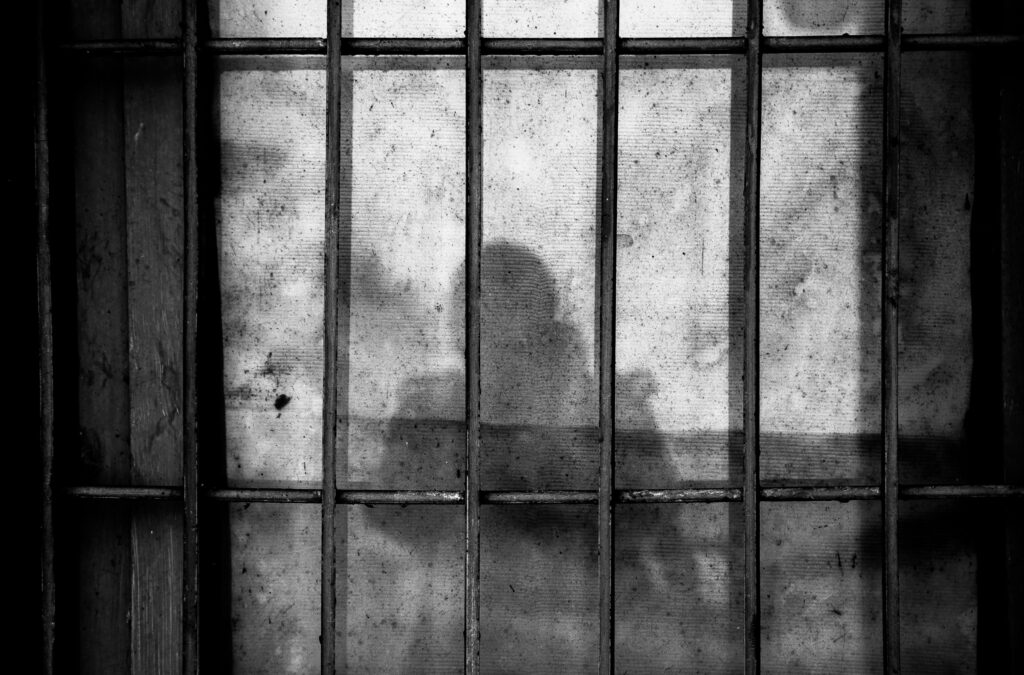
The most visible denial of freedom is physical confinement and coercion. Slavery represents one of the most extreme historical forms of unfreedom, where individuals are treated as property and stripped of autonomy. Modern prisons restrict movement, association, and autonomy as punishment or social control.
Philosophers debate the moral justification of incarceration. Some argue it is necessary for public safety and justice. Others argue that mass incarceration reflects structural inequalities and undermines social freedom.
Michel Foucault examined how prisons, schools, and institutions shape behavior through surveillance and discipline, creating subtle forms of control beyond physical chains.
Source: Stanford Encyclopedia of Philosophy, “Michel Foucault”
https://plato.stanford.edu/entries/foucault/
Freedom, then, is not only lost through overt force but also through systems that shape and constrain behavior.
Freedom of Religion, Press, and Expression
Modern democratic societies often enshrine freedoms such as religion, speech, and the press. These liberties protect individuals from state censorship and coercion.
Freedom of religion allows individuals to practice beliefs without persecution. Freedom of the press allows information to circulate, enabling accountability and democratic participation. Freedom of expression allows individuals to articulate identity, dissent, and creativity.
These freedoms are not absolute. Hate speech laws, national security restrictions, and misinformation debates illustrate ongoing tensions between liberty and harm prevention.
Legal theorists argue that free expression is foundational to democracy because it enables public discourse and collective decision-making.
Source: Stanford Encyclopedia of Philosophy, “Freedom of Speech”
https://plato.stanford.edu/entries/freedom-speech/
Social and Literal Consequences of Freedom
Every exercise of freedom has consequences. Actions shape social relationships, institutions, and the environment. Freedom without responsibility can lead to harm, while excessive control can suppress creativity and autonomy.
In ethical theory, this relationship is often framed in terms of rights and duties. Rights grant freedoms, while duties constrain actions to protect others. Freedom is therefore relational, not isolated.
Modern interconnected systems amplify consequences. A social media post can influence millions. A corporate decision can affect global supply chains. A political policy can reshape ecosystems. Freedom operates within networks of cause and effect.
Control, Power, and the Structure of Freedom
Freedom cannot be separated from power. Who has the power to act, to influence, to define norms? Political freedom is shaped by institutions, laws, and governance structures. Economic freedom is shaped by markets, corporations, and labor systems. Cultural freedom is shaped by norms, media, and identity frameworks.
Philosopher Hannah Arendt distinguished between power as collective action and violence as coercion, arguing that true political freedom arises from participation and public engagement.
Source: Stanford Encyclopedia of Philosophy, “Hannah Arendt”
https://plato.stanford.edu/entries/arendt/
Control can protect freedom, such as laws preventing violence. Control can also erode freedom, such as authoritarian surveillance. The challenge is balancing governance with autonomy.

The Interconnected Nature of Freedom
Freedom is not a singular state but a spectrum shaped by biology, psychology, society, economics, and politics. It exists in tension with order, responsibility, and power. It is both an individual experience and a collective condition.
Negative freedom without positive freedom can be hollow. Positive freedom without negative freedom can become paternalistic. Internal freedom without external rights can feel illusory. External rights without internal autonomy can feel empty.
The question “What is freedom?” remains open because freedom is not static. It evolves with technology, culture, and global systems. In an interconnected world, freedom is increasingly collective. One person’s freedom is intertwined with others’ constraints, opportunities, and vulnerabilities.
Freedom, then, is not merely the absence of chains. It is the ongoing negotiation between autonomy and obligation, possibility and limitation, individuality and interdependence.
Interconnected Earth Categories:
World Events: https://interconnectedearth.com/category/world-events
Mental Health: https://interconnectedearth.com/category/mental-health
Philosophy: https://interconnectedearth.com/category/philosophy