
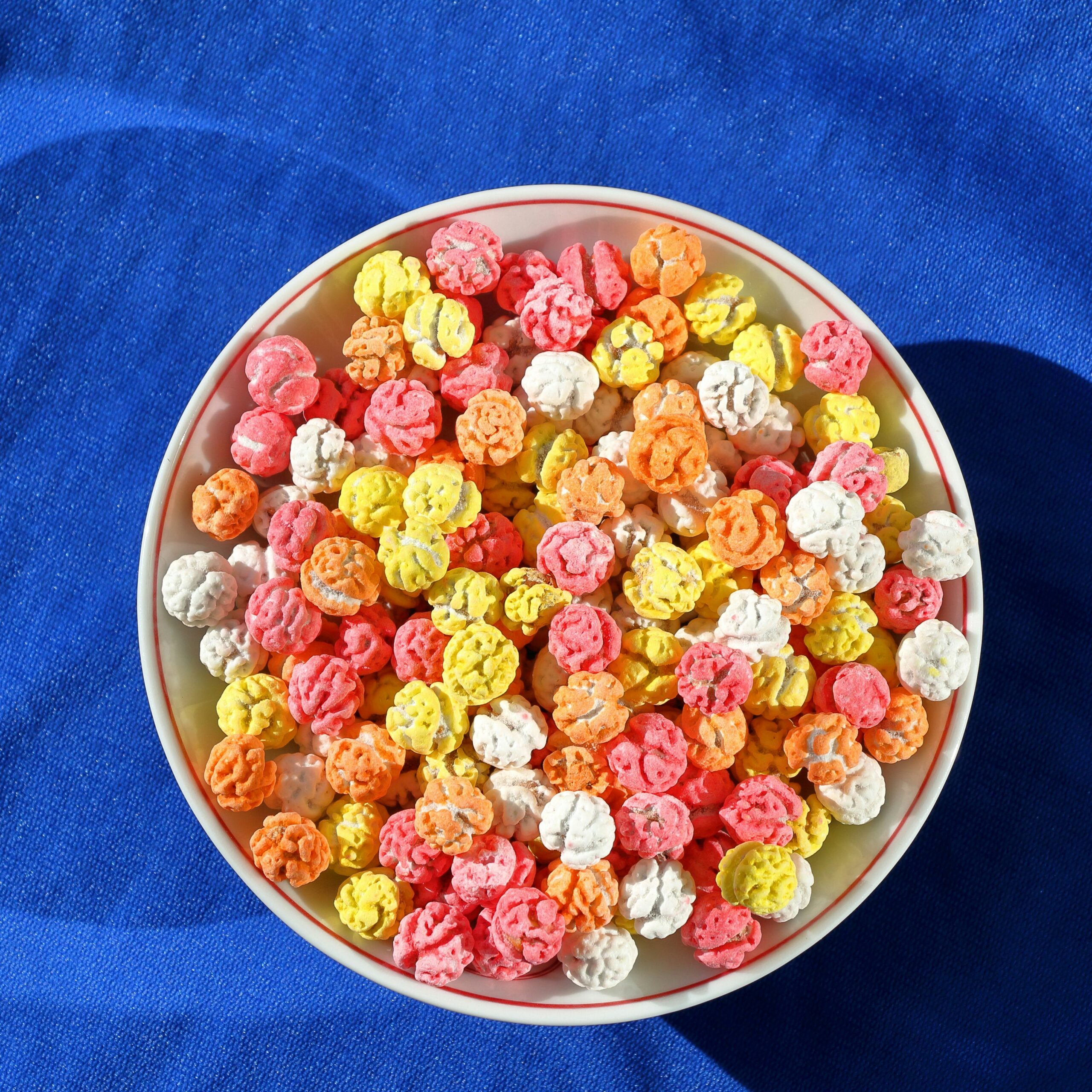
Most of us don’t eat food the way our grandparents did. We eat products. They are engineered to travel long distances, sit on shelves for months, survive heat and cold, and still trigger pleasure when opened. That engineering doesn’t happen by accident, and it doesn’t stop at calories or nutrients. It reaches into color, texture, smell, and even emotion.
Here we examine what actually goes into everyday food — not to provoke fear, but to reduce confusion. Because confusion, more than any single additive, may be one of the most harmful ingredients in the modern food system.
Why Ultra-Processed Food Exists at All
Ultra-processed food did not emerge because people forgot how to cook. It emerged because industrial food systems reward shelf stability, scale, predictability, and margin.
Long shelf life reduces waste and financial risk. Powdered ingredients, stabilizers, preservatives, and emulsifiers allow companies to ship globally and store cheaply. According to research summarized by the National Institutes of Health, ultra-processed foods are defined not just by what they contain, but by how extensively they are transformed before reaching the consumer
https://www.ncbi.nlm.nih.gov/pmc/articles/PMC7844609/
There is also the concept of the “bliss point” — the engineered balance of salt, sugar, fat, and texture that maximizes palatability. This idea, widely discussed in food science and behavioral research, explains why some foods feel oddly irresistible even when they are not particularly satisfying. The University of Michigan has linked ultra-processed foods to addictive-like eating behaviors
https://www.sciencedirect.com/science/article/pii/S0306460321002521
The result is an environment where convenience and profitability often outrun clarity.

Reading Labels and the Emotional Cost of Eating
Ingredient lists were meant to empower consumers. In practice, they often do the opposite.
As grocery prices rise and ingredient panels lengthen, people experience decision fatigue. Studies on consumer behavior show that too many choices and too much information can lead to paralysis, guilt, or disengagement rather than better decisions
https://www.apa.org/monitor/2014/02/decisions
This emotional burden matters. Food is not just fuel; it is identity, culture, comfort, and survival. When eating becomes a source of anxiety, the system has already failed, regardless of whether any single ingredient is technically “safe.”
Dyes and the Illusion of Color
Many foods are colored not because color improves nutrition or safety, but because color influences expectation.
Synthetic dyes such as Red 40, Yellow 5, and Blue 1 are derived from petroleum and used because they are inexpensive, stable, and visually striking. The U.S. Food and Drug Administration permits these dyes within regulated limits
https://www.fda.gov/food/color-additives-information-consumers
Concerns about behavior and attention in children have led the European Union to require warning labels on foods containing certain artificial colors. This difference in regulatory philosophy highlights a broader divide between U.S. and EU food standards
https://www.efsa.europa.eu/en/topics/topic/food-colours
The more subtle question is not whether color additives are acutely toxic, but why pickles, chips, yogurt, and cereal need neon brightness at all. Color becomes a marketing signal, not a nutritional one.
We have another article all about food dye you can read here – https://interconnectedearth.com/are-food-dyes-dying-out/
Fillers, Gums, and the Manufactured Mouthfeel
Texture is one of the most engineered aspects of modern food.
Gums such as xanthan gum, guar gum, locust bean gum, and carrageenan are used to thicken, stabilize, and suspend ingredients that would otherwise separate. They allow manufacturers to simulate creaminess without cream and thickness without fat.
Carrageenan, derived from seaweed, has been the subject of debate due to potential inflammatory effects in animal and cell studies, though regulatory agencies continue to permit its use
https://www.hsph.harvard.edu/nutritionsource/food-additives/
Modified starches, maltodextrin, and inulin serve as fillers, bulking agents, or fiber substitutes. In meat and plant-based products, soy or pea protein isolates act as extenders, binding water and improving yield.
This is sometimes called the “mouthfeel industry” — the quiet science of making inexpensive ingredients feel rich, filling, and indulgent.
Preservatives and Shelf-Life Engineering
Without preservatives, much of the modern food supply would collapse.
Antioxidants such as BHA, BHT, and TBHQ slow the oxidation of oils in cereals, snacks, and processed meals. While approved for use, some animal studies raise questions about long-term exposure at high doses
https://www.ncbi.nlm.nih.gov/pmc/articles/PMC5452224/
Nitrates and nitrites, used in processed meats to prevent bacterial growth and preserve color, are another example. Products labeled “uncured” often rely on celery powder, which still delivers nitrates through a regulatory workaround
https://www.cancer.gov/about-cancer/causes-prevention/risk/diet/nitrates-nitrites-fact-sheet
Sulfites in dried fruit and wine, along with benzoates and sorbates in sauces and sodas, inhibit microbial growth but can cause reactions in sensitive individuals.
Preservation is not inherently sinister — but it is rarely neutral.
Sugar, Its Many Names, and Its Substitutes
Sugar appears in ingredient lists under dozens of names: corn syrup, high fructose corn syrup, dextrose, maltose, barley malt, fruit juice concentrate. The body processes these forms similarly, regardless of branding.
Artificial sweeteners such as aspartame, sucralose, saccharin, and acesulfame potassium exist because they are intensely sweet and inexpensive. While deemed safe by regulators, research continues into their effects on insulin response and the gut microbiome
https://health.clevelandclinic.org/artificial-sweeteners/
“Natural” alternatives like stevia, monk fruit, allulose, and sugar alcohols are often positioned as gentler options. Each comes with tradeoffs, including gastrointestinal distress or altered blood sugar response.
There is no free sweetness — only different costs.

Flavor Without Nutrition
Flavor is often engineered separately from ingredients.
MSG, disodium inosinate, disodium guanylate, hydrolyzed vegetable protein, and yeast extract enhance savory taste. MSG has been repeatedly shown to be safe for the general population, despite persistent stigma
https://www.fda.gov/food/food-additives-petitions/monosodium-glutamate-msg
The terms “natural flavor” and “artificial flavor” are legally defined but largely opaque. Both can involve extensive chemical processing to replicate flavors that are not actually present in the food
https://www.fda.gov/food/food-ingredients-packaging/flavors-spices-and-natural-flavors
Smoke and grill flavors replace time, fuel, and traditional cooking methods with chemical shortcuts.
Fats, Oils, and Structural Engineering
Industrial seed oils — soybean, canola, corn, cottonseed — dominate processed products because they are cheap and shelf-stable. Some researchers have raised concerns about oxidation and high omega-6 intake, particularly in heavily processed contexts
https://www.hsph.harvard.edu/nutritionsource/what-should-you-eat/fats-and-cholesterol/
Interesterified fats emerged as replacements after trans fats were largely removed from the food supply. Their metabolic effects are still being studied.
Whipped toppings, coffee creamers, and processed cheeses are not simply items but emulsified systems designed to behave consistently under industrial conditions.
Fortification and the Industrial Fix for Nutrient Loss
Refining grains removes fiber and micronutrients. Fortification — adding iron, folic acid, and B vitamins back in — was introduced to prevent widespread deficiency diseases in the early 20th century
https://www.cdc.gov/nutrition/fortification/index.html
The iron used in fortified foods is often a salt or metallic form, not the same as iron found in whole foods. Fortification solves population-level problems while introducing another layer of industrial processing.
It is both a success and a compromise.
The Reality of “Allowed Defects”
Zero contamination is impossible in mass agriculture.
The FDA sets Defect Action Levels that permit minuscule amounts of insect fragments, rodent hairs, and mold in products like chocolate, coffee, flour, spices, and peanut butter
https://www.fda.gov/food/food-safety-modernization-act-fsma/defect-levels-food
These standards exist to balance safety with reality, though learning about them can still trigger a visceral “ick” response. Transparency here is uncomfortable but necessary.
U.S. Standards vs European Standards
The United States relies heavily on the “Generally Recognized as Safe” framework, allowing industry self-affirmation of ingredient safety. The European Union takes a more precautionary stance, restricting or labeling additives that remain common in the U.S.
https://www.efsa.europa.eu/en/applications/food-additives
This is why identical brands can have different ingredient lists depending on where they are sold.
When “Simple Foods” Aren’t Simple
Ice cream often contains stabilizers, emulsifiers, and air in place of eggs and cream. Bread may include dough conditioners like L-cysteine and bleaching agents to support high-speed production. Shredded cheese frequently uses cellulose to prevent clumping.
None of this is accidental. It is the cost of scale.
Packaging, Migration, and Forever Chemicals
What you are eating does not end at the ingredient list.
Compounds such as BPA, phthalates, and PFAS can migrate from packaging into food. PFAS, often called “forever chemicals,” have been found in some wrappers and are under increasing scrutiny
https://www.ewg.org/research/pfas-food-packaging
Packaging decisions are driven by durability and cost, not always by long-term health considerations.
Labels, Marketing, and the Space Between Words
Terms like “natural,” “wholesome,” “no added sugar,” and “made with real fruit” often mean far less than consumers assume. These phrases are carefully chosen because they sound reassuring, even when their legal definitions are narrow or surprisingly permissive. A product labeled “no added sugar,” for example, may still contain concentrated fruit juices or other sweeteners that function much like sugar in the body, while remaining compliant with labeling rules.
Serving sizes introduce another layer of distortion. Nutrition panels are allowed to present values per serving rather than per package, even when the package is commonly consumed in one sitting. By shrinking serving sizes, manufacturers can make sugar, sodium, and calorie counts appear modest, shifting the burden of interpretation onto the consumer rather than the producer.
This creates a subtle but important gap between disclosure and understanding. Labels are governed by regulatory compliance — what must be listed, how it must be formatted, and which claims are legally defensible. Meaning, however, is shaped by design, language, and implication. What labels disclose is dictated by law. What they suggest is shaped by marketing psychology, visual cues, and long-standing assumptions about what “healthy” is supposed to look like.
Food, Mental Health, and Trust
The constant effort to decode ingredients contributes to stress, guilt, and withdrawal. Many people oscillate between over-researching and giving up entirely.
A more sustainable approach is harm reduction: understanding common additives, prioritizing whole foods when possible, and accepting tradeoffs without moral judgment.
Perfection is not required for nourishment.
Where This Goes Next
This examination opens the door to deeper work: ingredient deep dives that unpack a single additive at a time, product comparisons that reveal how the same food can be formulated differently depending on market and regulation, and category-specific shopping guides that acknowledge real-world constraints rather than idealized diets. Each of these approaches moves the conversation away from fear and toward comprehension, replacing vague suspicion with concrete understanding of how food is made, labeled, and sold.
Understanding food systems is not about purity or moral correctness. It is about agency — the ability to make informed choices without being overwhelmed, to recognize tradeoffs without shame, and to participate in food culture with eyes open rather than in constant self-defense. In a system designed for scale, speed, and profit, clarity itself becomes a form of power.
Want to explore more perspectives like this?
Check out the Mental Health, World Events, and Philosophy sections of Interconnected Earth.