
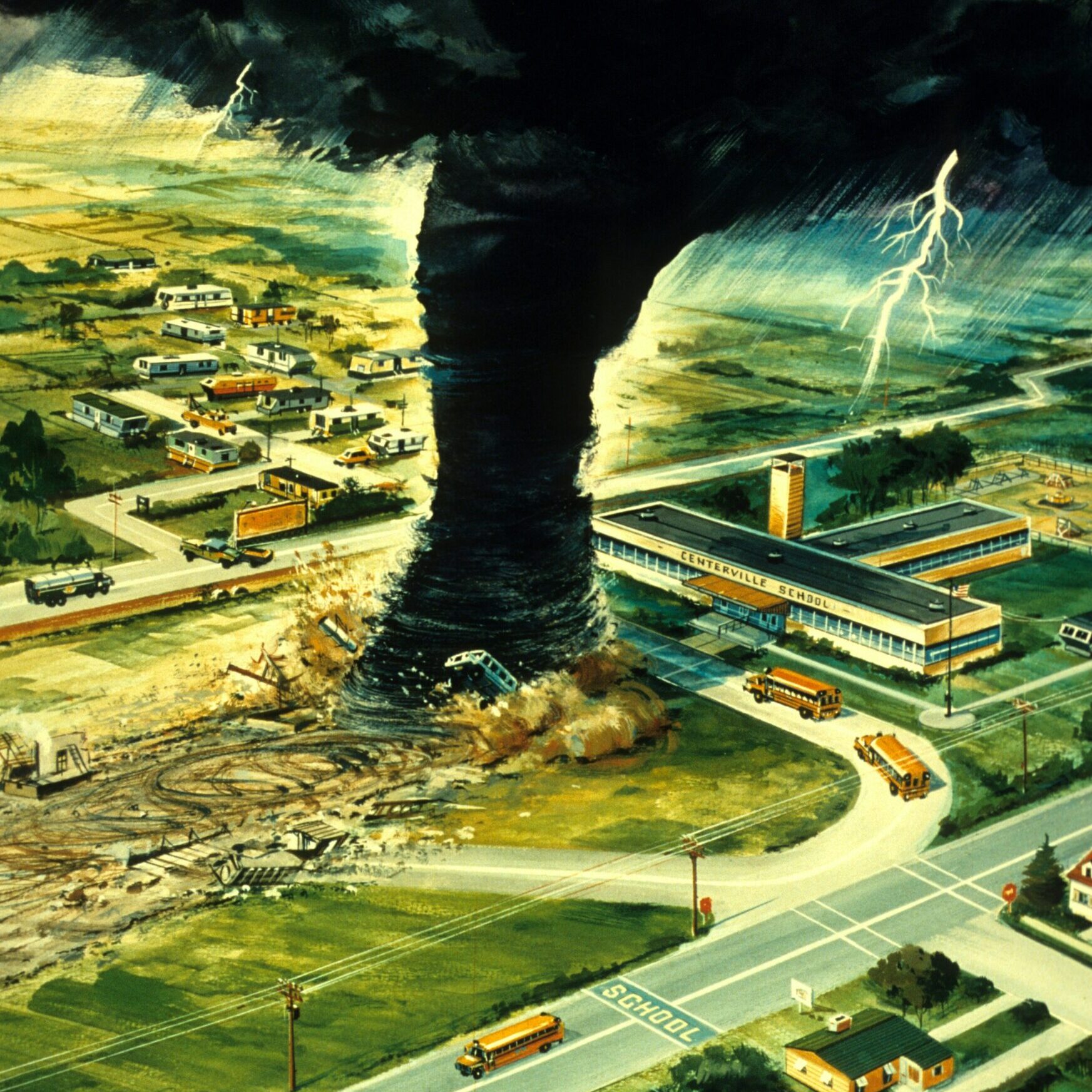
Weather prediction has never been more powerful, and yet it has never felt less reliable to the average person. Professional meteorologists, climate scientists, and emergency planners have access to models and data streams that would have been unimaginable even two decades ago. Global numerical weather prediction systems now simulate the atmosphere at resolutions once reserved for research supercomputers. Satellites observe nearly every square kilometer of the planet in near-real time. AI models can infer global circulation patterns in seconds rather than hours.
And yet, everyday users increasingly experience forecasts that feel chaotic, contradictory, and untrustworthy. Rain appears out of nowhere. Snow forecasts collapse at the last minute. One app predicts a storm, another predicts sunshine. Warnings arrive late, or not at all.
This disconnect is not accidental. It reflects a growing gap between professional forecasting capabilities and public-facing weather information. Politics, privatization, geopolitical instability, climate change, AI deployment, and defunding of public science infrastructure are all converging to make the weather feel noisier and, in many cases, be less reliably communicated to the public.
Here we examine why.
Has Weather Prediction Actually Gotten Worse?
On the technical side, modern forecasting systems have improved substantially. Large-scale pattern weather prediction, hurricane track forecasting, and mid-latitude storm modeling have all advanced over the past several decades. Ensemble modeling, data assimilation techniques, and increased computational power have reduced track errors and improved lead times for major hazards.
But what most people experience is not the professional weather prediction forecast. It is an automated consumer-facing product that often relies on raw model output with minimal local interpretation. As Weather and Climate Expert explains, consumer apps frequently differ because they use different models, post-processing techniques, and proprietary blends, often without communicating uncertainty to users (https://weatherandclimateexpert.com/why-your-weather-app-might-be-wrong-the-truth-about-weather-forecasting/).
This leads to several systemic problems:
- “Busted” local forecasts when a model’s grid cannot resolve micro-scale terrain or urban heat island effects.
- Conflicting app forecasts because each platform selects different model ensembles or weighting schemes.
- Lack of context, since automated apps rarely explain uncertainty, rare events, or edge cases.
The result is a paradox: professional forecasting has improved, while public perception of forecasting has degraded.
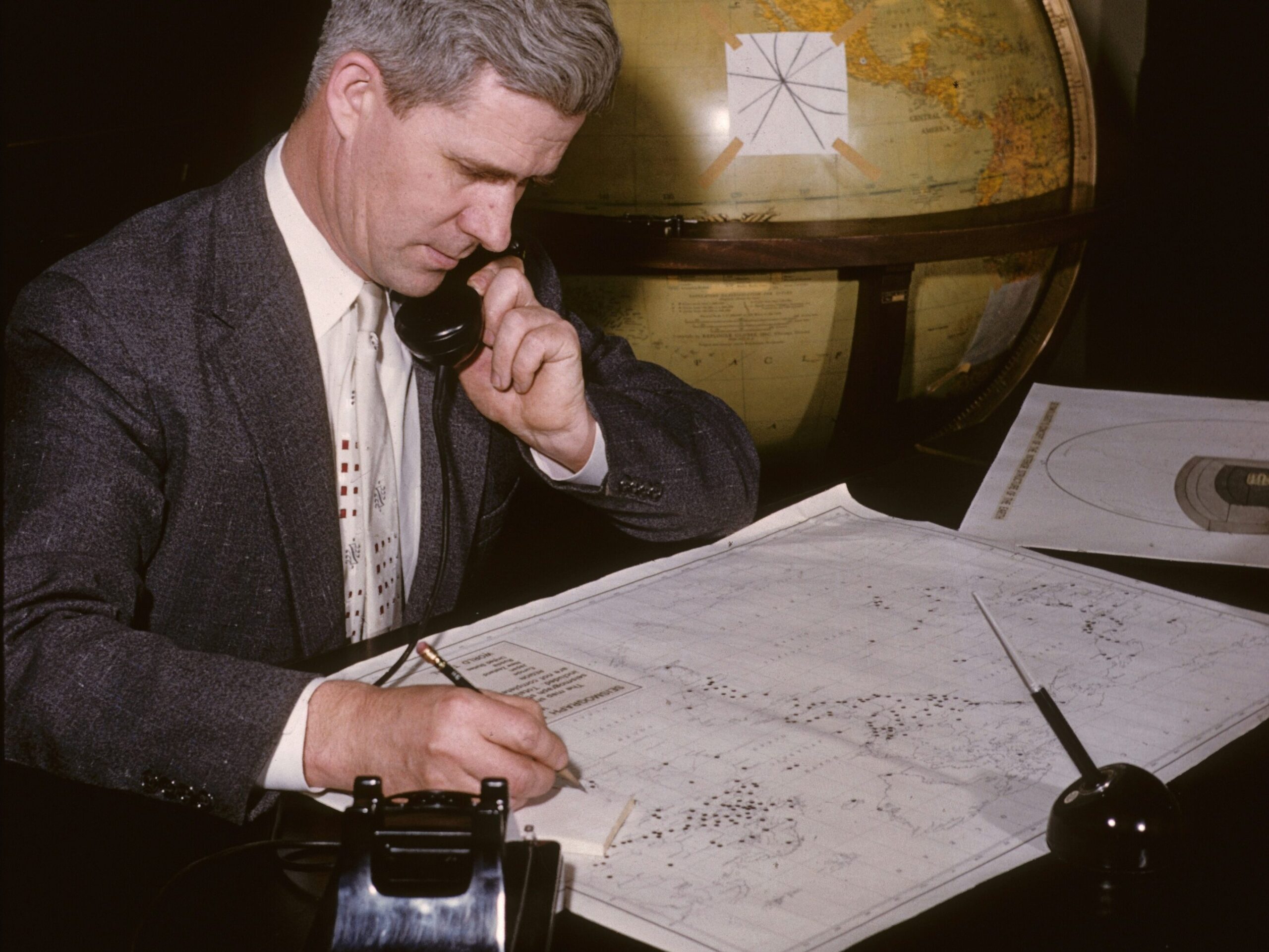
War, Geopolitics, and the Fracturing of Global Weather Data
Modern forecasting depends on a dense global observing system. Aircraft reports, ocean buoys, radiosondes, satellites, and radar networks feed into shared international frameworks coordinated by the World Meteorological Organization (WMO). Atmospheric physics is global; missing data in one region degrades forecasts everywhere.
Geopolitical conflict increasingly disrupts this data ecosystem. When nations enter conflict, several disruptions occur simultaneously:
- Data sharing agreements may be reduced, delayed, or suspended.
- Observational infrastructure can be destroyed or repurposed.
- Satellite data streams may become classified or restricted due to military sensitivities.
Even minor gaps in observations propagate through models, especially for rapidly evolving phenomena like severe convection or cyclogenesis. The atmosphere is a coupled system; blind spots in one region degrade forecasts thousands of kilometers away.
This is an emerging structural vulnerability in global forecasting. Weather prediction has historically been a rare domain of international cooperation, but geopolitical fragmentation is eroding that cooperative baseline.
Privatization and the Commodification of Weather Prediction
For much of the 20th century, weather data for weather prediction was treated as a public good. Agencies like NOAA and ECMWF shared data freely to improve global safety and scientific progress. That paradigm is changing.
Governments are now explicitly encouraged to purchase commercial weather prediction data products, including private satellite observations, and to structure contracts around licensing and exclusivity terms. NOAA’s guidance on commercial data purchases reflects this shift toward privatized data procurement (https://space.commerce.gov/noaa-releases-guidance-for-commercial-data-buys/; https://nosc-prod.woc.noaa.gov/public_docs/Guidance_for_NOAA_Commercial_Data_Buys-v1-final.pdf).
Private weather prediction forecasting companies increasingly build proprietary models, sell premium risk products to energy firms, insurers, agriculture conglomerates, and financial institutions, and gate high-resolution guidance behind paywalls.
This has created a two-tier weather information system:
Tier 1: Paying clients and government agencies
- High-resolution data
- Rapid update cycles
- Detailed risk analytics
- Human expert interpretation
Tier 2: The public
- Coarser resolution
- Automated forecasts
- Limited uncertainty communication
- Often cost-optimized data pipelines rather than accuracy-optimized ones
From a systemic perspective, this is self-defeating. Fragmentation reduces coherence in weather prediction forecasting, undermines public trust, and increases vulnerability to surprise events. The more proprietary the ecosystem becomes, the less collective resilience it has. Companies are, in effect, cutting off their own noses to spite their faces: maximizing short-term profit at the cost of systemic reliability and societal preparedness.

Climate Change: A Moving Target for Prediction
Climate change does not invalidate physical models. But it changes the baseline conditions those models were calibrated for.
Warmer oceans and atmosphere increase available moisture and energy, intensifying extremes such as:
- Flash floods
- Heat waves
- Rapidly intensifying hurricanes
- Atmospheric rivers
- Stalled precipitation systems
Historical analogs become less reliable. Many models use statistical corrections based on past decades, but the climate system is now moving outside historical ranges. Compound events—heat plus drought plus wildfire, or rain plus storm surge plus infrastructure collapse—are becoming more common and harder to predict with legacy frameworks.
Models must be continually re-tuned and re-validated as the baseline shifts. That requires funding, staffing, and research continuity—precisely the areas being cut or politicized.
The Royal Meteorological Society notes that model skill depends on observational density and continual calibration, both of which are strained by evolving climate conditions (https://rmets.onlinelibrary.wiley.com/doi/10.1002/met.1589).
AI Weather Forecasting: Breakthrough and Black Box
AI has rapidly entered meteorology. Machine-learning models can approximate global circulation patterns at a fraction of the computational cost of traditional numerical weather prediction systems. Some AI models now match or exceed traditional models for certain forecast horizons.
Positives of AI in weather forecasting
- Extremely fast inference, enabling large ensembles and hyper-local products.
- Pattern recognition capabilities that can detect subtle signals in radar and satellite imagery.
- Lower computational costs, democratizing high-resolution forecasting capabilities.
Risks and structural problems
Many AI models are opaque. Users receive deterministic outputs without explanation of uncertainty, failure modes, or training biases. AI systems trained on historical climate data may mis-handle unprecedented extremes. Climate change is shifting the distribution of events faster than some training pipelines can adapt.
Commercial AI weather products are often proprietary, further deepening the information divide between professionals and the public.
There is also a political risk: AI tools can be used to normalize escalating climate impacts rather than highlight them, especially if trained within frameworks that avoid explicit climate attribution.
Defunding and De-Professionalization of Weather Science
Public weather prediction services depend on sustained funding for observation networks, staffing, research, and outreach. Many national agencies have faced hiring freezes, budget constraints, or attrition without replacement.
Consequences include:
- Fewer experienced forecasters interpreting models in real time.
- Reduced maintenance of radars, radiosondes, and surface stations.
- Slower modernization of modeling systems.
- Weaker training pipelines for young scientists.
The proliferation of automated apps creates the illusion that “computers have solved weather,” which discourages students from entering meteorology, even as the complexity of forecasting increases.
Interest in Meteorology: A Quiet Decline
Meteorology is becoming simultaneously more critical and less attractive as a career path. Graduate programs are expensive, public funding is uncertain, and private sector roles often prioritize proprietary models over public service. As automation expands, the perceived role of human forecasters diminishes, even though human expertise is increasingly necessary to interpret complex, non-stationary systems.
This creates a feedback loop: fewer experts, more automation, more misinterpretation, less trust, less interest in the field.
Political Climate: Climate Silence as Policy
The current U.S. administration has aggressively rolled back climate regulations and framed climate policy as an economic burden. Executive actions emphasize limiting federal climate authority and resisting state-level climate initiatives (https://www.whitehouse.gov/presidential-actions/2025/04/protecting-american-energy-from-state-overreach/). Reporting indicates efforts to dismantle climate rules and potentially make rollbacks permanent (https://www.eenews.net/articles/trump-gutted-climate-rules-in-2025-he-could-make-it-permanent-in-2026/).
This posture has several implications for weather reliability:
- Reduced integration of climate science into routine forecasting products.
- Political pressure to frame extremes as isolated events rather than systemic trends.
- Increased reliance on private sector data and services instead of public infrastructure.
When climate risk is treated as an externality or “cost of doing business,” adaptation planning and public communication suffer. Forecasting agencies are pushed to do more with less while avoiding explicit climate attribution, which undermines transparency.
Public Apps vs Professional Tools: Divergence at Scale
The gap between professional forecasting environments and consumer apps is widening.
Professional environments include:
- Multiple global and regional model ensembles
- Real-time radar, satellite, lightning, and aircraft data
- Local forecasters interpreting terrain, urban effects, and biases
- Collaboration with hydrologists, fire weather specialists, and emergency managers
Public apps often provide:
- Single-model or simple blended outputs
- Automated post-processing without human intervention
- Icon-based hourly forecasts without uncertainty metrics
- Data pipelines optimized for cost, branding, or user engagement rather than accuracy
A professional meteorologist might see a high-uncertainty scenario with a narrow corridor of extreme rainfall and issue cautious warnings. An app might simply show “40% chance of showers,” masking the tail risk entirely.
Home Weather Stations and Data Fragmentation
The rise of consumer weather stations adds another layer of complexity. While personal stations can improve local data density, quality varies widely, and calibration issues can introduce noise. Comparisons between professional and home stations highlight disparities in accuracy, siting standards, and data quality control (https://www.weathershack.com/blogs/news/comparing-professional-vs-home-weather-stations-which-is-right-for-you).
Crowdsourced data can help models but can also degrade them if not filtered properly.
Why All of This Makes Weather Feel Less Reliable
Weather forecasting is not just a technical system. It is an ecosystem of data, institutions, politics, economics, and communication.
The ecosystem is fragmenting:
- Geopolitics disrupts data sharing.
- Privatization fragments access and coherence.
- Climate change invalidates historical assumptions.
- AI accelerates forecasting but obscures uncertainty.
- Public agencies are defunded and understaffed.
- Political pressure suppresses climate attribution.
- Public apps prioritize UX and monetization over nuance.
The raw science is capable of extraordinary accuracy. But the delivery system is increasingly compromised.
The Emerging Two-Worlds Forecast Reality
There is now a bifurcated reality:
World A: Professional forecasting
Highly sophisticated, increasingly accurate, but expensive and restricted.
World B: Public forecasting
Automated, inconsistent, opaque, and often misleading.
As privatization deepens and public infrastructure erodes, this gap will widen. Weather will become a premium service for those who can pay, while the public navigates an increasingly noisy and unreliable information environment.
A Systemic Risk, Not Just an Annoyance
Unreliable public forecasting is not just an inconvenience. It is a systemic risk. Emergency managers, farmers, utilities, and communities depend on accurate, trusted information. Fragmented forecasting increases vulnerability to disasters, misallocates resources, and erodes public trust in science.
Weather is becoming a case study in how knowledge infrastructures degrade when politicized, privatized, and automated without governance.
Where This Leads
If current trends continue:
- Forecast accuracy for professionals will continue improving.
- Public forecasts will become more fragmented and commercialized.
- Climate extremes will outpace institutional adaptation.
- Trust in weather science will erode among the public, even as scientific capability increases.
Weather prediction is not getting worse in a technical sense. But for the average person, the system delivering forecasts is becoming less coherent, less transparent, and less trustworthy.
This is not a failure of physics. It is a failure of governance, economics, and communication.
Check out other related stories on Interconnected Earth:
World Events → https://interconnectedearth.com/world-events/
Climate Change → https://interconnectedearth.com/climate-change/
Technology → https://interconnectedearth.com/technology/
Mental Health → https://interconnectedearth.com/mental-health/