
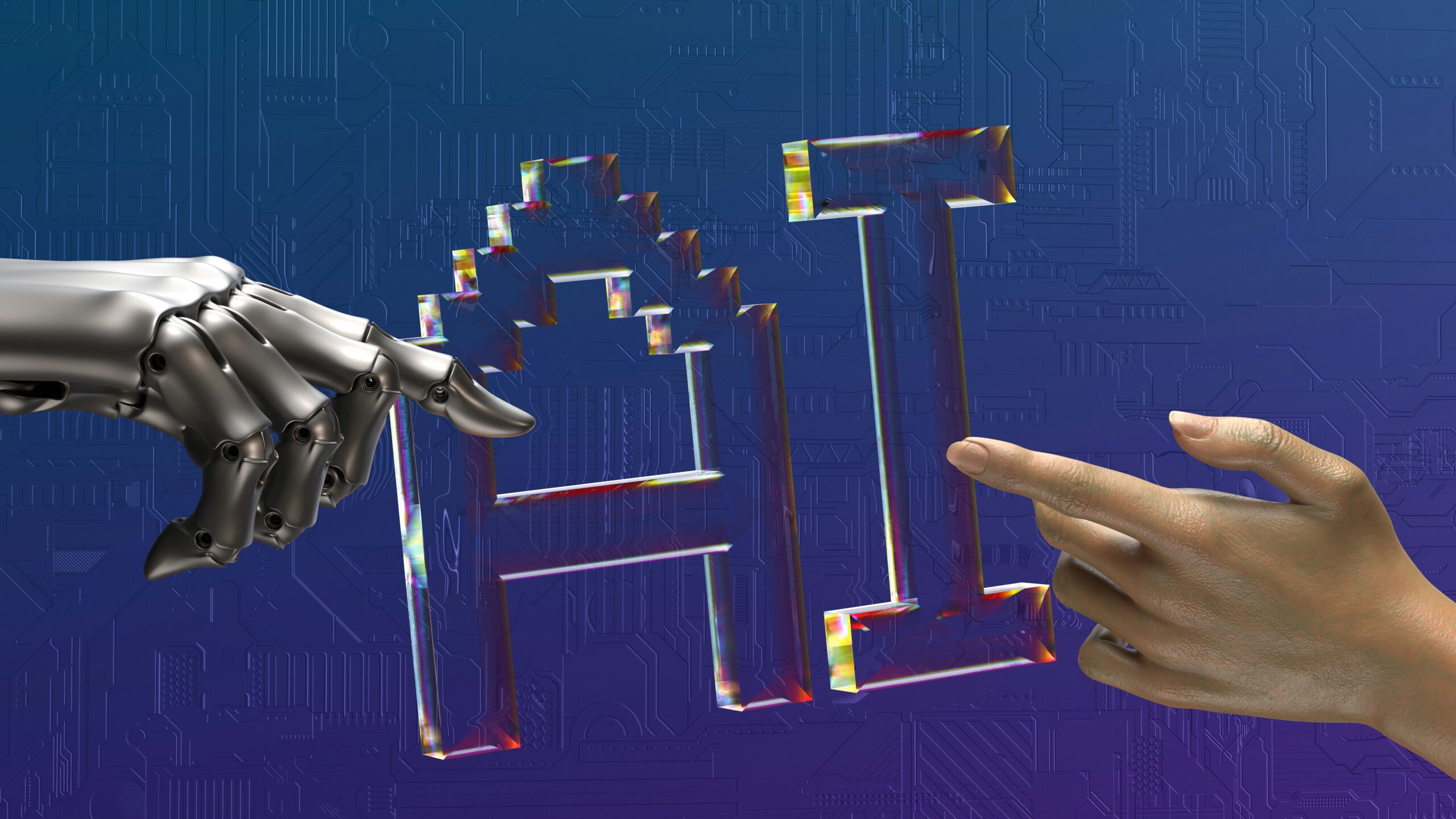
We have already spent time exploring how artificial intelligence is reshaping industries and redefining what work looks like across the economy. What is becoming clearer now is not just where AI is going, but how uneven its impact will be. Some careers are already being compressed, others are being redefined, and a smaller group may actually become more valuable as everything else shifts around them.
That creates a different kind of challenge than people are used to. It is no longer just about choosing a career path and sticking to it. It is about understanding how stable that path really is, and what to do if it starts to erode.
For some people, the right move will be to double down and strengthen their current position. For others, it will mean starting to shift into a different role or even a different industry. Both approaches require the same thing at the beginning: a clear understanding of where risk is increasing and where it is decreasing. We expect to explore this topic more in the coming years, and know that this are just early talking points.
Because not all work is changing at the same speed.
The Reality of AI and Career Stability
There is still a tendency to talk about AI in abstract terms, as if its impact is years away from affecting everyday work. But the data suggests that the shift is already underway, particularly in roles built around digital and repeatable tasks.
Goldman Sachs estimates that AI could impact up to 300 million full-time jobs globally, with a strong concentration in white-collar professions (https://www.goldmansachs.com/insights/articles/generative-ai-could-raise-global-gdp-by-7-percent). At the same time, McKinsey has found that generative AI could automate activities that currently take up 60 to 70 percent of employees’ time (https://www.mckinsey.com/capabilities/mckinsey-digital/our-insights/generative-ai-and-the-future-of-work-in-america).
What matters here is not just the scale, but the structure of the impact. This is not a simple replacement story where jobs or careers disappear all at once. Instead, tasks are being absorbed. When enough tasks are removed from a role, the role itself changes. Sometimes it becomes more specialized. Sometimes it becomes less necessary.
This is why many people feel pressure without seeing a clear breaking point. The change often happens gradually, until it does not.
Which Careers Are Most Exposed
If you want to understand your own position, it helps to look at where the pressure is already showing up. The common thread across the most exposed roles is that they rely on structured, predictable, and digital work.
In technology, particularly among programmers, AI tools are already capable of generating code, debugging, and handling routine development tasks. This does not eliminate developers, but it reduces the need for large teams and makes entry-level roles harder to justify.
Customer service is another area where the impact is direct. AI systems can now handle a large percentage of routine interactions, and companies are moving quickly to adopt them. IBM has highlighted the rapid integration of AI into customer service workflows as organizations push for efficiency (https://www.ibm.com/thought-leadership/institute-business-value/en-us/report/generative-ai).
Office and administrative roles are also highly exposed. Tasks like scheduling, data entry, reporting, and coordination are structured in ways that make them easier to automate. These roles have traditionally provided stable entry points into the workforce, so their disruption carries broader consequences.
Even in business and finance, especially at junior levels, the shift is becoming visible. Work that once involved gathering information, building reports, and summarizing data can now be done much faster with AI tools. That changes both how many people are needed and what skills are valued.
A simple way to think about it is this: if your job or career is heavily based on predictable digital tasks, you should assume it will change.
What “Stability” Actually Means Now

Before deciding whether to stay or move, it is worth redefining what stability looks like in this environment. In the past, stability often meant a steady role within a company or industry. Today, it is more about resilience to change.
A stable career now tends to have at least one of the following characteristics.
It involves work that is difficult to automate because it depends on human relationships, trust, or judgment. It may include elements that require physical presence or hands-on expertise. It often combines technical knowledge with context that is difficult to replicate through data alone.
Stability does not mean immunity. It means slower disruption and more time to adapt.
Income stability follows a similar pattern. Roles that are harder to automate or that require accountability tend to maintain stronger compensation over time. At the same time, highly automatable roles may see downward pressure on wages even before jobs or careers disappear entirely.
This is why understanding your position matters. It is not just about whether your job exists, but how its value is likely to change.
How to Strengthen Your Current Career
If you are in a role that is still viable but showing signs of pressure, the goal is not necessarily to leave. It is to make yourself harder to replace and more central to how work gets done.
One of the most effective ways to do this is to actively integrate AI into your workflow. Avoiding these tools creates distance between you and the direction your industry is moving. Learning how to use them, on the other hand, positions you as someone who can increase output rather than be replaced by it.
This shift is not just technical. It changes how you are perceived. Instead of being someone who performs tasks, you become someone who manages systems and outcomes.
At the same time, it is important to move toward work that involves more judgment and responsibility. Tasks that require interpretation, decision-making, and communication tend to remain valuable even as automation increases. This might mean taking on more complex projects, working closer to clients, or stepping into roles that require coordination across teams.
Another key factor is visibility. In environments where efficiency is increasing, being clearly tied to outcomes matters more than being quietly productive. The more your work is connected to results that others depend on, the harder it is to remove.
Strengthening your position is not about working more. It is about shifting what kind of work you are doing.
When It Makes Sense to Change Direction
In some cases, strengthening your current role is not enough. If the underlying demand for your type of work is shrinking, it may make more sense to start moving early rather than waiting for pressure to build.
This does not necessarily mean a complete career reset. In many cases, the most effective transitions are adjacent moves that build on existing skills while shifting into more resilient areas.
For example, someone in customer service might move toward account management or client success, where relationships play a larger role. A programmer might shift toward system architecture, product strategy, or AI integration rather than routine development. An administrative professional might move into operations or project management, where coordination and decision-making are more central.
The key is to look for roles where your existing knowledge still applies, but the structure of the work is less exposed.
Timing also matters. Transitions are easier when they are proactive rather than reactive. Moving while you still have stability gives you more flexibility and reduces pressure.

Industries That May Offer More Stability
No industry is completely insulated from AI, but some are likely to experience slower disruption or different kinds of change.
Healthcare is often cited as one of the more resilient sectors. While AI can assist with diagnostics, data analysis, and administrative tasks, many roles require direct human interaction, physical presence, and high levels of trust. These factors make full automation more difficult.
Skilled trades also fall into this category. Electricians, plumbers, construction professionals, and similar roles require hands-on work in variable environments. While technology can augment these fields, it is less likely to replace them entirely in the near term.
Education is another area where the impact is complex. AI can change how content is delivered and personalized, but the human elements of teaching, mentorship, and social development remain important. The structure of the industry may shift, but demand is likely to persist.
Roles that combine technical expertise with real-world application, such as certain engineering and field-based positions, also tend to be more stable. These jobs often require both knowledge and physical execution, which makes them harder to automate fully.
It is important to note that stability does not always mean higher income. Some of these roles may offer more consistent demand but different compensation structures. That tradeoff is part of the decision.
Skills That Carry Across Careers
Whether you stay in your current field or move into a new one, certain skills are becoming more valuable because they transfer across roles and are less tied to specific tasks.
Communication is one of the most important. The ability to explain ideas clearly, manage expectations, and work with different stakeholders remains critical in almost every field.
Problem-solving and critical thinking are also central. As AI handles more routine work, the ability to define problems and evaluate solutions becomes more valuable.
Adaptability itself is a skill. Being able to learn new systems, adjust to changing environments, and navigate uncertainty is increasingly important.
There is also a growing need for people who can work effectively with AI systems. This includes understanding how to prompt them, how to validate their outputs, and how to integrate them into workflows.
These skills do not replace technical expertise, but they extend its usefulness.

The Financial and Mental Side of Change
Career decisions are not made in isolation. They are shaped by financial realities and personal circumstances.
If you are considering a change, it is important to think about how that transition will be supported. This might mean building savings, reducing expenses, or creating a temporary income stream that gives you more flexibility.
There is also a psychological component that is often overlooked. Work is closely tied to identity, especially in knowledge-based professions. Changing direction can feel like starting over, even when it is a logical move.
Uncertainty itself can be difficult to manage. Not knowing how an industry will evolve or whether a new path will work out creates stress. That is a normal response to a system that is changing quickly.
Approaching this process with a longer-term perspective can help. Instead of trying to make a perfect decision, the focus can shift to making a series of smaller, informed adjustments.
A Different Way to Think About Careers
One of the underlying shifts in all of this is how careers are structured.
The idea of a single, stable path that lasts for decades is becoming less reliable. In its place is something more flexible, but also more uncertain. Careers are increasingly made up of phases, each shaped by changes in technology, demand, and personal priorities.
This does not mean that stability is gone. It means that stability has to be built differently.
Instead of relying on a single role or industry, it comes from having skills that transfer, awareness of where change is happening, and the ability to adjust over time.
In that sense, the question is not just whether your current job is safe. It is whether you are positioned to adapt if it is not.
Building Forward
There is no single answer that applies to everyone. Some people will benefit from staying where they are and evolving their role. Others will find more opportunity by shifting into something new.
What matters is being intentional about the choice.
Understanding where your work sits in the broader landscape. Recognizing the signals of change early. Taking steps that increase your flexibility rather than reduce it.
Because the pace of change is unlikely to slow down.
And the people who navigate it best are not the ones who predict the future perfectly. They are the ones who stay close enough to the changes that they can move with them.
Relevant Interconnected Earth Categories:
World Events: https://interconnectedearth.com/category/world-events/
Technology: https://interconnectedearth.com/category/technology/
Mental Health: https://interconnectedearth.com/category/mental-health/
Arts and Entertainment: https://interconnectedearth.com/category/arts-and-entertainment/
Philosophy: https://interconnectedearth.com/category/philosophy/