
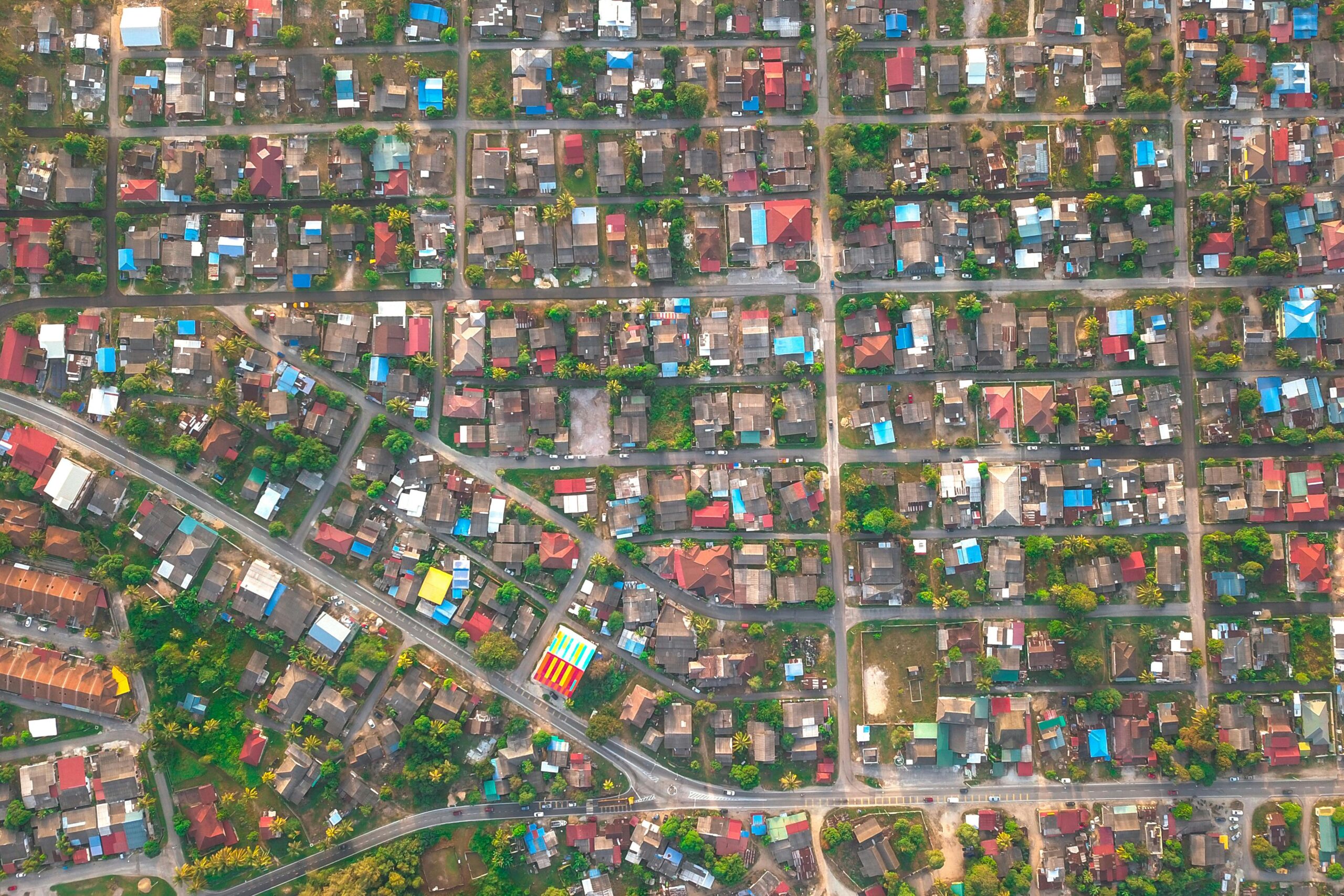
For decades, many economists, developers, and governments operated under a basic assumption: populations would continue growing. More people would need more homes. Cities would expand. Suburbs would sprawl outward. Apartment towers would rise. Housing demand would keep climbing.
That assumption is beginning to fracture.
Across much of the world, birth rates are falling below replacement level. Countries once associated with rapid population growth are now confronting aging populations, labor shortages, and the possibility of long-term demographic decline. The implications reach far beyond pensions and labor markets. They strike directly at the foundation of modern real estate economies.
What happens to housing markets when there are fewer people? What happens to suburban developments, apartment complexes, schools, malls, and entire communities if population decline becomes permanent rather than temporary?
The world is entering an era where some places may experience housing shortages and housing collapse simultaneously. Immigration, climate migration, wealth inequality, remote work, and aging populations are likely to determine which communities survive and which slowly empty out.
The World Is Having Fewer Children

The global fertility rate has fallen dramatically over the past several decades. According to the OECD, fertility across developed countries has dropped from an average of 3.3 children per woman in 1960 to around 1.5 in 2022, well below the replacement rate of 2.1 needed to maintain stable population levels without immigration. Countries like South Korea, Italy, Spain, Japan, and Poland are already facing severe demographic decline.
This is not isolated to wealthy nations anymore. Fertility rates are declining across Latin America, parts of Asia, and even many regions of Africa. Research from the French Institute for Demographic Studies found that nearly two-thirds of the global population now lives in areas where fertility is below replacement level.
The United Nations projects that global fertility will continue declining in the coming decades, with population growth slowing dramatically by the second half of the century.
The reasons are complex:
- Rising housing costs
- Expensive childcare
- Economic insecurity
- Longer working hours
- Student debt
- Urbanization
- Delayed marriage
- Increased education levels
- Shifting cultural priorities
- Climate anxiety
- Reduced optimism about the future
Many younger adults increasingly view raising children as financially dangerous rather than economically sustainable.
Housing itself has become part of the fertility crisis. As homes transformed from shelter into investment assets, affordability collapsed in many urban centers. Younger generations often delay families because they cannot afford stable housing.
Ironically, the very housing boom that generated wealth for some property owners may contribute to the demographic decline that threatens long-term housing demand.
The Strange Contradiction: Housing Booms During Population Decline
At first glance, current housing markets appear disconnected from declining birth rates. In many countries, housing prices remain extremely high despite slowing population growth.
How can both things be true?
The answer is that housing demand is not driven only by population growth. It is also driven by:
- Investment speculation
- Short-term rentals
- Wealth concentration
- Immigration
- Household fragmentation
- Remote work migration
- Foreign capital flows
- Aging populations living longer
- Fewer people per household
A country can experience low birth rates while still needing more housing units temporarily.
For example, if one household of five becomes two divorced households of two and three people, housing demand rises even without population growth. If older adults remain in homes longer, inventory tightens. If investors purchase homes as assets instead of residences, supply shrinks further.
In many major cities, housing increasingly functions like a financial instrument rather than a human necessity.
But demographic decline operates slowly. Real estate markets often lag behind population trends by years or even decades.
The danger is not necessarily immediate collapse. It is long-term structural oversupply in certain regions.
Some Places Will Boom While Others Empty Out
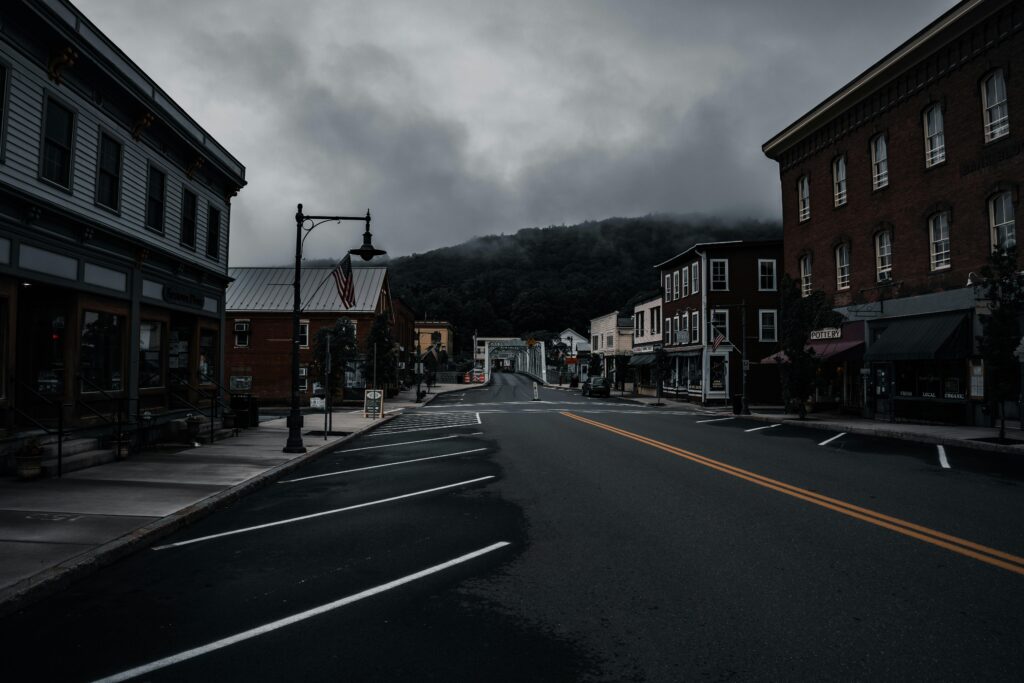
Population decline will not affect every community equally.
Some cities may continue growing through immigration, economic concentration, and climate migration. Others may slowly hollow out.
This is already happening in parts of the world.
In Japan, rural villages are disappearing while Tokyo remains economically dominant. Millions of homes across Japan are now vacant, creating what is known as the “akiya” crisis. Entire neighborhoods contain abandoned properties because there are simply not enough younger residents to occupy them.
In parts of Italy, Spain, and Eastern Europe, shrinking towns are selling homes for symbolic prices to attract residents and investment.
The OECD warns that many regions could lose 20% or more of their populations by 2050, leading to deteriorating property values, vacant buildings, rising infrastructure costs, and collapsing local tax bases.
The future housing market may become increasingly divided into two realities:
High-demand mega-regions
These areas may continue attracting workers, immigrants, and capital:
- New York
- London
- Toronto
- Singapore
- Sydney
- Berlin
- Seoul
- Major Sun Belt cities in the United States
Housing in these areas could remain expensive despite national population decline because economic opportunity remains concentrated there.
Shrinking regions
Other communities may face:
- Falling home values
- School closures
- Hospital shutdowns
- Abandoned homes
- Aging populations
- Reduced public services
- Infrastructure decay
This divide may create a new geography of inequality.
Some places may become overcrowded and unaffordable while others become economically abandoned.
Immigration Will Become Even More Important
Immigration is already helping offset population decline in many developed countries.
The United Nations notes that migration can help mitigate aging and demographic contraction in some nations, even though it cannot fully reverse global fertility decline forever.
Countries facing severe labor shortages may increasingly compete for immigrants rather than resist them.
This could fundamentally reshape politics and economics.
For decades, many immigration debates centered around fears of “too many people.” In the future, some nations may worry about too few workers, too few taxpayers, and too few young families to sustain local economies.
Places capable of attracting immigrants may maintain stronger housing markets. Places unable to attract newcomers may struggle to survive.
This creates another layer of inequality:
- Wealthy global cities may absorb skilled migrants
- Smaller towns may continue losing population
- Climate-stressed regions may experience outward migration
- Aging nations may aggressively recruit younger workers
Migration itself may become a major driver of future housing demand.
For example:
- Climate refugees may relocate from coastal or drought-stricken areas
- Workers may migrate toward automation-resistant economies
- Retirees may move toward cheaper regions
- Younger populations from developing nations may relocate into aging economies
Housing markets could become increasingly dependent on global mobility rather than domestic birth rates alone.
What Happens to Suburbs?
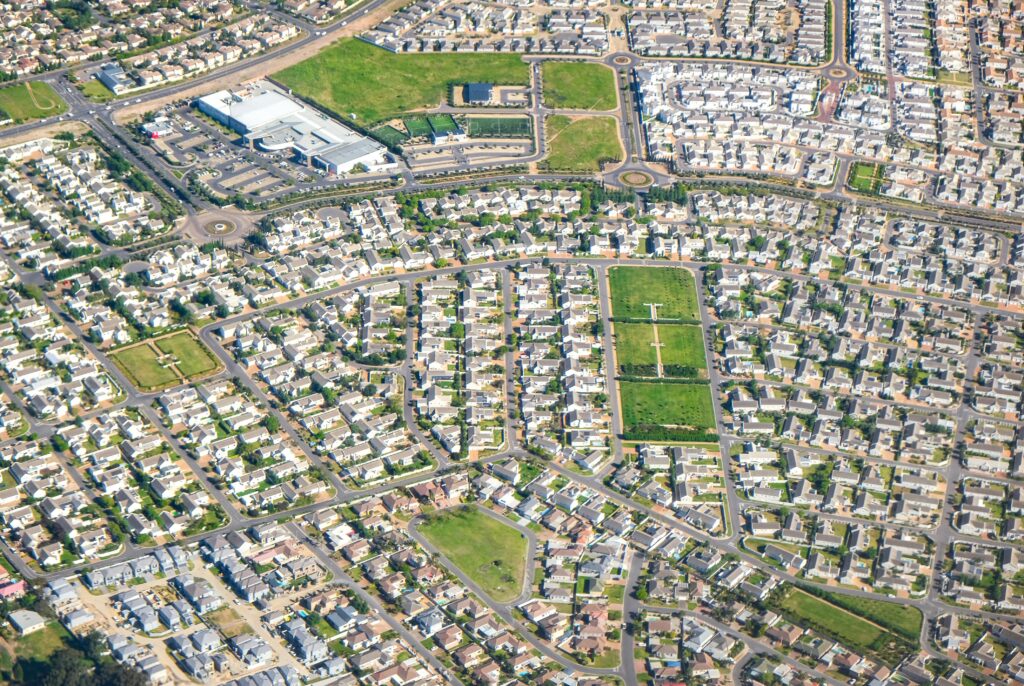
The suburbs may undergo some of the most dramatic transformations.
Many suburban developments were built around assumptions of continuous family formation:
- Young couples
- Multiple children
- Expanding school districts
- Car-dependent growth
- Rising consumer spending
But what happens when there are fewer children?
Some suburbs may age rapidly. Schools could close due to low enrollment. Shopping centers may decline. Large single-family homes could become harder to sell in aging communities where younger buyers are scarce.
Some suburbs may densify instead:
- Homes converted into multi-family housing
- Elder care facilities expanding
- Shared living arrangements increasing
- Remote workers repurposing former commuter suburbs
Others may simply decay.
A future with fewer people may leave behind enormous amounts of underutilized infrastructure:
- Roads
- Parking lots
- Strip malls
- Office parks
- Apartment complexes
- Water systems
- Power grids
The modern built environment was designed for expansion. Maintaining that infrastructure becomes much harder when tax bases shrink.
Apartment Markets Could Change Dramatically
Apartment markets may initially appear safer because urban living remains attractive to younger populations.
But even apartment-heavy cities may eventually face oversupply if demographic decline accelerates globally.
Developers today are still building based on growth assumptions shaped by the late 20th century.
If population decline deepens:
- Rent growth may weaken
- Vacancy rates could rise
- Luxury developments may struggle
- Smaller units may dominate
- Multi-generational housing may return
- Governments may repurpose empty buildings
Some cities may increasingly convert unused office towers into housing due to remote work and shifting demographics.
Others may experience a paradox where luxury housing sits vacant while affordable housing remains scarce because homes function more as investment assets than occupied residences.
In extreme cases, some apartment towers could eventually become economically unsustainable to maintain.
The Future of “Ghost Communities”
The term “ghost city” is often associated with overbuilt developments in China, but similar patterns could emerge globally over time.
Not every abandoned community will collapse suddenly. Many may slowly fade:
- Empty storefronts
- Closed schools
- Fewer births
- Aging residents
- Deteriorating infrastructure
- Reduced healthcare access
- Lower investment
This creates psychological effects as well.
Humans are deeply social creatures. Communities with shrinking populations often experience:
- Isolation
- Loneliness
- Reduced civic participation
- Mental health strain
- Lower economic optimism
Population decline is not just an economic issue. It reshapes social identity.
A neighborhood that once felt vibrant may gradually feel abandoned even before it physically collapses.
Climate Change Complicates Everything
Climate change will likely intensify demographic instability.
Some regions facing depopulation today may later see renewed growth due to climate migration. Others may lose population rapidly due to extreme heat, flooding, drought, or resource shortages.
For example:
- Coastal communities may face retreat from sea-level rise
- Desert regions may become harder to inhabit
- Water shortages may drive migration
- Northern regions could attract more residents
This means future housing demand may not simply decline uniformly. It may relocate chaotically.
Some shrinking cities may revive unexpectedly. Some booming regions may become less habitable.
The housing market of the future may increasingly revolve around resilience:
- Water access
- Energy stability
- climate survivability
- Infrastructure reliability
Could Housing Eventually Become Cheap Again?
Possibly, but not evenly.
In some shrinking areas, housing may become extremely affordable because demand collapses.
But affordable housing alone does not guarantee thriving communities.
A cheap house in a declining town may still lack:
- Jobs
- Healthcare
- Education
- Infrastructure
- Social mobility
Meanwhile, globally connected economic hubs may remain expensive due to concentrated opportunity.
This could create a strange future where housing abundance and housing scarcity coexist simultaneously depending on geography.
The Long-Term Future
If global population decline continues through the century, humanity may eventually enter an economic system fundamentally different from the growth-driven world of the last hundred years.
Modern capitalism largely assumes:
- Expanding markets
- Growing populations
- Rising consumption
- Continuous labor replacement
A shrinking and aging population challenges all of those assumptions.
Housing markets may eventually transition from speculative growth assets into utility-based systems focused more on stability than appreciation.
Cities may compete aggressively for residents.
Governments may subsidize migration.
Entire regions may consolidate infrastructure.
Unused neighborhoods may return to nature.
Some communities may reinvent themselves around remote work or climate resilience.
The world could become less crowded overall while simultaneously more unequal geographically.
Some places may flourish because they attract people.
Others may disappear because they cannot.
The future housing question is no longer simply “How do we build enough homes?”
It may increasingly become:
“What do we do with the homes, suburbs, and communities left behind?”
Sources:
OECD Fertility Trends
https://www.oecd.org/en/publications/2024/06/society-at-a-glance-2024_08001b73/full-report/fertility-trends-across-the-oecd-underlying-drivers-and-the-role-for-policy_770679b8.html
OECD Demographic Change in Regions and Cities
https://www.oecd.org/en/topics/demographic-change-in-regions.html
United Nations Population Data
https://www.un.org/en/global-issues/population
Our World in Data: Global Fertility Decline
https://ourworldindata.org/global-decline-fertility-rate
OECD Shrinking Smartly and Sustainably
https://www.oecd.org/en/publications/shrinking-smartly-and-sustainably_f91693e3-en.html
INED Fertility Decline Mapping
https://www.ined.fr/en/publications/editions/population-and-societies/mapping-the-massive-global-fertility-decline-over-the-last-20-years/
Relevant Categories:
World Events: https://interconnectedearth.com/category/world-events/
Mental Health: https://interconnectedearth.com/category/mental-health/
Climate Change: https://interconnectedearth.com/category/climate-change/
Technology: https://interconnectedearth.com/category/technology/
Philosophy: https://interconnectedearth.com/category/philosophy/