
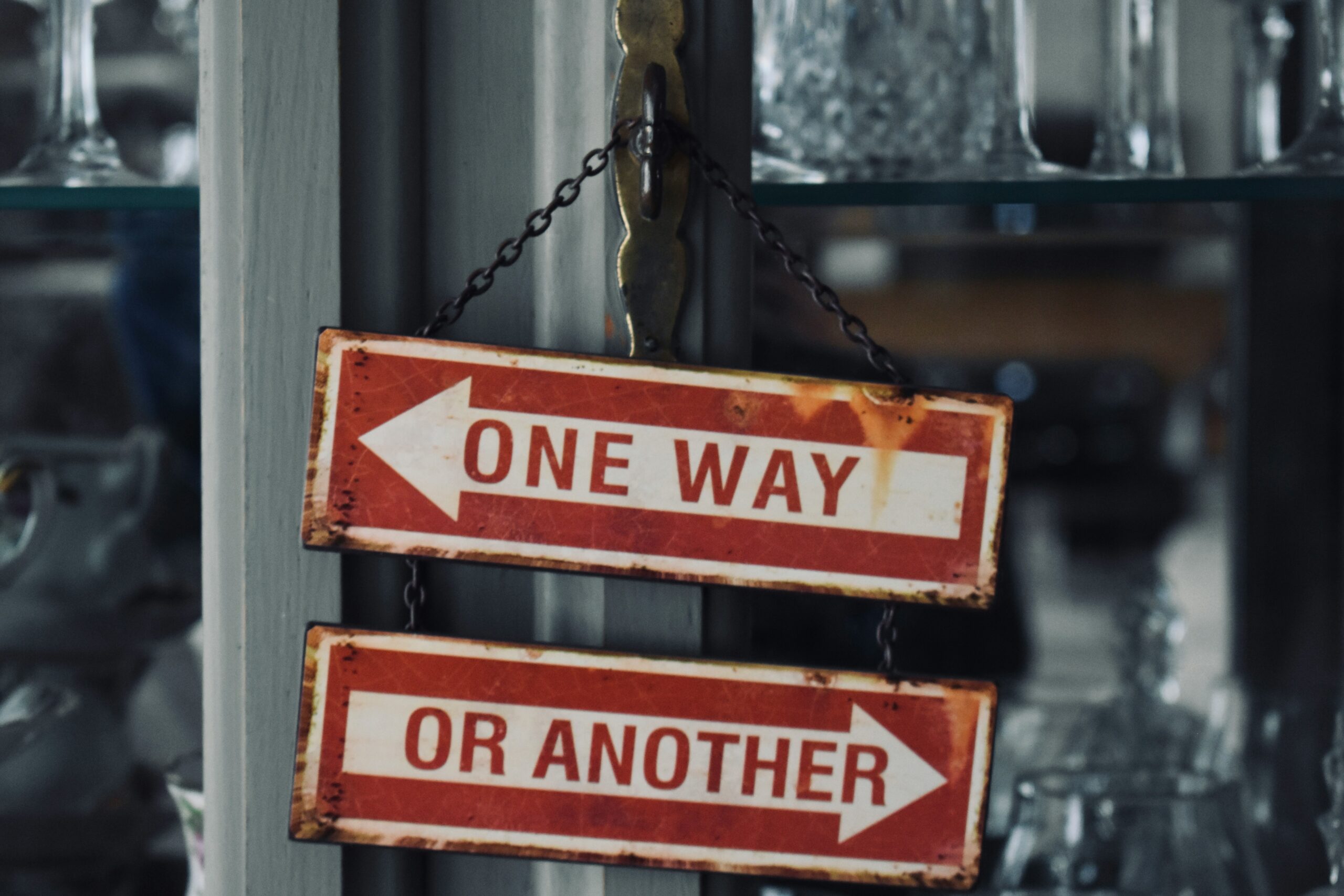
“There is no ethical consumption under capitalism.”
It is a phrase that has become almost unavoidable in modern discourse, rooted in critiques from fields like Marxist economics and broader discussions about global systems of power, labor, and capital. At its core, the statement points to a difficult truth: most goods and services we rely on are connected to systems that are, in some way, exploitative, unequal, or environmentally damaging.
But somewhere along the way, this phrase has been flattened into something less useful. Instead of encouraging deeper awareness, it often leads to a kind of resignation. If no consumption is ethical, then why try at all?
That conclusion is understandable, but it misses something important.
Perfect choices do not exist in our current systems. That is true. But better choices often do. And those choices, imperfect as they are, still matter.
What we choose to buy, support, and participate in does not just reflect the world we live in. It actively shapes the world we are building.
So the question is not whether you can consume perfectly ethically. You cannot.
The question is: how do you make more ethical choices within imperfect systems?
The Reality of Constraint: Why Not All Choices Are Equal
Before we talk about how to make more ethical decisions, we need to acknowledge something fundamental: not everyone has the same choices available to them.
Ethical consumption is not just about values. It is about access, time, money, energy, and safety and this impacts our choices.
If you have $3 and the only bread you can afford costs $2, but a more ethically produced option costs $5, the decision is already made for you. If you do not have transportation to reach a better store, that is another constraint. If you are working 80-hour weeks and barely functioning, the cognitive and emotional cost of seeking out better options becomes a real and valid barrier.
In those moments, the choices of the more accessible, affordable, or safe option is not a moral failure. It is a rational response to a system that limits your agency.
And that is the point.
When something as simple as buying bread becomes a complex ethical calculation involving income, transportation, labor conditions, and mental health, we are not looking at individual failure. We are looking at systemic design not a failure of personal choices.
These systems did not emerge overnight, and they will not be replaced overnight either. They are the result of decades of policy decisions, economic incentives, corporate strategies, and cultural shifts.
So while we cannot fix the system instantly, we can begin to navigate it more intentionally.
Why Your Choices Still Matter
Even within constrained systems, individual and collective behavior has impact.
Markets respond to demand. Companies track purchasing patterns. Local economies shift based on where money flows. Over time, small decisions accumulate into larger signals.
This is not theoretical. Research from organizations like Nielsen has shown that a growing percentage of consumers are willing to change their purchasing habits based on sustainability and ethical considerations.
https://www.nielsen.com/us/en/insights/report/2015/the-sustainability-imperative/
Similarly, reports from McKinsey & Company highlight how consumer pressure has influenced corporate commitments around environmental and social governance.
https://www.mckinsey.com/capabilities/sustainability/our-insights
These shifts are not perfect. They are often slow, sometimes superficial, and occasionally co-opted for marketing purposes. But they demonstrate a key principle:
Choices, especially when aggregated across millions of people, do shape outcomes.
You are not individually responsible for fixing global systems. But you are part of the system. And your participation has weight.

Research: Understanding What You Are Actually Buying
Ethical consumption begins with awareness.
That does not mean you need to spend hours researching every single purchase. That is not realistic. But carving out time to understand the products and services you regularly rely on can significantly change how you engage with them.
Start with a few key questions:
Who owns this company?
How are their products made?
Where do their materials come from?
Who benefits most from this purchase?
Ownership matters, but it is only one piece of the puzzle. A company may present itself as ethical while being funded by investors whose priorities push in the opposite direction. Understanding funding structures, supply chains, and production methods gives you a more complete picture.
Resources like Good On You provide accessible breakdowns of brand practices in industries like fashion.
https://goodonyou.eco/
Similarly, organizations such as Fairtrade International help identify products that meet certain labor and environmental standards.
https://www.fairtrade.net/
You do not need to become an expert in global supply chains. But even a baseline understanding can help you avoid assumptions and make more informed decisions.
And sometimes, you will be surprised by what you find.

Budget: Aligning Spending With Values (When Possible)
Every purchase is a trade-off.
Not just financially, but psychologically and culturally as well.
It is worth asking:
Are you buying out of necessity, convenience, habit, or emotion?
Are you responding to marketing, status signals, or genuine need?
What role does this purchase play in your life?
Tracking your spending can reveal patterns that are otherwise invisible. Tools like Fudget or YNAB allow you to categorize expenses and see where your money is going over time.
This is not about judgment. It is about clarity.
If you notice that a significant portion of your spending is driven by impulse or convenience, that may present an opportunity to reallocate even a small percentage toward more intentional choices.
But again, this must be grounded in reality.
If your budget is tight, your priority is stability. Ethical consumption should not come at the cost of your well-being. The goal is not perfection. It is alignment where possible.
Shop Small When You Can
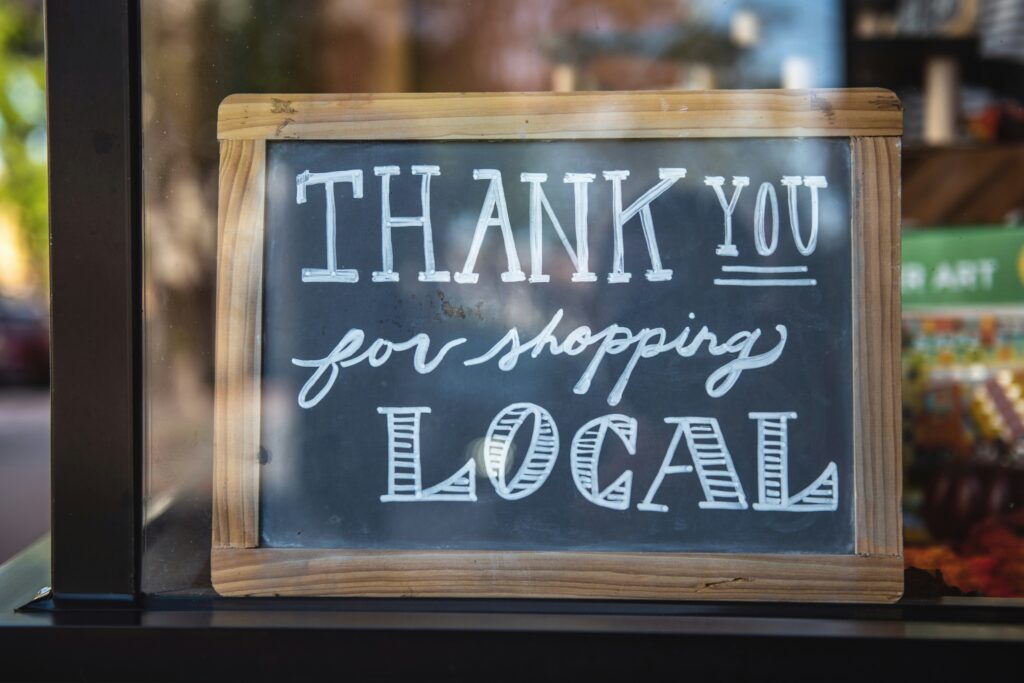
Local and small businesses often operate under different constraints than large corporations.
They are more directly tied to their communities. Their success depends on relationships, reputation, and repeat customers. In many cases, they do not have the same capacity to externalize harm at scale.
When you spend money at a local business, a larger portion of that money tends to stay within the local economy. According to research from American Independent Business Alliance, locally owned businesses recirculate a significantly higher share of revenue within their communities compared to large chains.
https://amiba.net/resources/local-vs-chain/
This does not mean all small businesses are ethical or all large corporations are unethical. Reality is more nuanced than that.
But when you have the option, supporting smaller, more transparent operations can create stronger feedback loops between your values and your spending.
It also gives you something that large systems rarely offer: visibility.
You can talk to the owner. You can ask questions. You can see how decisions are made.
That kind of connection matters.
Think About the Planet
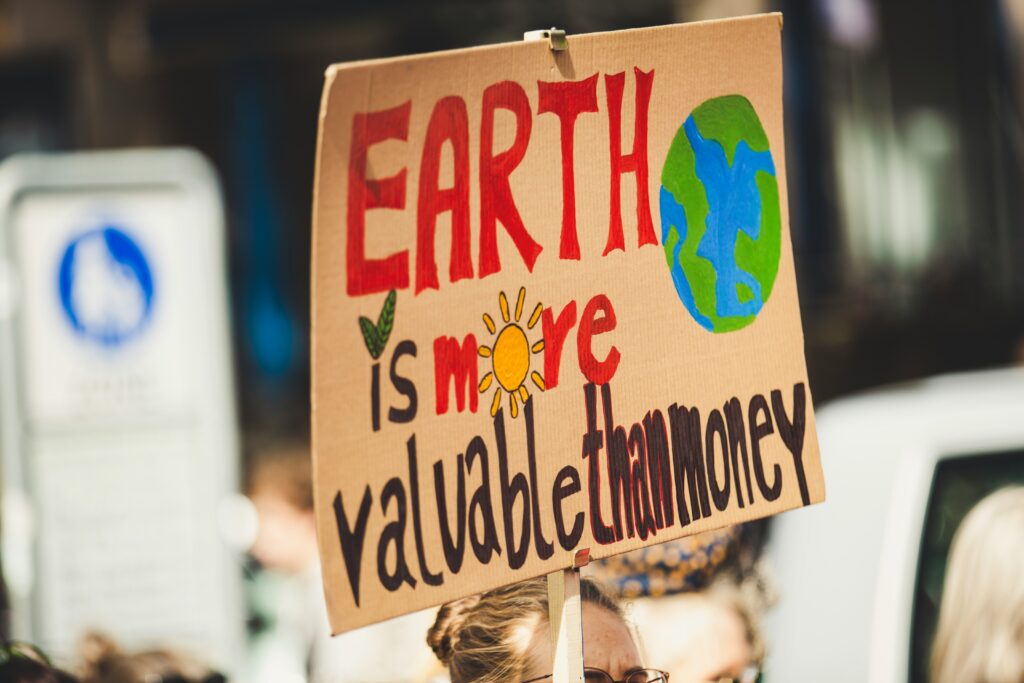
Every product has an environmental footprint.
From raw material extraction to manufacturing, packaging, transportation, and disposal, each step carries consequences.
The cumulative effect is significant. Reports from the United Nations Environment Programme show that global resource extraction has more than tripled since 1970, driving climate change, biodiversity loss, and pollution.
https://www.unep.org/resources/global-resources-outlook
Waste is not just an environmental issue. It is a systems issue.
More waste means more landfills, more emissions, more strain on ecosystems, and more long-term costs that are often not reflected in the price you pay at checkout.
Thinking about the planet does not require extreme lifestyle changes.
It can start with small considerations:
Reducing unnecessary packaging
Choosing products designed to last longer
Repairing instead of replacing when possible
Being mindful of disposal and recycling
These decisions compound over time, both individually and collectively.
Pay Attention to Labor and Working Conditions
Behind every product is labor.
Someone harvested the raw materials. Someone assembled the components. Someone transported the goods. Someone stocked the shelves.
The conditions under which that labor occurs vary widely.
While it is not always easy to assess working conditions directly, there are signals you can look for:
Company transparency reports
Third-party certifications
Employee reviews and public reporting
Observable conditions in local businesses
Organizations like Human Rights Watch and International Labour Organization regularly publish findings on labor practices across industries.
https://www.hrw.org/
https://www.ilo.org/
At a more immediate level, you can also observe.
Do employees appear overworked, stressed, or disengaged?
Is there high turnover?
Are workers treated with basic respect?
These are not definitive metrics, but they are indicators.
And they remind us that ethical consumption is not abstract. It is human.
The Emotional Layer: Guilt vs Responsibility
One of the biggest barriers to ethical consumption is emotional overload.
When you begin to see the complexity behind everyday purchases, it can feel overwhelming. Every decision becomes a potential moral dilemma.
This is where many people disengage.
Not because they do not care, but because the weight of caring feels unsustainable.
It is important to draw a distinction here.
Guilt is not the goal. Perfection is not the goal.
Responsibility is the goal.
Responsibility means being aware, making intentional choices when you can, and accepting that you cannot control everything.
If you have had a long, exhausting week and you choose the most convenient option available, that is not a failure. That is a human response to limited capacity.
Ethical consumption should not come at the cost of your mental or physical health.
It should be integrated into your life in a way that is sustainable over time.
Systems Are Built From Choices
It is easy to look at large systems and feel powerless.
Global supply chains, multinational corporations, financial markets, policy decisions, cultural norms. These structures are vast and deeply entrenched.
But they are not abstract forces. They are built and maintained through decisions.
Individual decisions. Corporate decisions. Political decisions.
Systems persist because they are reinforced repeatedly.
And they change when those patterns shift.
This does not mean that your individual choices will transform the system overnight. They will not.
But they are part of a larger network of decisions that collectively define direction.
The same way systems were built over time, they can be reshaped over time.

So What Will You Choose?
You will not always have the ability to make the most ethical choice.
Sometimes cost will decide for you.
Sometimes access will decide for you.
Sometimes exhaustion will decide for you.
That is the reality of the systems we live in.
But there will also be moments where you do have a choice.
Moments where you can pause, consider, and decide.
In those moments, the question is not:
“Is this perfectly ethical?”
The question is:
“Is this a better choice than the alternative available to me right now?”
And just as importantly:
“Why am I making this choice?”
Because systems are not just built on what we do.
They are built on the reasons we do it.
Sources
Nielsen – Sustainability and consumer behavior
https://www.nielsen.com/us/en/insights/report/2015/the-sustainability-imperative/
McKinsey & Company – Sustainability insights
https://www.mckinsey.com/capabilities/sustainability/our-insights
Good On You – Ethical brand ratings
https://goodonyou.eco/
Fairtrade International – Certification standards
https://www.fairtrade.net/
American Independent Business Alliance – Local vs chain economic impact
https://amiba.net/resources/local-vs-chain/
United Nations Environment Programme – Global Resources Outlook
https://www.unep.org/resources/global-resources-outlook
Human Rights Watch
https://www.hrw.org/
International Labour Organization
https://www.ilo.org/
Explore more from Interconnected Earth:
World Events: https://interconnectedearth.com/category/world-events/
Mental Health: https://interconnectedearth.com/category/mental-health/
Climate Change: https://interconnectedearth.com/category/climate-change/
Technology: https://interconnectedearth.com/category/technology/
Philosophy: https://interconnectedearth.com/category/philosophy/