
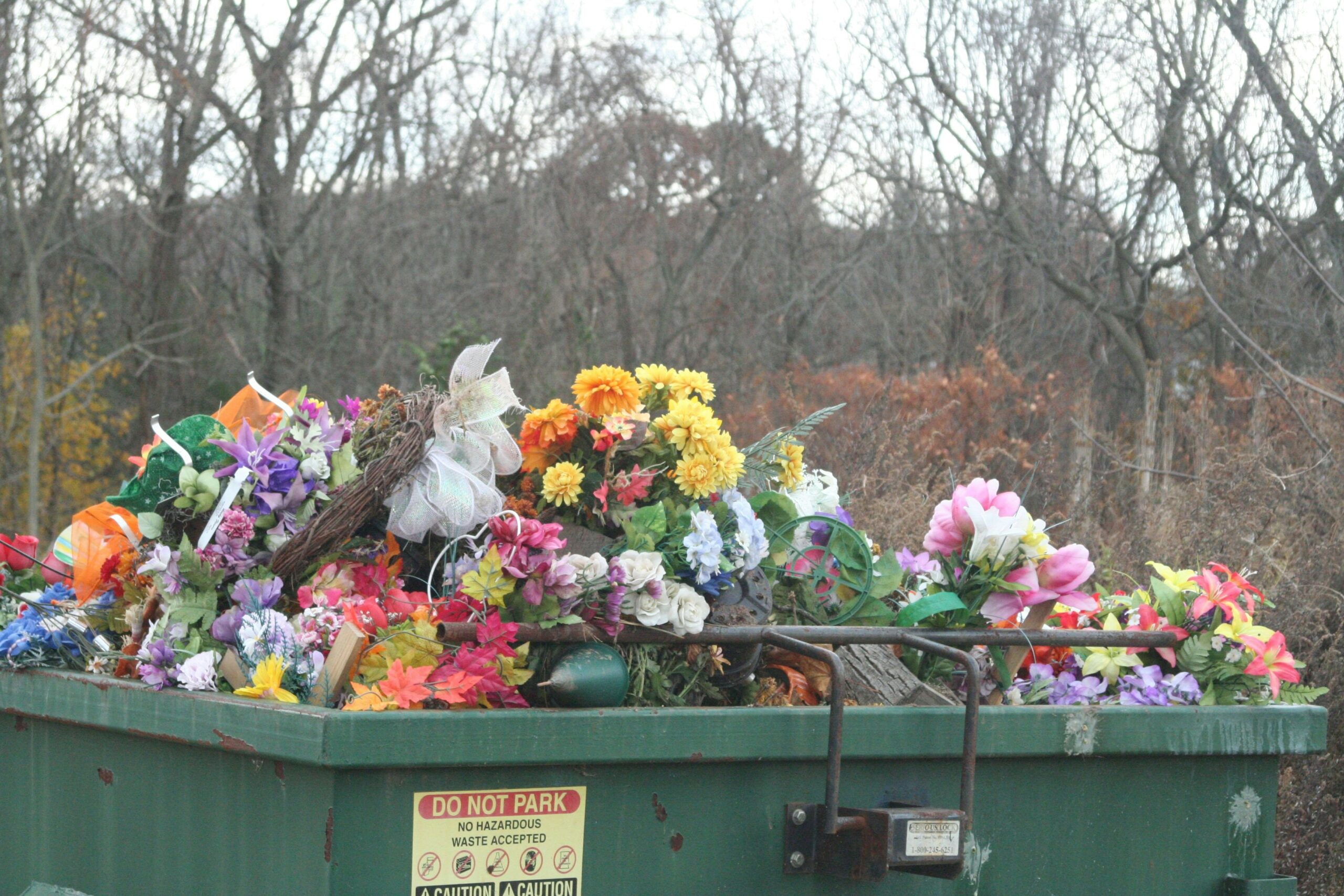
Dumpster diving has always existed.
It has always been part of the system, not outside of it. A behavior that emerges naturally when usable goods are discarded and people are aware of it. For most of modern consumer history, it stayed out of sight. Not because it was rare, but because it was hidden, stigmatized, and structurally kept out of view.
What is changing now is not the existence of dumpster diving. What is changing is its visibility.
And visibility changes everything.
Visibility Is Driven by Technology, Not Random Chance
For decades, dumpster diving happened in isolation.
There was no easy way to document it, share it, or scale awareness. If someone recovered usable food or products from a dumpster, that knowledge stayed local. It did not spread. Phones changed that.
Now, nearly everyone carries a high-quality camera connected to a global distribution network. Platforms like TikTok and YouTube allow people to document and broadcast behaviors instantly. As a result, dumpster diving has moved from something hidden to something widely observed.
Content tagged with dumpster diving has reached billions of views, exposing the scale of what is being discarded and what can be recovered (https://www.scarymommy.com/lifestyle/dumpster-diving).
This does something structurally important.
It turns isolated knowledge into shared knowledge.
And once knowledge is shared at scale, behavior becomes repeatable.

Awareness of Waste Is Increasing
Another reason dumpster diving is becoming more visible is that people are becoming more aware of how much is thrown away.
Modern systems produce excess as a feature, not a flaw.
Retailers overstock to avoid missing demand. Food systems discard products before they lose quality. Returned goods are often thrown away rather than restocked. Entire inventories are sometimes destroyed to protect pricing structures.
The result is a consistent stream of usable goods entering waste systems.
Estimates suggest that tens of billions of dollars in retail goods are discarded annually in the United States alone, while large portions of food waste remain perfectly edible (https://www.scarymommy.com/lifestyle/dumpster-diving).
As this reality becomes more visible, the perception of dumpsters changes.
They are no longer seen purely as waste.
They are seen as overflow.
Economic Pressure Increases Attention
Visibility is also tied to attention.
And attention increases under pressure.
Since 2020, cost of living has risen across housing, food, and basic necessities. Even when wages increase, they often lag behind inflation. This creates a persistent gap between what people need and what they can comfortably afford.
Under those conditions, people start looking more closely at their environment.
They notice inefficiencies.
They notice waste.
They notice alternatives.
Reports have shown that rising grocery prices are directly contributing to increased interest in dumpster diving, particularly for food recovery (https://aapnews.aap.com.au/news/dumpster-diving-on-the-rise-due-to-rising-grocery-costs).
This does not mean people suddenly became different.
It means their constraints changed.
And when constraints change, behavior adapts.

Social Proof Removes Friction
One of the most important drivers of visibility is social proof.
Before widespread documentation, dumpster diving carried a strong psychological barrier. Even if someone knew it was possible, they might not act on it because it felt abnormal or stigmatized.
Seeing others do it changes that.
When people watch others recover valuable, usable items consistently, it reframes the activity. It becomes something that works, something that is repeatable, something that is already being done at scale.
This reduces friction.
Behavior that feels rare becomes normalized. Behavior that feels risky becomes calculated.
In some cases, individuals have even turned dumpster diving into structured income streams, reselling recovered goods or documenting their findings for large audiences (https://www.reuters.com/markets/on-the-money/how-39-year-old-turned-dumpster-diving-into-full-time-income-2026-04-14/).
That level of visibility changes the category entirely.
It moves from hidden behavior to observable system interaction.
The Line Between Waste and Resource Is Blurring
One of the deeper shifts happening is conceptual.
The definition of “waste” is becoming unstable.
When people repeatedly see:
- sealed products being discarded
- edible food thrown away
- functional items abandoned
the label of waste stops making sense.
Instead, a different interpretation emerges.
These are not useless items. They are misallocated resources.
Dumpster diving highlights this distinction in a direct, tangible way. It shows that value does not disappear when something is thrown away. It simply moves location.
Once people understand that, visibility increases further.
Because the barrier is no longer just physical.
It is cognitive.
How Much Is Actually Being Thrown Away — And Where It Comes From
To understand why dumpster diving is becoming more visible, you have to quantify the scale of what is being discarded.
The numbers are not small. They are structural.
In the United States alone, roughly 30–40% of the entire food supply is never eaten, amounting to around 133 billion pounds and over $160 billion worth of food every year (https://www.usda.gov/foodwaste/faqs).
Other estimates put total annual food waste even higher, closer to 60 million tons, reinforcing the same pattern: a system producing far more than it ultimately distributes (https://www.rts.com/resources/guides/food-waste-america).
This is not happening in one place.
It is happening at every level of the system:
- Farms lose massive quantities before food even reaches stores
- Manufacturers overproduce and discard surplus
- Retailers throw away unsold inventory daily
- Restaurants and consumers add another layer of waste
By the time everything is combined, the system is not just inefficient. It is consistently generating excess.
Retailers Are a Key Pressure Point
While households contribute significantly to waste, retail is where visibility becomes most tangible.
This is where people encounter dumpsters.
U.S. supermarkets alone discard billions of pounds of food every year, often due to overstocking, cosmetic standards, and expiration labeling practices (https://worldmetrics.org/american-food-waste-statistics/).
Entire categories of products are routinely wasted:
- Produce that doesn’t meet visual standards
- Bakery items that expire within days
- Prepared foods that cannot be resold
- Dairy and meat approaching sell-by dates
Some estimates suggest grocery stores waste around 30% of their inventory, not because it is unusable, but because it does not fit within operational or aesthetic constraints (https://wifitalents.com/grocery-store-food-waste-statistics/).
This is where the system becomes visible.
Because unlike upstream waste, retail waste is accessible.
The Largest Players Generate the Largest Surplus
The scale of waste tends to mirror the scale of operations.
Large national retailers move enormous volumes of goods, which means even small inefficiencies translate into massive absolute waste.
For example, data suggests that major chains like Walmart alone discard hundreds of thousands of tons of food annually, much of it from perishable categories like produce and dairy (https://worldmetrics.org/american-food-waste-statistics/).
This is not unique to one company.
It reflects how large-scale retail operates:
- Inventory is optimized for full shelves, not minimal waste
- Overproduction is safer than understocking
- Disposal is often cheaper than redistribution
From a system perspective, this is rational.
From a visibility perspective, it creates concentration.
Large stores produce large dumpsters.
And large dumpsters make the system easier to see.
Environmental Awareness Is Increasing the Signal
Environmental awareness is also contributing to visibility.
Waste is no longer an abstract concept. People are increasingly aware that discarded goods represent:
- wasted energy
- wasted materials
- unnecessary emissions
Food waste alone is a major contributor to greenhouse gas emissions due to methane production in landfills (https://pmc.ncbi.nlm.nih.gov/articles/PMC7514403/).
As more people become aware of this, dumpster diving is not just seen as a way to recover value, but as a way to reduce waste.
This adds another layer of legitimacy to the behavior.
Not as something fringe, but as something aligned with broader concerns about sustainability and resource use.

Mental Models Are Shifting
Perhaps the most important change is not external.
It is internal.
People are changing how they interpret the system itself.
When you repeatedly see usable goods being discarded while costs rise, it creates cognitive tension. The system begins to look less efficient, less rational, and less aligned with lived experience.
Dumpster diving becomes one way of resolving that tension.
Not by rejecting the system entirely, but by navigating it differently.
This shift in mental models matters.
Because once people stop assuming that formal systems are the only access point to value, they begin to look elsewhere.
And once they look elsewhere, they find what was already there.
This Was Always Part of the System
It is easy to frame dumpster diving as a reaction to recent events.
But that framing is incomplete.
Dumpster diving is a predictable outcome of a system that:
- produces more than it distributes
- discards more than it recovers
- prices goods in ways that limit access
- and hides its inefficiencies from view
What has changed is not the structure.
What has changed is transparency.
Technology made it visible.
Economic pressure made people pay attention.
Social platforms made it replicable.
Environmental awareness made it meaningful.
And once all of those forces align, something that was always present becomes impossible to ignore.
Final Thought
Dumpster diving is not new.
It is now seen more often. And when something becomes visible at scale, it stops being an edge case and starts becoming data.
Not data about individuals. Data about systems. It shows where value is created, where it is lost, and where it can still be found.
And as long as those patterns remain unchanged, the visibility will continue to grow.
Explore more from Interconnected Earth:
World Events: https://interconnectedearth.com/category/world-events/ | Mental Health: https://interconnectedearth.com/category/mental-health/ | Climate Change: https://interconnectedearth.com/category/climate-change/ | Technology: https://interconnectedearth.com/category/technology/ | Arts and Entertainment: https://interconnectedearth.com/category/arts-and-entertainment/ | Philosophy: https://interconnectedearth.com/category/philosophy/