
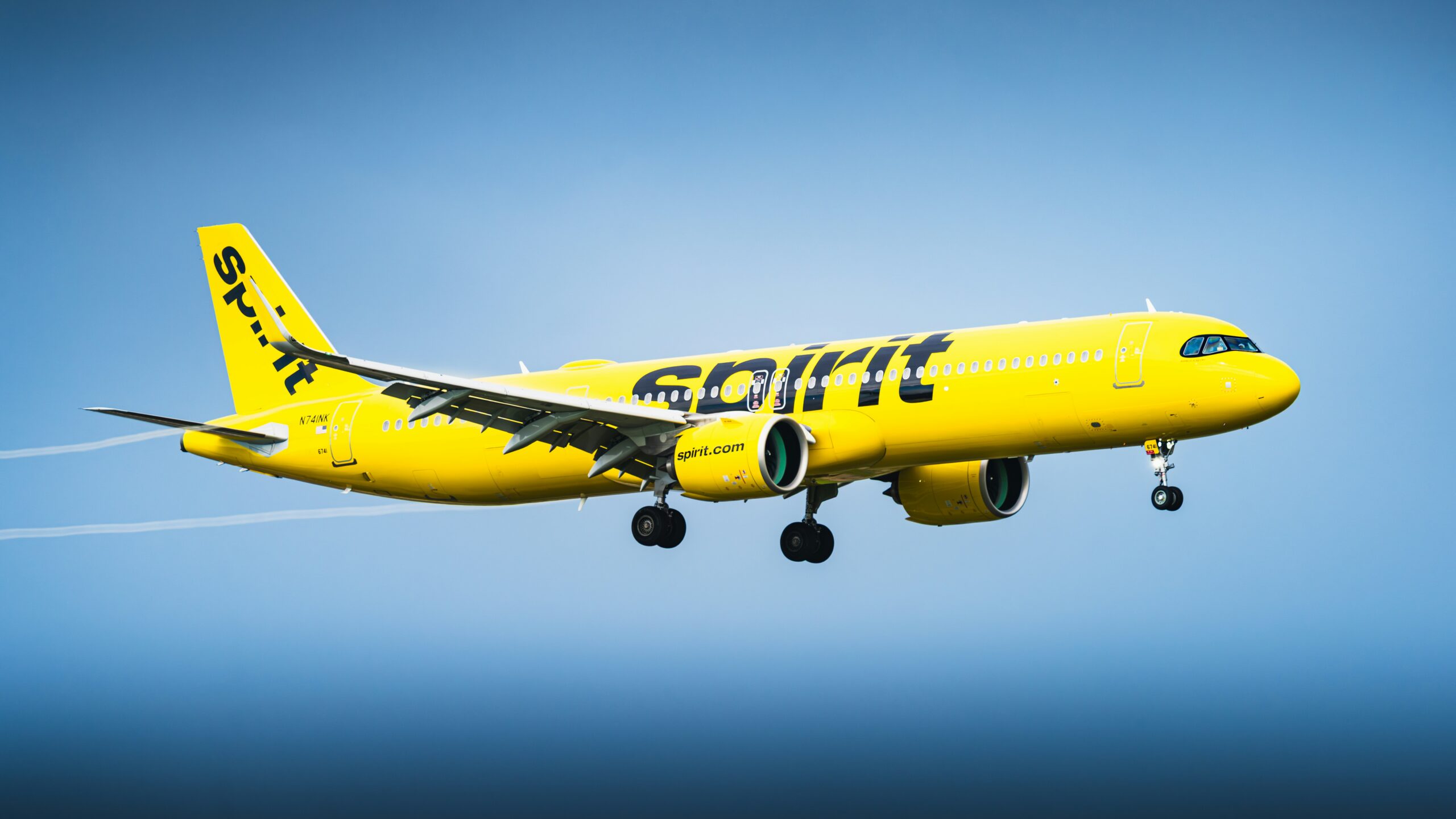
In early May 2026, one of the strangest and most revealing economic stories of the year erupted online. A viral campaign built around the website Lets Buy Spirit Air began spreading across TikTok, Reddit, Instagram, and news outlets with a surprisingly simple pitch:
What if ordinary people bought Spirit Airlines together?
The campaign, associated with creator Hunter Peterson and the broader “Spirit 2.0” idea, emerged almost immediately after reports that Spirit Airlines had effectively collapsed after years of financial instability, failed merger attempts, mounting debt, and worsening operating conditions. Early reporting indicated the campaign rapidly accumulated tens of thousands of pledges and over $20 million in promised support, although those numbers were not independently verified.
At first glance, the entire idea sounds absurd.
Airlines are among the most difficult businesses on Earth to operate profitably. They burn enormous amounts of cash, face constant regulatory oversight, depend on volatile fuel markets, and operate on razor-thin margins. Even large, experienced carriers routinely collapse, merge, restructure, or seek bankruptcy protection.
And yet, despite all of that, the campaign struck a nerve.
Because beneath the memes, the jokes, and the viral enthusiasm was something deeper: a growing frustration with modern corporate ownership, rising travel costs, shrinking competition, and the feeling that ordinary people have almost no control over the systems they rely on every day.
The campaign may or may not succeed. In purely financial terms, the odds are difficult. But culturally and politically, the fact that millions of people suddenly became emotionally invested in the idea of collectively owning an airline says something important about this moment in history.
How Spirit Airlines Reached This Point
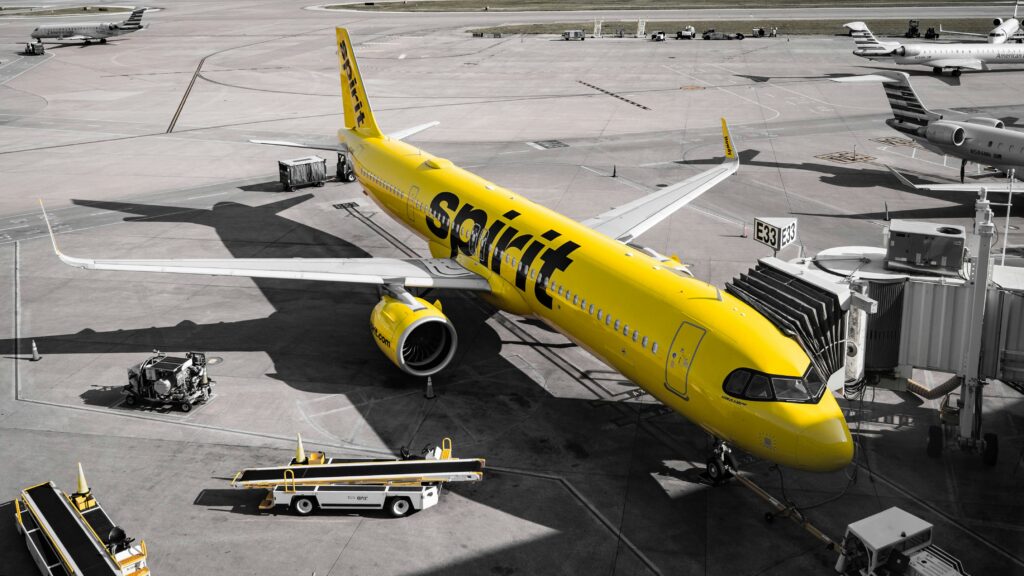
The downfall of Spirit Airlines did not happen overnight.
For years, Spirit occupied a strange but important place in the American airline ecosystem. It became famous, and often infamous, for ultra-low fares combined with aggressive fee structures. Customers joked about the airline constantly, but millions still used it because it made air travel accessible to people who otherwise could not afford frequent flights.
Spirit’s business model depended on volume, cost minimization, and price disruption. It pressured larger airlines to lower fares on overlapping routes, especially in competitive leisure markets.
But that same low-cost structure also left the airline extremely vulnerable.
The airline faced repeated financial pressure after the pandemic era, accumulating billions in losses while struggling with debt obligations, operational disruptions, labor costs, and changing consumer expectations. The failed merger with JetBlue became one of the biggest turning points. Regulators blocked the deal over antitrust concerns, removing what many analysts viewed as Spirit’s clearest path to survival.
By May 2026, reports indicated liquidation was becoming increasingly likely. Spirit Airlines ultimately shut down operations after years of instability, citing severe financial pressure and rising fuel costs connected to broader geopolitical turmoil.
That closure had immediate consequences:
- Thousands of workers suddenly faced uncertainty
- Customers lost flights and travel plans
- Airport slots and routes became vulnerable to acquisition
- Competitors gained leverage in markets Spirit once disrupted
When low-cost carriers disappear, ticket prices often rise afterward because competitive pressure weakens.
That reality helps explain why the public reaction became so intense.
The Viral Birth of Spirit 2.0
Hunter Peterson’s campaign did not begin as a polished corporate acquisition strategy. By many accounts, it began almost as a thought experiment online.
But social media can transform jokes into movements with astonishing speed.
The campaign framed itself not as a traditional corporate buyout, but as a people-powered rescue effort. The language deliberately echoed cooperative ownership models and public participation rather than venture capital or private equity. Reporting described the campaign as inspired partly by the ownership structure of the Green Bay Packers, the famously community-owned football franchise.
The emotional appeal was obvious.
Many Americans feel alienated from large corporations, especially airlines. Flying has increasingly become associated with fees, delays, shrinking seats, loyalty-program complexity, and customer frustration. The idea that passengers themselves could reclaim ownership of an airline felt, at least symbolically, like a rebellion against that system.
By May3rd 2026 The campaign reportedly generated:
- More than 36,000 pledges
- Roughly $23 million in promised support
- Massive social media engagement
- Repeated website crashes from traffic surges
The website itself presented the project as a “community-owned airline” built by workers, passengers, and the communities Spirit served.
Even if the campaign never acquires an aircraft, the scale of interest alone matters.
It demonstrates that many people are actively searching for alternatives to traditional corporate ownership structures.
The Enormous Challenges Ahead
The hopeful narrative surrounding Spirit 2.0 is emotionally compelling.
The practical reality is much harder.
Buying an airline is not like crowdfunding a product, a startup, or an independent film. Airlines require constant liquidity and operational discipline. The acquisition cost itself is only the beginning.
A functioning airline must continuously pay for:
- Fuel
- Aircraft leases
- Maintenance
- Insurance
- Airport gate agreements
- Labor contracts
- Scheduling systems
- Safety compliance
- Pilot staffing
- Air traffic coordination
- Customer support infrastructure
The cash burn is relentless.
Even established airlines with billions in capital frequently struggle during downturns. A crowd-funded ownership structure would face immediate questions from regulators, lenders, airports, unions, suppliers, and lessors.
Would the organization have stable leadership?
Who makes operational decisions?
How are disputes resolved?
Can thousands or millions of contributors govern a business requiring rapid executive action?
Those questions become even more complicated because much of Spirit’s fleet was reportedly leased rather than fully owned. That means many aircraft could quickly return to leasing companies rather than remain available for a reborn airline.
In addition, airlines operate in one of the most heavily regulated industries in the world. Federal oversight regarding safety, maintenance, operations, financial stability, and licensing would create additional hurdles for any unconventional ownership structure.
None of these problems are impossible.
But they are extraordinarily difficult.
Could Other Airlines Try to Stop It?
If Spirit 2.0 gained real momentum, competitors would almost certainly respond aggressively.
Not necessarily through direct attacks, but through market behavior.
There are several likely responses.
Asset Absorption
The first is simple acquisition.
If Spirit’s assets enter liquidation proceedings, rival airlines could quickly move to acquire:
- Gates
- Routes
- Airport slots
- Maintenance infrastructure
- Personnel
- Aircraft access
This is often how consolidation happens after airline failures.
A weakened competitor becomes an opportunity.
Narrative Warfare
The second response would likely involve credibility.
Established airlines could emphasize:
- Operational stability
- Safety track records
- Financial seriousness
- Existing infrastructure
- Regulatory experience
A crowd-funded airline would face skepticism from institutional actors almost immediately.
Rivals would not necessarily need to destroy the idea publicly. They could simply wait for uncertainty to undermine confidence naturally.
Pricing Pressure
If Spirit 2.0 somehow launched operations, competitors could temporarily lower fares on overlapping routes to squeeze margins.
Large airlines have historically used aggressive pricing strategies against smaller challengers. The airline industry has a long history of consolidation pressure that often favors scale over experimentation.

Why Some People Still Believe It Could Work
Despite all these obstacles, the campaign continues attracting attention because it taps into something much larger than aviation.
It reflects broader public frustration with:
- Corporate consolidation
- Private equity acquisitions
- Asset stripping
- Rising inequality
- Economic precarity
- Declining public trust in institutions
People increasingly feel that major industries operate primarily for investors rather than customers or workers.
That perception creates space for ideas that would once have seemed impossible.
The campaign also arrives during a period where internet-driven financial movements have repeatedly demonstrated that online communities can mobilize substantial resources quickly. While many of those efforts have failed or become chaotic, they have shown that decentralized enthusiasm can sometimes influence markets and institutions in unexpected ways.
Even skeptics on Reddit acknowledged that experts, lawyers, aviation professionals, and financial advisors reportedly began contacting organizers as the movement gained traction.
That does not guarantee success.
But it suggests the project evolved beyond being only a meme.
The Cooperative Question

One of the most interesting aspects of Spirit 2.0 is that it reopens a larger debate about democratic ownership.
Can essential industries operate differently?
Historically, cooperative models have succeeded in certain sectors:
- Agriculture
- Retail
- Credit unions
- Regional enterprises
- Some employee-owned businesses
But airlines present unique difficulties because of their sheer operational complexity and capital intensity.
There are partial precedents. Employee stock ownership programs have existed in aviation before, including at United Airlines. But ownership alone did not eliminate structural business problems or labor tensions.
Democratic ownership models work best when:
- Governance remains manageable
- Scale stays relatively localized
- Decision-making remains efficient
- Capital needs remain sustainable
Airlines challenge all four conditions simultaneously.
Still, the fact that people are discussing these ideas at all is notable.
For decades, many industries have moved toward greater consolidation and financialization. Spirit 2.0 represents a public reaction against that trend, even if the project ultimately fails.
What Happens If Nobody Buys Spirit?
If no rescue emerges, liquidation becomes the most likely outcome.
That process would probably involve:
- Asset sales
- Route redistribution
- Workforce layoffs
- Creditors recovering portions of debt
- Competitors expanding market share
Consumers could face higher fares on some routes previously disrupted by Spirit’s ultra-low-cost pricing model.
Workers could face reduced bargaining leverage as the labor market consolidates around fewer employers.
Private equity firms or rival carriers could selectively acquire profitable pieces while leaving behind less valuable operations.
In many ways, that outcome would represent the standard modern corporate cycle:
growth, debt pressure, bankruptcy, consolidation, asset redistribution.
That is exactly the cycle many supporters of Spirit 2.0 believe they are resisting.
The Most Important Lesson
The real significance of the Let’s Buy Spirit movement may not be whether it successfully acquires an airline.
The deeper significance is that millions of people immediately understood why the idea felt appealing.
That matters.
The campaign exposed widespread dissatisfaction with how major industries operate and who benefits from them. It showed that many people are hungry for ownership models that feel more participatory, transparent, and community-oriented.
Whether Spirit 2.0 succeeds or fails, the emotional response surrounding it reveals a growing desire for alternatives to systems dominated entirely by institutional capital.
At the same time, the campaign also demonstrates the hard realities of scale.
Enthusiasm alone cannot operate an airline.
Viral energy cannot replace regulatory compliance, operational logistics, or billions in required capital.
The internet can generate attention almost instantly, but transforming attention into durable institutions remains extraordinarily difficult.
Still, even a long-shot effort can influence public conversations.
And sometimes the importance of a movement is not only whether it wins, but whether it changes what people believe might be possible.
Sources:
- Business Insider coverage of Spirit 2.0
- Associated Press reporting on Spirit shutdown
- Dexerto reporting on crowdfunding campaign
- Moneywise coverage of the viral movement
- Los Angeles Times reporting on bailout discussions
- Yahoo reporting on pledge totals and traffic surge
- Reddit cooperative discussion thread
- Reddit discussion about feasibility and airline assets
Explore more from Interconnected Earth:
World Events: https://interconnectedearth.com/category/world-events/
Technology: https://interconnectedearth.com/category/technology/
Mental Health: https://interconnectedearth.com/category/mental-health/
Climate Change: https://interconnectedearth.com/category/climate-change/
Arts and Entertainment: https://interconnectedearth.com/category/arts-and-entertainment/
Philosophy: https://interconnectedearth.com/category/philosophy/