

The public anger feels predictable.
In recent weeks, a pattern has emerged that many are calling alarming, but for others, it feels inevitable. At least 22 warehouse fires have been reported in a relatively short span of time, with causes in many cases still undisclosed. At least one was set in a viral moment recorded on social media where the individual lighting the fires said “all you had to do was pay us enough to live”. Alongside this, there has been a noticeable rise in hostility directed at corporate leadership, including murder such as in the Luigi Mangione case, but also threats, isolated acts of aggression, and growing discussion around executive deaths that have not always been widely detailed in public reporting.
For some, these developments are deeply concerning signs of instability and signal public anger. For others, they are viewed as the visible symptoms of something that has been building for years.
Not everyone agrees on what these events mean. But more people are starting to agree on why they are happening.
Public Anger: Predictable Pressure, Not Random Chaos
Calling this moment “troubling” suggests surprise. But a significant portion of the public is not surprised.
That does not mean there is broad agreement with destructive actions. It means that the underlying conditions producing anger and instability have been visible for a long time. When those conditions intensify without meaningful relief, reactions become more likely.
This is what predictability looks like in a strained system.
Over the past decade, multiple economic indicators have moved in ways that increase pressure on everyday life:
- The cost of living has risen faster than wages
- Housing affordability has deteriorated
- Food prices have remained elevated
- Work hours have increased, especially for lower-income households
- Benefits and safety nets have weakened
- Social time and community engagement have declined
None of these shifts operate in isolation. They compound.

The Economic Foundation: Costs Rising Faster Than Stability
Data from the U.S. Bureau of Labor Statistics shows that while nominal wages have increased, real wage growth has struggled to keep pace with inflation in key categories like housing, food, and healthcare.
Housing remains one of the most significant drivers of financial strain. As explored in our previous analysis
https://interconnectedearth.com/how-the-2017-tax-cuts-drove-up-rent/
policy changes tied to the Tax Cuts and Jobs Act helped reshape investment incentives, contributing to rising rent costs and increased consolidation in housing markets.
When rent rises sharply, it has a cascading effect. Households allocate more income to housing, leaving less for everything else. That shift influences:
- Food purchasing behavior
- Transportation decisions
- Healthcare access
- Savings and long-term planning
Housing is not just one expense. It is the anchor that determines how flexible the rest of a budget can be.
It is also important to note when the person you are buying things from also has their rent raise, they must also raise prices.
Food Costs and Daily Strain
According to the U.S. Department of Agriculture, food prices have increased significantly over the past several years, with grocery costs remaining persistently high even as inflation has moderated in other sectors.
Food is a non-negotiable expense. When prices rise, there is no option to defer consumption without self-harm. Instead, people adjust by:
- Buying lower-quality or less nutritious food
- Reducing portion sizes
- Increasing reliance on credit
This is where financial stress becomes physical and psychological stress.
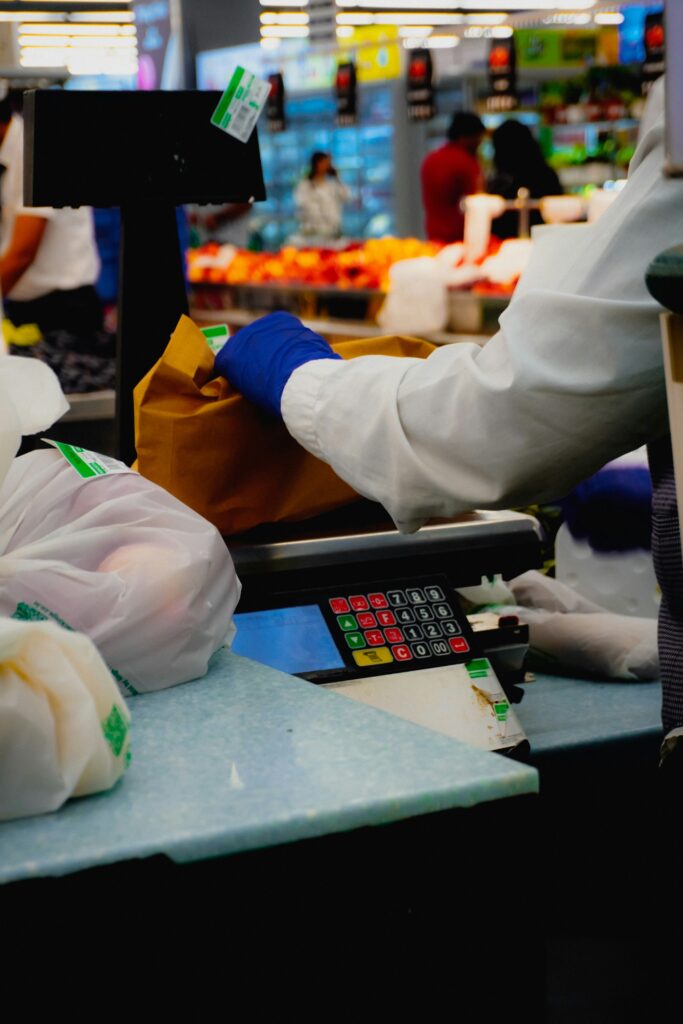
Working More, Getting Less
The idea that people are working more is not just anecdotal.
The U.S. Bureau of Labor Statistics reports that millions of Americans hold multiple jobs, and average working hours remain elevated in several industries, particularly in logistics, warehousing, and service sectors.
At the same time, job quality has shifted:
- More roles are part-time or contract-based
- Benefits like healthcare and retirement contributions are less consistent
- Scheduling is often unpredictable
This creates a paradox. People are working more hours, sometimes across multiple jobs, but experiencing less stability.
That combination leads to exhaustion, not security.

The Decline in Time and Social Connection
Economic strain does not stop at finances. It reshapes how people live.
Research from the Pew Research Center indicates that Americans are spending less time in social settings and reporting higher levels of isolation.
When people work longer hours or multiple jobs, something has to give. Often, it is:
- Time with family
- Community involvement
- Rest and recovery
This reduction in social connection has measurable effects on mental health and overall well-being. It also changes how people process frustration. Without strong social networks, grievances are more likely to intensify rather than diffuse.
Upward Mobility and the Breaking of Expectations
One of the most significant shifts is not just economic hardship, but declining belief in upward mobility.
The Pew Research Center has documented a growing skepticism, particularly among younger generations, that hard work alone will lead to financial improvement.
This is a critical psychological shift.
When people believe that effort leads to progress, they tolerate hardship differently. When that belief weakens, frustration tends to rise more quickly and more intensely.
It is not just about current conditions. It is about the perceived absence of a path forward.
Corporate Power and Public Perception
Another layer shaping this moment is how corporate leadership is perceived.
High-profile executives, including figures like Sam Altman, have become symbolic of broader economic systems. Incidents involving threats or hostility toward such figures reflect a growing tension between concentrated wealth and public frustration.
At the same time, discussions around executive deaths and figures such as Luigi Mangione have contributed to a wider narrative that something unusual is happening, even when details remain incomplete or unverified.
A grounded takeaway is this: trust in institutions, including corporations, has declined. That decline shapes how events are interpreted and amplifies existing tensions.
The Boiling Point
When you combine all of these factors, the concept of a “boiling point” becomes less abstract.
You have:
- Rising costs across essential categories
- Increased working hours and job instability
- Declining benefits and protections
- Reduced time for social connection
- Lower confidence in future mobility
This is sustained systemic pressure.
It does not produce a single uniform response. Instead, it manifests in different ways:
- Labor organizing and strikes
- Political polarization
- Declining institutional trust
- And in some cases, destructive or confrontational actions
Not everyone supports those actions. Many strongly oppose them. But their emergence is part of a broader spectrum of responses to prolonged strain.

Why This Moment Feels Different
There have always been economic cycles and periods of hardship. What makes this moment distinct is the convergence of multiple stressors happening simultaneously while those at the top remain largely untouched. This is compounded by the speed at which information spreads
People are not only experiencing pressure. They are constantly exposed to evidence that others are experiencing the same thing thus why misinformation and access to information has begun to shift in recent years.
That shared awareness changes perception. It reinforces the idea that the issue is not individual failure, but systemic imbalance.
Connecting Back: Policy, Rent, and Ripple Effects
This is where the connection to our previous analysis becomes critical.
In https://interconnectedearth.com/how-the-2017-tax-cuts-drove-up-rent/ we examined how the Tax Cuts and Jobs Act contributed to rising housing costs.
That was not the only factor driving economic strain, but it was a significant one.
Housing cost increases ripple outward:
- Higher rents increase wage pressure
- Increased wage pressure contributes to higher prices in other sectors
- Higher prices reinforce cost-of-living strain
This feedback loop is part of why frustration has become so widespread. It is not one issue. It is a network of interconnected pressures.
Where This Leaves Us
The warehouse fires, the rising hostility toward corporate leadership, and the broader sense of instability are not isolated developments.
They are signals.
Signals of a system under strain. Signals of a population experiencing sustained pressure across multiple dimensions of daily life.
For some, these signals are alarming. For others, they are expected.
What is clear is that the underlying conditions driving this moment are not temporary. They have been building for years.
Until those conditions change, the pressure does not dissipate.
It accumulates.
Sources
- U.S. Bureau of Labor Statistics
https://www.bls.gov - U.S. Department of Agriculture
https://www.usda.gov - Pew Research Center
https://www.pewresearch.org - Previous analysis
https://interconnectedearth.com/how-the-2017-tax-cuts-drove-up-rent/
Explore more:
World Events: https://interconnectedearth.com/category/world-events/
Mental Health: https://interconnectedearth.com/category/mental-health/
Technology: https://interconnectedearth.com/category/technology/
Philosophy: https://interconnectedearth.com/category/philosophy/