
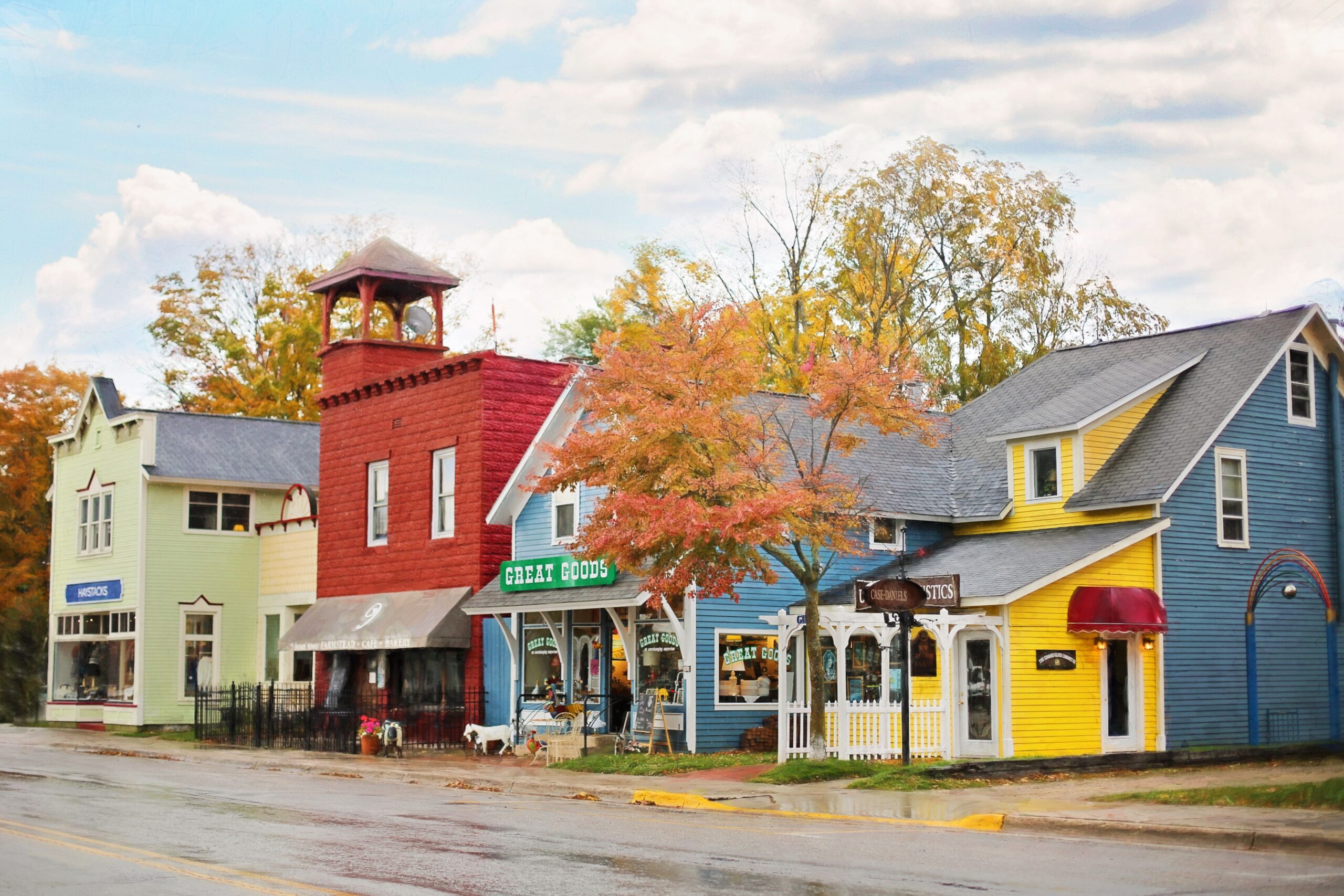
There’s a quiet violence in the way money moves through our modern economy. It doesn’t look like violence, it looks like a swipe of a card, a tap of a phone, a two-day delivery box on the porch. But trace that transaction far enough and you’ll find a pipeline, one that pulls wealth out of our neighborhoods and funnels it into the vaults of distant shareholders. Healing our communities, and building the kind of resilience this fractured moment demands, starts with a simple, radical act: keeping our money close to home.
This is the case for the radical localization of capital, or spending money locally. And the single most effective tool we have to get there is local money.
The Promise That Wasn’t Kept
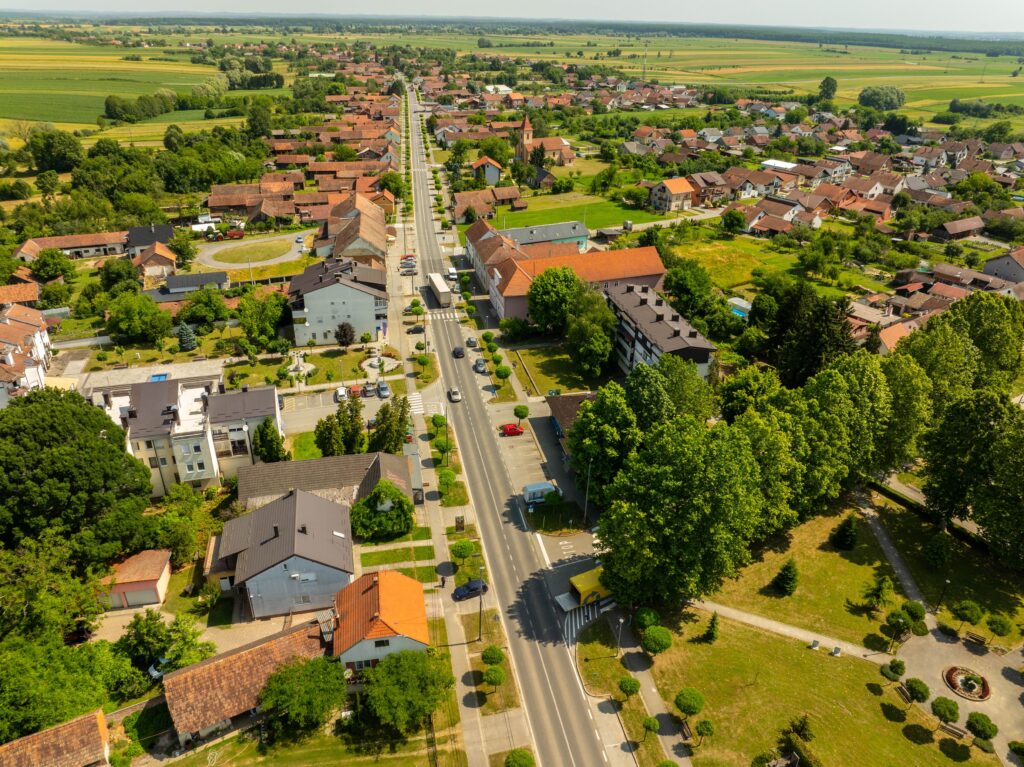
For decades, conventional economic theory championed globalization, centralized efficiency, and the unchecked expansion of transnational corporations. We were promised that a rising tide would lift all boats, that deregulation would spark innovation, and that global supply chains would deliver universal prosperity.
Decades into that experiment, the reality on the ground tells a different story. Our small towns are hollowed out. Our main streets are lined with vacant storefronts. Wealth generated by local hands, grown in local soil, built with local labor, is systematically drained away to enrich a narrow class of offshore shareholders and corporate executives who will never set foot in the communities they profit from.
The flaw isn’t a policy glitch. It’s baked into the mechanics of the system itself. When currency is spent within a multibillion-dollar corporate ecosystem, whether at a big-box retailer, an e-commerce monopoly, or a fast-food chain, that money doesn’t linger. It exits the community almost instantly, swept into a hyper-financialized system designed to minimize local taxation, depress local wages, and consolidate monopolistic power.
Turning this around will take more than cosmetic reform. It calls for an economic reawakening rooted in community self-reliance and a deep respect for the ecosystems, human and natural alike, that sustain us. It starts with something as simple, and as radical, as deciding where our currency lives.
How Corporate Extraction Actually Works

To understand why keeping capital close to home matters so much, it helps to look honestly at how corporate expansion dismantles community ecosystems. Multinational corporations don’t invest in the communities they enter; they exploit them as markets for consumption and resource extraction. When a corporate giant enters a town, it arrives with massive capital advantages that let it underprice local businesses until they’re driven into bankruptcy.
Once local competition is gone, the pattern is predictable. Wages fall. Service quality declines. Profit is extracted at scale and funneled out of the geography where it was actually earned. Economist Michael Shuman has written extensively about this dynamic, describing how corporate globalization creates an illusion of abundance while quietly liquidating the tangible wealth, biodiversity, and cultural character of real human communities.
Local governments have made this worse by trapping themselves in a toxic cycle of corporate welfare. Millions of taxpayer dollars are routinely handed out as subsidies, tax abatements, and infrastructure packages meant to lure big-box retailers and tech campuses into town. It’s a devastating misallocation of public funds. We’re effectively paying corporations to build the very infrastructure that will strip power from our own local institutions.
Reclaiming our financial systems demands an immediate halt to that corporate welfare cycle. Capital needs to be anchored where it’s generated, reinvested through community-led initiatives, and stewarded through democratic economic institutions accountable to the people who actually live there, not to shareholders three time zones away.
The Local Multiplier Effect: Keeping Wealth Alive

At the heart of localization economics is a phenomenon known as the Local Multiplier Effect. When you spend money at a genuinely independent, locally owned business, that dollar doesn’t vanish into a corporate ledger. The local business owner is far more likely to hire a local bookkeeper, contract a local marketing freelancer, source inventory from a regional farm or artisan, and deposit the revenue at a community bank or credit union.
Economic impact studies consistently validate this. Research from the Institute for Local Self-Reliance and similar independent economic analyses has found that locally owned businesses recirculate roughly three to four times more revenue within their home economies than national chains do.
Put in dollar terms: for every $100 spent at an independent local merchant, somewhere between $45 and $68 tends to stay within the community. Spend that same $100 at a corporate chain, and less than $15 remains, with the rest exported almost immediately to corporate headquarters and global financial markets.
That gap is really the whole story. It’s the difference between an economy that circulates and one that drains. By retaining capital locally, communities build internal economic velocity, money circulates, jobs get created, municipal services get funded through a healthier local tax base, and a web of economic interdependence forms that acts as a buffer against recessions and global supply-chain disruptions.
Your Spending Is a Form of Power

Corporations derive their outsized political and social influence from one primary source: our aggregated spending. Every time we swipe a card at a mega-monopoly, we’re arming that corporation with the financial leverage it uses to lobby politicians, rewrite environmental regulations, suppress unionization efforts, and dominate public discourse.
Choosing local money is an act of economic non-cooperation, a quiet, deliberate defiance. By intentionally withholding wealth from corporate platforms, we strip away a piece of their leverage. When enough people collectively shift their spending toward local producers, community-supported agriculture, and regional credit unions, the corporate structure genuinely begins to starve.
This isn’t about waiting on slow-moving antitrust legislation that’s constantly diluted by corporate lobbyists. It’s a grassroots reallocation of purchasing power that starts today, at the register, with choices any of us can make.
Rebuilding Community Resilience and Social Capital
Beyond the mathematical benefits of localized financial circulation, keeping our transactions regional carries real socio-ecological value. A healthy economy can’t be measured by GDP alone; it has to be measured by the well-being, connectedness, and ecological health of the people living inside it.
Localizing capital directly nurtures what economists call “social capital,” the networks of trust and mutual obligation that bind a community together. Local business owners aren’t faceless shareholders hiding behind algorithms. They’re neighbors. They sit on school boards, sponsor youth sports teams, care about the health of the town’s watershed, and are personally invested in the community’s long-term wellbeing.
When economic power stays close to home, relationships re-enter the transaction. Commerce stops being an anonymous, alienating exchange and starts to look more like mutual aid.
Local economies also tend to be more ecologically sustainable. Global corporations rely on extended supply chains that generate massive carbon footprints through transoceanic shipping and long-haul trucking. When capital and production stay local, supply chains naturally shrink. We shift toward seasonal consumption, reduce packaging waste, and end up with producers who are directly accountable, to the people who can literally walk into their shop and ask questions, for their environmental footprint.
Putting Localization Into Practice

How do we actually put this into everyday practice? It takes a deliberate, step-by-step decoupling from corporate systems.
Move your money out of Wall Street and onto Main Street. Commercial megabanks often use customer deposits to fund fossil fuel infrastructure and speculative financial instruments. Community banks and credit unions, by contrast, are structurally oriented toward reinvesting in local mortgages, small business loans, and neighborhood development.
Cultivate food sovereignty. Buy directly from regional farmers through farmers’ markets, CSAs, and food cooperatives, bypassing the industrial agricultural complex entirely. Food sovereignty is, in many ways, the foundation of real economic resilience.
Explore local currencies and time banks. Complementary currencies and time-banking systems are explicitly designed to keep purchasing power circulating within a defined geographic community, largely insulated from the pull of global capital markets.
Support cooperatives and community land trusts. Worker-owned cooperatives and community land trusts democratize property ownership, ensuring that real estate value and business profits remain in the hands of the people actually creating that value, rather than distant investors.
Each of these is a practical, achievable step. None of them require waiting on legislation or a change in leadership somewhere far away. They start with decisions we can make this week.
A Call to Interconnected Action
The crises defining this moment, widening wealth inequality, systemic instability, ecological collapse, political polarization, aren’t accidental bugs in an otherwise functional system. They’re its defining features. We can’t heal an interconnected Earth by continuing to run it through the same centralized, extractive financial systems that fractured it in the first place.
Shifting our focus to local money offers a genuinely practical path forward. It asks us to see our wealth not as an abstract tool for personal accumulation, but as a living, circulating force that belongs, first and foremost, to the places and people we call home.
By redirecting spending away from destructive corporations, standing firmly behind local merchants and farmers, and building decentralized, democratic economic institutions, we begin to reclaim something that’s been slipping away for decades: the ability to shape our own economic future from the ground up.
Further Reading & Sources
- Institute for Local Self-Reliance (ILSR), research on the local multiplier effect and the economic impact of independent businesses: https://ilsr.org/key-studies-why-local-matters
- Schumacher Center for a New Economics, work on local currencies and decentralized capital infrastructure: https://centerforneweconomics.org
- The New Economics Foundation (NEF), “Plugging the Leaks,” a framework for community wealth building: https://neweconomics.org