

The modern world has been engineered around the automobile. Roads dominate landscapes, parking lots consume valuable land, and daily life in many regions assumes that driving is not optional but required. Yet beneath this system lies a measurable, often overlooked cost: human life, long-term disability, and widespread societal strain.
Here we examine a fundamental question with far-reaching implications: If societies shifted away from car dependency toward robust public transportation systems, how many lives could be saved, how many injuries avoided, and what would the broader economic and social consequences look like?
The answer is not speculative. It is grounded in transportation safety data, public health research, and economic modeling. When taken together, the findings point to one of the most significant preventable causes of death and disability in modern society and one of the clearest opportunities for systemic improvement.
The Scale of the Problem: Global and U.S. Road Fatalities
According to the World Health Organization, road traffic crashes kill approximately 1.19 million people globally every year.
Source: https://www.who.int/news-room/fact-sheets/detail/road-traffic-injuries
In the United States, the annual death toll consistently ranges between 40,000 and 45,000 fatalities, based on data from the National Highway Traffic Safety Administration.
Source: https://www.nhtsa.gov/road-safety
These are not marginal figures. Road traffic injuries rank among the leading causes of death globally, particularly for younger populations. Unlike many diseases, however, these deaths are highly preventable through structural change.
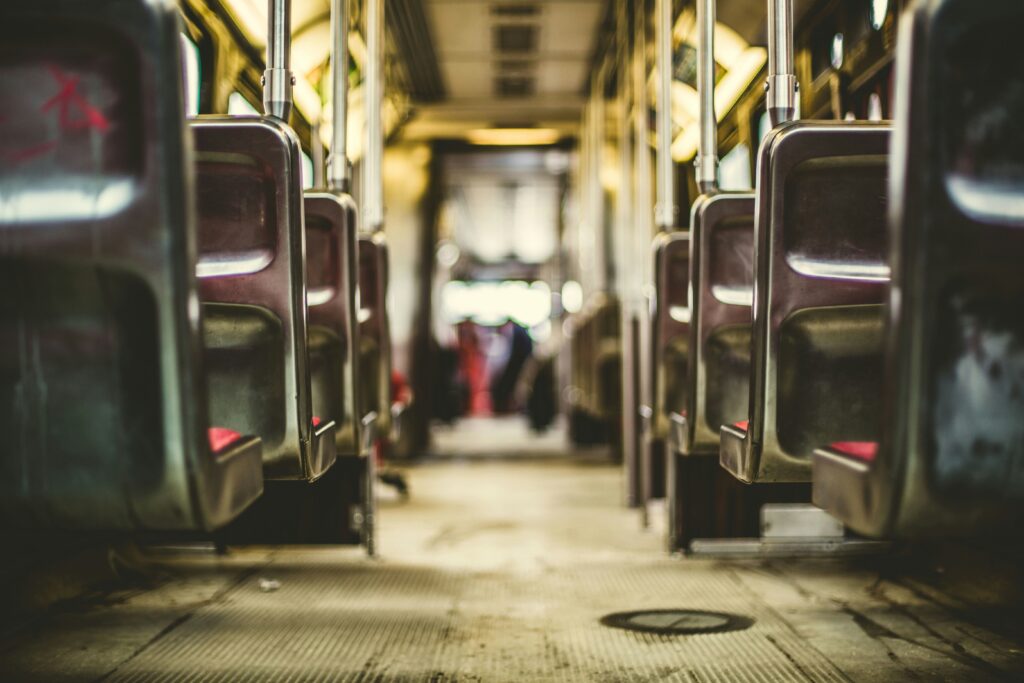
Why Public Transportation Is Statistically Safer
One of the most cited findings in transportation safety comes from the American Public Transportation Association, which reports that:
Traveling by public transit is approximately 10 times safer per mile than traveling by private automobile.
Source: https://www.apta.com/research-technical-resources/safety-security/
This safety advantage is not accidental. It is rooted in system design:
- Professional operators with strict licensing and monitoring
- Dedicated infrastructure such as rail lines and bus lanes
- Reduced exposure to high-risk behaviors like speeding or impaired driving
- Lower collision probability per passenger mile
When risk is aggregated across millions of trips, the difference becomes enormous.
Estimating Lives Saved: What Happens If Car Use Declines?
Let’s move from theory to practical impact.
If even a portion of car travel were replaced with public transit, the reduction in fatalities would scale proportionally. While exact figures depend on adoption rates, modeling and historical comparisons suggest:
- A moderate shift could prevent thousands of deaths annually in the U.S. alone
- A large-scale shift could reduce fatalities by tens of thousands over time
Globally, the impact would be even more dramatic.
If public transit replaced a significant share of vehicle miles traveled worldwide, even a 10–20% reduction in car use could translate into hundreds of thousands of lives saved each year.
Beyond Fatalities: The Hidden Epidemic of Injury and Disability
Fatalities are only part of the equation.
According to the World Health Organization:
- 20 to 50 million people suffer non-fatal injuries from road crashes annually
- Many result in permanent disabilities, including:
- Traumatic brain injuries (TBI)
- Spinal cord damage
- Limb loss
- Chronic pain conditions
Source: https://www.who.int/news-room/fact-sheets/detail/road-traffic-injuries
For every life lost, dozens more are permanently altered.
Reducing car dependency would directly reduce:
- High-speed collisions
- Multi-vehicle crashes
- Pedestrian fatalities
- Bicycle-related injuries
This leads to a measurable decline in long-term disability rates, which has cascading benefits for healthcare systems, labor participation, and quality of life.
The “Safety in Numbers” Effect
A key concept in transportation planning is the Safety in Numbers phenomenon.
As more people walk, bike, or use transit:
- Drivers become more aware and cautious
- Infrastructure adapts to protect non-drivers
- Risk per individual traveler decreases
This creates a positive feedback loop:
More transit use → fewer cars → safer streets → more non-car travel → even fewer accidents
Cities that have invested heavily in transit and active transport consistently demonstrate lower per-capita traffic fatality rates.
Air Pollution: The Secondary Death Toll

Car dependency does not only kill through crashes. It also contributes to premature death through air pollution.
Vehicle emissions release:
- Particulate matter (PM2.5)
- Nitrogen oxides (NOx)
- Volatile organic compounds
These pollutants are linked to:
- Cardiovascular disease
- Lung cancer
- Asthma and respiratory conditions
Research from the Environmental Protection Agency shows that transportation is a major contributor to urban air pollution.
Source: https://www.epa.gov/transportation-air-pollution-and-climate-change
Transitioning to cleaner, transit-oriented systems could prevent tens of thousands of additional premature deaths annually by improving air quality.
Economic Costs of Car Accidents
The financial burden of car crashes is staggering.
According to the Centers for Disease Control and Prevention:
- Motor vehicle crashes cost the U.S. hundreds of billions of dollars annually
- Costs include:
- Emergency response
- Medical treatment
- Lost productivity
- Long-term disability care
Source: https://www.cdc.gov/transportationsafety/costs/index.html
Reducing accident rates would:
- Lower healthcare expenditures
- Reduce strain on emergency services
- Improve workforce participation
- Decrease insurance costs
This is not just a safety issue. It is a macroeconomic one.
The Automotive Industry: Collapse or Transformation?
A large-scale shift away from private vehicles would not eliminate the automotive industry, but it would fundamentally reshape it.
From Ownership to Mobility-as-a-Service
Instead of selling individual cars to consumers, companies would pivot toward:
- Fleet manufacturing
- Autonomous transit vehicles
- High-capacity buses and rail systems
The industry would transition into a Mobility-as-a-Service (MaaS) model.
Production Shifts
- Fewer personal vehicles
- Increased demand for:
- Trains
- Electric buses
- Shared autonomous shuttles
Maintenance Evolution
Maintenance would become:
- Centralized
- Industrial-scale
- Managed by transit agencies rather than individuals
This fundamentally alters supply chains and revenue streams.
The Labor Market: Disruption and Redistribution
Few sectors would experience as much disruption as employment.
Job Losses
- Auto manufacturing
- Dealership networks
- Oil and gas sectors
- Independent repair shops
Job Creation
Public transportation investment generates approximately 31% more jobs per dollar than highway construction, according to research cited by the American Public Transportation Association.
Source: https://www.apta.com/research-technical-resources/economic-impact-of-public-transit/
New jobs would include:
- Transit operators
- Engineers and planners
- Maintenance technicians
- Station and operations staff
Local Economic Effects
Transit spending tends to circulate locally, unlike fuel and vehicle spending, which often flows to multinational corporations.
This creates stronger regional economies.

Infrastructure Transformation: Reclaiming Space
Car-centric infrastructure is spatially inefficient.
- Up to 30% of urban land is dedicated to parking
- Highways require continuous expansion due to induced demand
Public transportation enables a reallocation of space toward:
- Housing
- Parks
- Pedestrian zones
- Commercial hubs
A single transit lane can move up to 15 times more people than a car lane.
This is not just efficiency. It is a redefinition of how cities function.
Agglomeration Economies: Why Density Drives Growth
Economists describe agglomeration effects as productivity gains that occur when people and businesses cluster together.
Transit-oriented environments enable:
- Faster knowledge exchange
- Lower logistics costs
- Increased innovation
- Higher retail activity
Car-dependent sprawl disperses economic activity, reducing efficiency.
Transit concentrates it.
The Transition Problem: Structural Friction
Despite the benefits, the shift is not frictionless.
Stranded Assets
Millions of individuals currently:
- Own vehicles
- Carry auto loans
A rapid transition risks leaving people with depreciating assets and financial strain.
Tax Revenue Shifts
Gas taxes fund much of existing infrastructure.
A decline in fuel consumption would require new models such as:
- Mileage-based user fees
- Land value taxation near transit hubs
The Accessibility Challenge: When Transit Falls Short
A critical constraint is that public transportation is not universally available.
The “Last Mile” Problem
Transit systems are efficient for major corridors, but gaps exist between:
- Stations and homes
- Stops and workplaces
Without solutions, travel times can increase significantly.
Rural and Low-Density Areas
Public transit struggles in:
- Rural regions
- Suburban sprawl
Low population density reduces feasibility for traditional systems.
Economic Inequality Risks
If transit expansion is uneven:
- Low-income populations may face reduced mobility
- Access to jobs, healthcare, and food may worsen
Bridging the Gap: Practical Solutions
To prevent reduced car use from limiting access, cities deploy complementary strategies:
Micro-Transit
On-demand shuttle systems function like publicly funded ride-sharing, connecting low-density areas to transit hubs.
Active Transportation
Protected bike lanes and e-bike infrastructure dramatically extend the reach of transit.
Mixed-Use Development
Zoning reforms allow essential services to exist within residential neighborhoods, reducing the need for long trips.
Transit-Oriented Development (TOD)
High-density housing near transit stations ensures maximum accessibility.
A Shift in Daily Life
In a transit-centered system, everyday behavior changes:
- Grocery shopping becomes more frequent and localized
- Commuting becomes predictable and less stressful
- Streets become social and commercial spaces, not just traffic corridors
Parking lots could transform into:
- Housing developments
- Public parks
- Community spaces
The Net Impact: Lives, Health, and Society
When all factors are considered, the transition away from car dependency offers:
Direct Benefits
- Thousands of lives saved annually (U.S.)
- Hundreds of thousands globally
- Millions of injuries prevented
Indirect Benefits
- Reduced disability rates
- Cleaner air and fewer pollution-related deaths
- Lower healthcare costs
- Stronger local economies
Structural Benefits
- More efficient land use
- Increased economic productivity
- Safer, more livable cities

The Core Tradeoff
The challenge is not whether a transit-oriented system is safer. The data is clear that it is.
The challenge is execution.
A poorly managed transition could:
- Limit access
- Disrupt employment
- Increase inequality
A well-designed transition could:
- Extend life expectancy
- Improve quality of life
- Reshape economies for resilience
Final Thought
The question is not simply how many lives could be saved. It is how society defines mobility itself.
If transportation is treated as a public health system rather than just a convenience, the implications are profound. Fewer crashes, fewer disabilities, and fewer premature deaths are not abstract outcomes. They are measurable, achievable, and directly tied to policy and infrastructure decisions.
The deeper question becomes personal:
If your community replaced most car travel with fast, reliable transit, would your daily life feel more connected or more constrained? And what would you gain in exchange for what you give up?
Explore more:
World Events: https://interconnectedearth.com/category/world-events/
Mental Health: https://interconnectedearth.com/category/mental-health/
Technology: https://interconnectedearth.com/category/technology/
Climate Change: https://interconnectedearth.com/category/philosophy/