
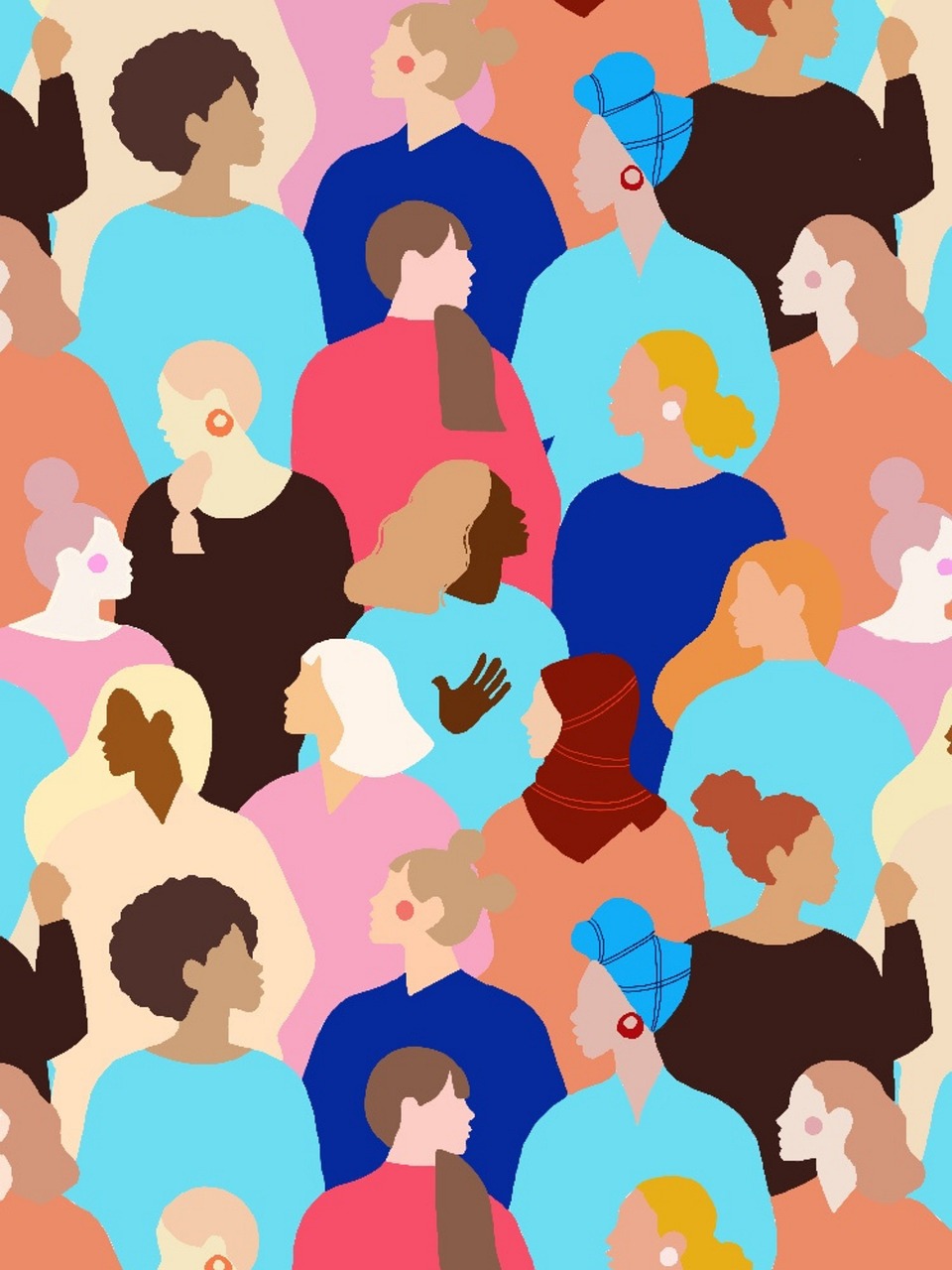
There is a strange contradiction at the center of modern life when it comes to community.
Human beings are more technologically connected than at any other point in history, yet loneliness, exhaustion, anxiety, and social fragmentation continue to rise. Entire industries now exist to sell people forms of care, connection, relief, and emotional support that communities once provided more organically.
People increasingly pay for things that families, neighborhoods, churches, unions, clubs, friendships, and extended social networks once handled collectively. Food delivery replaces shared meals. Therapy apps replace trusted confidants. Daycare replaces multigenerational support systems. A handyman replaces neighbors helping neighbors. AI assistants replace companionship and organizational help. Meal kits replace communal shopping and cooking. Cleaning services replace the time and energy once available to maintain homes collectively. Gyms replace public recreation and physical labor. Streaming replaces local gatherings. Vacations become temporary escapes from lives structured around chronic burnout.
Even rest itself has become monetized.
This transformation did not emerge from nowhere. It developed alongside economic systems that increasingly reward isolation, overwork, consumer dependence, and emotional exhaustion.
The less connected people are to each other, the more dependent they become on markets to meet emotional and practical needs.
And the more exhausted people become, the less capacity they have to resist the system producing that exhaustion.
The Collapse of Shared Time

One of the least discussed aspects of modern labor is how thoroughly it consumes social energy and minimizes community.
People are not only working long hours. They are commuting, managing digital communication, navigating unstable schedules, dealing with economic anxiety, and attempting to maintain online identities simultaneously. Many workers finish their days psychologically depleted long before they are physically done.
A 2026 study published in the Journal of Business Ethics argued that modern workplace structures, especially gig work, workplace surveillance, and efficiency-focused technologies, have stripped many jobs of the social interactions and community bonds that work once created. The researchers noted that technological and economic shifts have made it harder for workers to socialize both during and outside work. https://link.springer.com/article/10.1007/s10551-026-06289-6
This matters because communities require time.
Friendships require time.
Families require time.
Neighborhoods require time.
Mutual aid requires time.
Political engagement requires time.
Care requires time.
An exhausted population does not organize effectively. It does not build strong communal structures easily. It struggles simply to survive the week.
The result is a society where people increasingly outsource basic forms of care because they no longer possess the bandwidth to provide them themselves.
The irony is brutal. People work so much that they must spend money compensating for the consequences of working so much.
Why “Tradwife” Fantasies or Commune Fantasies Keep Appearing
Across social media, wildly different ideologies often reveal the same underlying emotional hunger.
Some people romanticize communes, cooperative living, or intentional communities. Others romanticize hyper-traditional domestic structures like the “tradwife” lifestyle. These movements are often framed as opposites politically, but emotionally they are responding to many of the same unmet needs.
People want stability.
People want care.
People want emotional labor.
People want to feel needed.
People want someone to notice when they are struggling.
People want lives that are not entirely transactional.
For many, these fantasies emerge because modern society increasingly atomizes people into isolated economic units.
The longing underneath many of these movements is not necessarily about ideology. It is about exhaustion with radical individualism and the collapse of dependable social support systems.
People are searching for structures where someone cooks together, watches the children together, shares burdens together, or simply exists together physically without every interaction being monetized or scheduled.
Modern consumer culture often treats dependency itself as weakness, unless dependency can be monetized.
Yet humans are inherently interdependent creatures.
Anger as Economic Fuel

Social division also serves an economic function.
A population constantly fighting itself rarely examines the structures producing shared suffering.
Social media algorithms reward outrage because outrage increases engagement. Engagement increases advertising revenue. Polarization becomes profitable.
Research published in Communications Psychology found that use of Twitter/X predicted increases in outrage, polarization, and changes in well-being over time. https://www.nature.com/articles/s44271-024-00062-z
Similarly, studies on online echo chambers have shown that emotionally charged and polarized communities intensify negative emotional behavior the deeper users become embedded within them. https://arxiv.org/abs/1607.01032
This constant emotional activation leaves people perpetually reactive.
Angry people doomscroll.
Lonely people consume.
Anxious people purchase relief.
Exhausted people seek convenience.
Isolated people become easier to market to.
The economy increasingly profits from emotional destabilization while simultaneously selling temporary solutions to that destabilization.
The same systems contributing to stress often profit from treating the symptoms they intensify.
The Marketplace of Emotional Survival
Consider how many industries now monetize forms of relief from modern life itself.
Fast food exists partly because people are too exhausted or time-starved to cook consistently.
Therapy has become increasingly necessary partly because many people lack stable support networks, extended families, or close community bonds.
AI assistants increasingly market themselves as productivity partners, organizational aids, emotional support tools, or even companions for isolated individuals.
Cleaning services emerge because dual-income households often lack the time or energy required to maintain homes after work.
Daycare systems become essential because economic pressures frequently require both parents to work extensive hours.
Vacation industries sell temporary recovery from lifestyles that many people fundamentally cannot sustain long term.
Skin care and makeup industries often monetize insecurity, stress, aging anxiety, and appearance pressures amplified by digital culture.
Fitness industries frequently market recovery from sedentary work conditions produced by the labor economy itself.
None of these things are inherently bad. Therapy helps many people. Daycare can be wonderful. Restaurants provide joy and employment. Gyms improve health. AI tools can genuinely assist people.
The issue is not the existence of these services.
The issue is understanding why the demand for them has exploded alongside weakening social bonds, increasing loneliness, declining free time, and rising emotional exhaustion.
Many services now compensate for the absence of social infrastructure.
Loneliness as an Economic Condition

Loneliness is often discussed as an individual psychological issue, but increasingly researchers view it as structural.
Studies across psychology and sociology continue linking loneliness with changes in labor systems, digital life, declining community participation, and social fragmentation.
Research has also shown that social media use can correlate with higher loneliness over time, particularly when interaction becomes passive rather than deeply relational. https://journals.sagepub.com/doi/10.1177/01461672241295870
Loneliness itself becomes profitable.
An isolated person consumes differently than a socially integrated person.
A lonely person may spend more time online.
More time online means more advertising exposure.
More advertising exposure means more consumption opportunities.
A person embedded within strong social structures often shares resources, borrows tools, cooks communally, receives emotional support informally, and relies less heavily on market solutions for every problem.
Isolation increases consumer dependence.
This does not require a giant secret conspiracy. Systems naturally evolve toward profitable conditions. If emotional fragmentation generates engagement and consumption, institutions adapt around those incentives.
The Death of Public Life
Another major factor is the erosion of shared public spaces.
Previous generations often participated more heavily in unions, religious organizations, local clubs, civic groups, bowling leagues, neighborhood associations, and multigenerational living structures.
Those systems were imperfect and sometimes exclusionary, but they created social density.
Many modern environments do the opposite.
Suburban sprawl, car dependency, rising housing costs, remote work isolation, declining third places, algorithmically personalized entertainment, and economic precarity reduce spontaneous human interaction.
People increasingly encounter each other as customers, competitors, audiences, or political enemies rather than neighbors.
Even online spaces increasingly encourage performance over intimacy.
Researchers examining loneliness and digital culture have argued that online environments often create “intimate publics” that simulate emotional closeness while still reinforcing isolation and commodified interaction. https://journalcontent.mediatheoryjournal.org/index.php/mt/article/view/573
In many ways, society has become highly individualized but emotionally undernourished.
Overwork Keeps People From Digging Deeper

Perhaps most importantly, exhaustion reduces critical thought.
When people are constantly stressed, financially insecure, emotionally overloaded, and bombarded with information, they have less capacity to analyze systems structurally.
Instead, anger gets redirected horizontally.
Workers blame other workers.
Generations blame other generations.
Men blame women.
Women blame men.
Political tribes blame each other endlessly.
Meanwhile, many underlying economic pressures remain untouched.
This dynamic is useful because divided populations struggle to organize collectively.
A society focused entirely on survival and outrage rarely has the energy to rebuild communal structures or demand systemic reform.
Researchers studying polarization and social capital have found that stronger community bonds can reduce some of the damaging effects of political division and stress. https://journals.sagepub.com/doi/abs/10.1177/10659129211034561
Community itself becomes a threat to systems that depend on atomized consumption.
Selling Humanity Back to Itself
What many people are truly searching for is not another app, subscription, or productivity tool.
They are searching for reciprocity.
For care that is not transactional.
For relationships not mediated entirely by algorithms.
For support systems that do not disappear when money runs out.
For belonging that does not require branding themselves constantly online.
Human beings evolved in cooperative groups. Modern economies increasingly organize people as isolated economic actors.
That tension produces enormous psychological strain.
The commoditization of community welfare means more and more aspects of ordinary human life become products. Emotional labor becomes outsourced. Companionship becomes monetized. Rest becomes purchasable. Care becomes professionalized. Survival becomes individualized.
And then corporations market solutions to the loneliness, exhaustion, insecurity, and alienation produced by those same conditions.
People are not irrational for longing for communes, close-knit families, or stronger local communities. Those desires often reflect recognition that something fundamental has been lost.
Not perfection.
Not some mythical golden age.
But the understanding that humans were never designed to endure life entirely alone while functioning primarily as consumers.
Sources
https://link.springer.com/article/10.1007/s10551-026-06289-6
https://www.nature.com/articles/s44271-024-00062-z
https://journals.sagepub.com/doi/10.1177/01461672241295870
https://journals.sagepub.com/doi/10.1177/01492063241313320
https://link.springer.com/article/10.1007/s11186-022-09476-2
https://journals.sagepub.com/doi/abs/10.1177/10659129211034561
https://journalcontent.mediatheoryjournal.org/index.php/mt/article/view/573
Related Interconnected Earth Categories
World Events: https://interconnectedearth.com/category/world-events/
Mental Health: https://interconnectedearth.com/category/mental-health/
Technology: https://interconnectedearth.com/category/technology/
Philosophy: https://interconnectedearth.com/category/philosophy/