
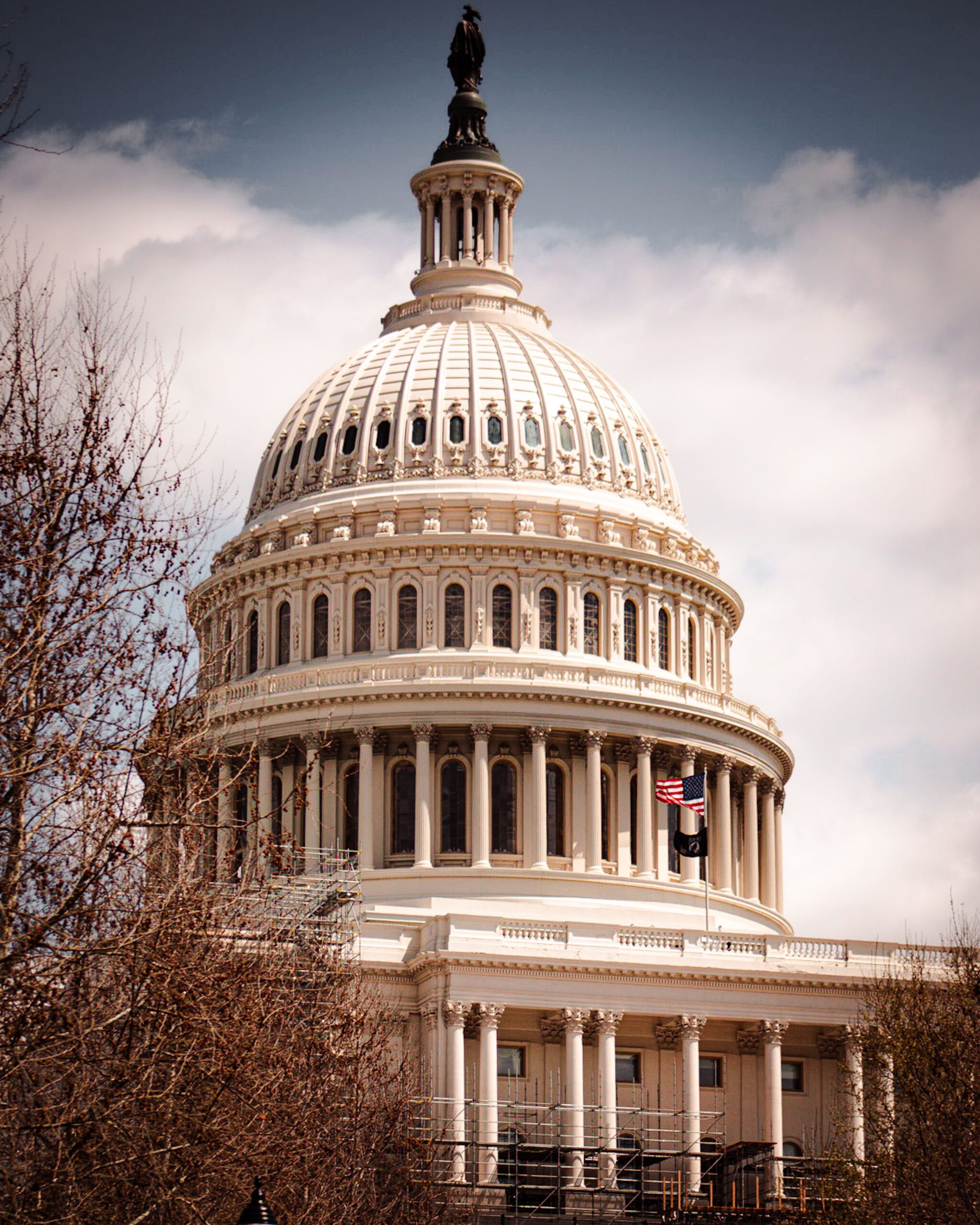
For decades, an overwhelming majority of Americans across the political spectrum have agreed on a fundamental, intuitive principle of governance: term limits are a necessity for elected officials. While the specific policy mechanics of term limits remain a subject of intense debate among constitutional scholars and voters alike, the underlying civic anxiety is remarkably consistent. When political power becomes a permanent fixture rather than a temporary trust, the lack of term limits gradually detaches a representative from the very ecosystem, community, and economy they are meant to steward. Implementing structural term limits is not a magic cure-all for every systemic ailment plaguing the modern state, but term limits serve as an absolutely essential tool for maintaining long-term institutional health and democratic vitality.
We must recognize at the outset that term limits won’t instantly dissolve institutional corruption, nor will term limits guarantee that every incoming lawmaker will possess enlightened leadership qualities. However, structural term limits can decisively disrupt a stagnant political equilibrium that favors self-preservation over proactive problem-solving. In a world where the global biosphere is rapidly shifting, economies are reorganizing around automation, and technological innovation is accelerating at an exponential rate, passing federal term limits ensures that our governance structures match the pace of the complex systems they regulate. Without term limits, our democracy remains intensely vulnerable to systemic inertia, leaving us poorly equipped to handle the compounding crises of the twenty-first century.
The Law of Stagnation vs. The Living World

The architects of modern representative government originally envisioned public service as a seasonal, civic duty, a temporary departure from one’s primary profession to contribute to the common good before returning to private life. However, because the federal system currently lacks meaningful term limits, congressional tenure has steadily climbed over the past several decades, a trend thoroughly documented by institutions like the Congressional Research Service. The complete absence of term limits means that what is often defended as “institutional memory” can quietly turn into institutional rot, creating an insular political class that prioritizes its own longevity above all else.
While experience in legislative drafting and parliamentary procedure is undoubtedly valuable, the systemic lack of limits creates severe isolation from the everyday realities of ordinary citizens. When an individual representative spends thirty, forty, or even fifty years in Washington without facing the structural boundary of term limits, their primary cognitive inputs and social networks inevitably shift. By avoiding limits, politicians gradually drift away from the lived experiences of workers, parents, and community members, moving instead into a closed loop populated by career lobbyists, political consultants, national fundraising networks, and entrenched special interest groups.
Implementing term limits introduces a vital circulating force into this stagnant environment. Just as a physical ecosystem requires constant biodiversity and resource cycling to survive and thrive, a healthy democracy requires the continuous experiential diversity that only mandatory term limits can reliably provide. Without term limits, the political class transforms into an invasive, self-preserving species that monopolizes institutional resources, crowds out competitive ideas, and smothers the democratic renewal necessary for a society to flourish.
When the Labor Market Evolves Faster Than the Legislature
Few environments have morphed as radically or as ruthlessly over the last quarter-century as the global workplace, making the adoption of term limits even more urgent for the protection of working people. The modern workforce does not simply punch a clock in a stable manufacturing plant or a legacy corporate office; instead, contemporary workers must constantly navigate the precarity of algorithmic management, the integration of generative artificial intelligence, fluctuating digital surveillance, and a highly atomized gig economy. Yet, because the United States Congress operates entirely without term limits, many of the country’s most powerful long-serving lawmakers began their political careers before the dawn of the commercial internet, let alone the smartphone, cloud computing, or decentralized digital platforms.
This historic disconnect raises a troubling question: can a legislature that completely lacks term limits effectively protect, regulate, and advocate for modern digital workers? Structural term limits would guarantee that incoming representatives include individuals who have actual, recent, hands-on experience within these rapidly evolving socio-technical realities. We urgently need term limits so that those tasked with debating AI data privacy, gig-worker protections, portable benefits, and automation-driven economic displacement are not completely detached from the modern workplace. Establishing term limits bridges the widening chasm between obsolete 20th-century policy frameworks and the stark economic realities faced by younger generations entering the labor force today.
Furthermore, the lack of term limits distorts the internal power structures of legislative committees. Under the current system, committee chairs and senior leadership positions are heavily dictated by seniority; meaning the individuals with the most consecutive decades in office hold the most power over policy. Without term limits, a lawmaker who joined Congress in the 1980s might head a crucial committee overseeing cybersecurity or digital commerce, despite having never worked a single day in an economy shaped by modern technology. Introducing term limits would dismantle this rigid seniority system, allowing individuals with relevant, up-to-date professional expertise to ascend to leadership positions when their knowledge is most critically needed by the nation.
Climate Chaos Demands Adaptive Governance

Nowhere is the compounding cost of omitting term limits clearer or more dangerous than in our collective governance response to a changing planet. The biosphere does not operate on a linear, predictable, or accommodating timeline; it responds to complex feedback loops and tipping points. According to extensive findings from the Intergovernmental Panel on Climate Change (IPCC), global climate risks are compounding rapidly, demanding highly agile, forward-looking, and interdisciplinary policymaking. Yet, a Congress operating without the refreshing mechanism of term limits almost always defaults to static, outdated, and incrementalist approaches that reflect the economic priorities of past decades.
We must introduce term limits to systematically infuse fresh perspectives from recent field scientists, clean-tech engineers, grid architects, and adaptive agriculturalists into the active legislative body. When term limits are absent, policy defaults to the comfortable status quo; which is precisely what the planet’s life-support systems can no longer sustain. Shifting politics from a lifelong career destination to a temporary period of public service via limits ensures that ecological urgency isn’t continually diluted by decades of political inertia and industry captured relationships. Simply put, mandatory term limits force a rigid, slow-moving political system to adapt to a rapidly changing physical climate.
Consider the complexity of modern environmental policy. It is no longer just about passing basic emissions standards or funding traditional conservation projects. Today’s ecological challenges require a sophisticated understanding of:
- Decentralized Renewable Grid Integration: Managing intermittent power sources like solar and wind across continental scales.
- AI-Optimized Infrastructure: Utilizing machine learning to maximize energy efficiency in municipal water, transport, and power systems.
- The Economics of Circular Manufacturing: Designing supply chains that eliminate waste and prioritize closed-loop resource management.
- Socio-Economic Resiliency and Climate Migration: Preparing coastal and agricultural communities for shifting populations and extreme weather patterns.
A legislative body that lacks term limits will naturally struggle to comprehend these fast-moving domains, defaulting instead to old political battles over fossil fuel subsidies and legacy industrial frameworks. Term limits provide a structural guarantee that the individuals writing our environmental laws are living in the same century as the ecological crises they are trying to solve.
Disrupting the Networks of Entrenched Influence
No structural tweak or constitutional amendment, including term limits, will ever entirely eliminate human greed, ambition, or political maneuvering from public life. However, careerism directly fuels the massive financial machinery of modern politics, a corrupting reality that term limits can actively disrupt and deconstruct. Data compiled by nonpartisan watchdogs like OpenSecrets highlights the endless, exhausting cycle of campaign fundraising that dominates a lifetime politician’s calendar, a repetitive cycle of transactional dependency that can be broken only by the implementation of term limits.
When a politician spends multiple decades in a single seat without the boundary of term limits, their relationships with major donors, political action committees (PACs), and industry-specific lobbyists become deeply institutionalized. These interactions form a symbiotic network where access is traded for financial support, ensuring the incumbent remains virtually unassailable in primary and general elections. This permanent incumbency advantage effectively disenfranchises the electorate, as dark money and corporate backing insulate the veteran politician from the shifting desires of their constituents.
If lawmakers are constrained by clear, non-negotiable term limits, these entrenched networks of influence lose their foundational permanence. Because of term limits, a lobbyist can no longer spend thirty years cultivating a single politician as an reliable instrument for a specific corporate interest. Forcing turnover via term limits means that special interest groups must constantly re-adapt to a changing legislative roster, dramatically lowering the return on investment for long-term political capture. Consequently, term limits allow the focus of lawmakers to migrate away from permanent electoral self-preservation and toward immediate, impactful legacy-building during their strictly restricted time in office.
Balancing Renewal with

While the arguments in favor of term limits are robust and deeply rooted in democratic theory, intellectual honesty requires that supporters also engage with the valid concerns raised by critics of the policy. Opponents of term limits often pose a critical, systemic question: if you aggressively and automatically flush out experienced lawmakers from the Capitol, who steps into the resulting power vacuum? The hidden danger is that poorly designed or excessively restrictive term limits might inadvertently hand more leverage to unelected, unaccountable actors, such as permanent corporate lobbyists, entrenched bureaucratic agency staff, and partisan policy consultants who remain in Washington while the actual legislators rotate in and out.
This is a legitimate institutional design challenge, but it is far from an insurmountable obstacle. The solution lies in designing balanced, thoughtful term limits rather than resorting to chaotic, hyper-short restrictions that destabilize the legislative branch entirely. To understand how we can optimize this institutional balance, it is helpful to analyze the structural trade-offs across different governance models:
| Governance Model | Institutional Risk | Systemic Benefit |
| No Term Limits (Current) | Severe institutional stagnation, donor lock-in, extreme generational disconnect, and incredibly low policy adaptability. | Deep procedural memory, long-term legislative relationships, and comprehensive mastery of complex budget rules. |
| Hyper-Short Term Limits (e.g., 3-6 years) | Severe empowerment of unelected staff, erratic or shallow policymaking, and a constant state of campaign orientation. | Maximum democratic turnover, absolute elimination of careerism, and rapid entry of outsiders. |
| Balanced Term Limits (e.g., 12 years per chamber) | Moderate loss of senior leadership, requiring structured transition plans and transparent archiving of institutional knowledge. | Healthy generational rotation, preserves adequate room for policy mastery, limits permanent power networks, and maintains democratic accountability. |
As the comparative analysis demonstrates, implementing an optimized framework of term limits, such as a 12-year maximum cap per chamber (equivalent to two terms for a Senator or six terms for a Member of the House of Representatives) strikes the ideal democratic balance. A 12-year timeframe allows an elected representative more than enough time to master the intricate complexities of constitutional law, federal budgeting, and foreign affairs, ensuring they can stand toe-to-toe with executive agencies and interest groups. At the exact same time, these balanced term limits provide an absolute guarantee that the window of power will eventually open for fresh blood, new perspectives, and modern lived experiences.
Overcoming the Constitutional Hurdles to Reform

If public support for term limits remains consistently high across almost every demographic and political ideology, why have they not yet been encoded into the supreme law of the land? The answer lies within the self-preserving nature of political incentives. Members of the federal legislature would effectively be required to vote to limit their own lucrative careers, a prospect that is naturally unappealing to career politicians. Furthermore, the Supreme Court ruled in the historic 1995 case U.S. Term Limits, Inc. v. Thornton that individual states cannot unilaterally impose term restrictions on their federal representatives, meaning that implementing term limits at the national level requires a formal constitutional amendment.
As outlined in Article V of the U.S. Constitution, the process for amending our foundational framework is intentionally demanding, requiring an immense degree of national consensus. An amendment can either be proposed by a two-thirds vote in both the House and the Senate, or by a convention of states called for by two-thirds of the state legislatures. Once proposed, it must be ratified by three-fourths of the states.
While this high threshold makes structural reform difficult, the growing frustration with congressional stagnation is driving renewed interest in the Article V convention pathway. Grassroots movements across the country are working to bypass Washington entirely by pressuring state legislatures to apply for a convention focused explicitly on proposing term limits. This decentralized approach reminds us that the ultimate authority in a constitutional republic rests with the people, not with a permanent political class in a distant capital city.
Cultivating a Responsive Political Ecosystem
Humanity is currently piloting its civilization through a historically unprecedented period of technological disruption, economic realignment, and environmental volatility. According to insights from global trend analyses like the World Economic Forum’s Future of Jobs Report, systemic disruption is no longer an occasional anomaly; it has become our permanent operational baseline. A healthy, resilient, and forward-looking democracy simply cannot rely on a governing class that functions as a closed, unchanging, and self-perpetuating loop.
To effectively navigate shifting economic landscapes, protect consumer privacy in an era of advanced data harvesting, regulate biotechnology, and address the destabilization of our natural infrastructure, our legislature must implement term limits. This structural intervention ensures that the legislative branch actively reflects, understands, and embodies the rapidly changing world outside the marble walls of the Capitol.
While term limits won’t solve every systemic flaw or ideological division in modern democracy, enforcing term limits provides an absolute guarantee that political power can never freeze into permanent, unyielding power. Ultimately, term limits are a fundamental necessity because they allow us to design a government that is just as dynamic, adaptive, and resilient as the Earth itself. By treating public service as a temporary civic duty rather than a lifelong profession, we can restore the foundational promise of representative governance: a government of the people, by the people, and truly for the living generations of the people.
Sources & Further Reading
- Congressional Research Service: Average Tenure Trends in the U.S. Congress
- Intergovernmental Panel on Climate Change (IPCC): Sixth Assessment Report on Climate Change Adaptation, Vulnerability, and Risks
- World Economic Forum: The Future of Jobs Report: Technological Disruption and Labor Market Evolution
- OpenSecrets: Campaign Finance Data, Incumbency Advantages, and PAC Tracking
- U.S. Constitution: Article V Legislative and State-Led Amendment Process