

Climate change is often discussed as if it were a single problem with a single solution. In reality, it is the classic manifestation of an interconnected earth, the complex, emergent result of billions of human activities spread across energy grids, heavy industry, global food systems, international shipping lanes, consumer behavior, and macroeconomic structures.
To achieve true ecological restoration, we have to look past the buzzwords. Reversing climate change is not simply about reducing our carbon output or feeling good about localized conservation. It means fundamentally restructuring human civilization’s relationship with the biosphere. True reversal demands a two-pronged systemic shift: first, plummeting global greenhouse gas emissions down to absolute zero to halt ongoing warming; second, scaling up active carbon removal systems so that we capture more greenhouse gases from the atmosphere than humanity emits. Only then will atmospheric concentrations of carbon dioxide and methane begin a sustained, multi-decadal decline.
To map out what this planetary overhaul actually requires, we have to trace greenhouse gases back to their systemic roots. When we break down global emissions into major socioeconomic sectors, we discover an encouraging yet daunting truth: our ecological crisis is highly concentrated. A relatively small number of deeply embedded industrial and agricultural systems produce the vast majority of global warming. By altering these core nodes, we can trigger a cascading, positive feedback loop across the entire Earth system.
A Systems-Level Breakdown of Global Emissions
To design a plan for planetary recovery, we must understand the baseline math of our current impact. Pulling from synthesized data provided by the Intergovernmental Panel on Climate Change (IPCC), the United Nations Environment Programme (UNEP), and the International Energy Agency (IEA), global greenhouse gas emissions can be categorized into seven primary economic sectors.
| Emission Source Sector | Approximate Share of Global Emissions |
| Electricity and Heat Production | 25% |
| Food, Agriculture, and Land Use | 22% |
| Industry and Manufacturing | 21% |
| Transportation | 14% |
| Buildings and Urban Infrastructure | 6% |
| Indirect Sources and Supply Chains | 5% |
| Chemical Processes (Non-Mfg) & Specialized Sectors | 4% |
| Waste Management and Landfills | 3% |
It is vital to note that these sectors do not exist in isolated silos; they are deeply interdependent. For instance, the emissions tallied under transportation are heavily driven by the logistical demands of globalized food systems and the distribution of industrial goods. Similarly, the footprint of our buildings is tied directly to the carbon intensity of the regional electrical grids supplying them.
Because these sectors are webbed together, a change in one ripples through the others. If humanity wants to reverse climate change, every single one of these columns must undergo a profound phase transition. However, from a systems-engineering perspective, transforming our energy and food systems yields the highest leverage.
Food, Agriculture, and Land Use: 22% of the Solution

Food systems are perhaps the most underestimated, politically sensitive node in the entire climate puzzle. We often think of smokestacks and tailpipes when visualizing climate change, yet the simple act of feeding eight billion humans accounts for nearly a quarter of global warming.
Our current globalized agricultural complex drives ecological degradation through a web of distinct pathways:
- Enteric fermentation (livestock methane emissions from digestion)
- Energy-intensive synthetic fertilizer production
- Nitrous oxide off-gassing from mismanaged agricultural soils
- Systemic deforestation for pasture expansion and crop monocultures
- Long-distance cold-chain logistics and food transportation
- Methane release from organic food waste rotting in anaerobic landfills
- Fossil-fueled agricultural machinery and heavy transport
The Leverages of Methane and Livestock
When targeting climate change reversal, methane demands immediate, outsized prioritization. While carbon dioxide lingers in the atmosphere for centuries, methane is a short-lived climate pollutant with an atmospheric lifespan of roughly a decade. However, its immediate warming potency is devastating, holding a Global Warming Potential (GWP) roughly 80 times greater than CO2 over a 20-year timeline.
Cattle are the primary drivers of this biological methane surge. There are over one billion domestic cattle grazing the planet at any given moment. The sheer land footprint required to sustain this livestock population is the leading driver of tropical deforestation, particularly in critical carbon sinks like the Amazon basin.
If global dietary patterns shifted away from intensive beef consumption, it would spark an immediate, multi-layered climate benefit. Methane emissions would plummet within years, granting the planet a near-instant cooling buffer. Simultaneously, millions of square kilometers of land currently dedicated to livestock grazing and soy feed production could be liberated, allowing native forests and grasslands to naturally regenerate and pull gigatons of legacy carbon back down into biomass.
Resolving the Food Waste Paradox
The inefficiencies of our modern supply chains present another massive systemic lever: roughly one-third of all food produced globally is lost or wasted before it ever reaches a human mouth. This represents a monumental waste of embedded carbon, water, and labor. When this discarded organic matter is dumped into landfills, it decomposes under anaerobic (oxygen-deprived) conditions, converting directly into a steady plume of atmospheric methane.
An interconnected, climate-restorative food paradigm would require an aggressive suite of interventions:
- A systemic transition toward plant-forward regional diets
- The broad adoption of regenerative agriculture practices that restore soil organic matter
- Precision fertilizer application utilizing satellite data and IoT soil sensors to minimize runoff
- Localized closed-loop supply chains to eradicate logistical food waste
- The strict legal protection and re-wilding of ancestral forest lands
Potential contribution toward climate reversal: Roughly 20% to 25% of total required global reductions. Learn more about ecological food webs at Our World in Data: Environmental Impacts of Food.
Electricity Generation: 25% of the Problem
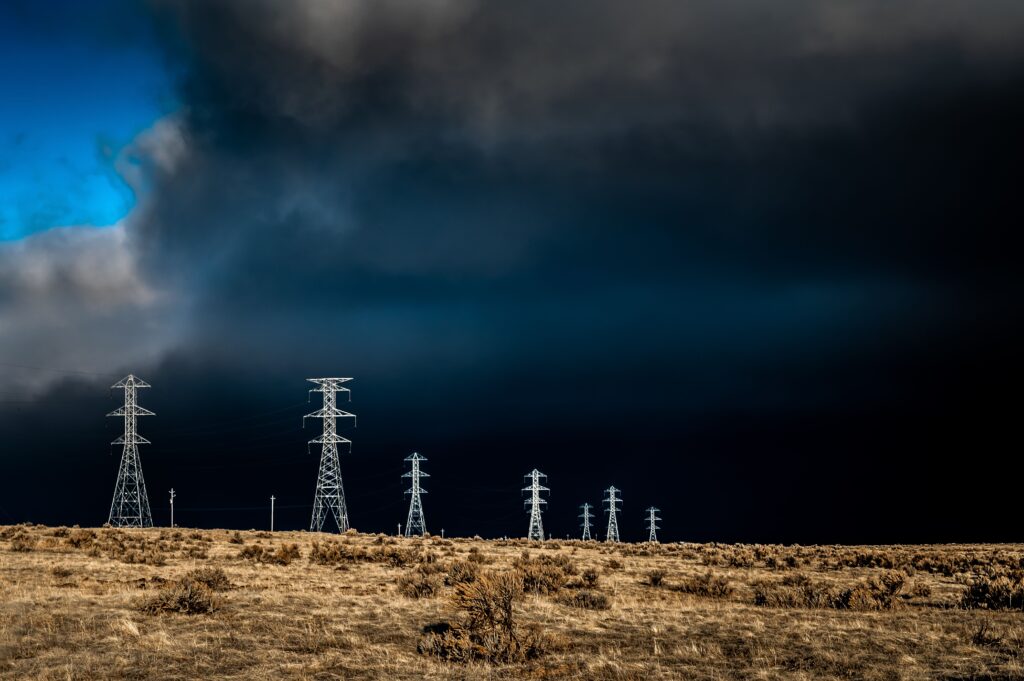
Electricity and heat production remain the bedrock of modern industrial society—and the single largest sector driving climate change. Despite decades of renewable energy growth, coal and natural gas still form the spine of global power generation, continuously pumping immense volumes of C02 into the troposphere.
To reverse climate change, our global power architecture must undergo complete decarbonization. This cannot be achieved by relying on a single silver-bullet technology. A resilient, zero-carbon grid must reflect the diverse geographies of an interconnected earth, leveraging a diversified portfolio of baseload and variable power sources:
- Solar Photovoltaics (PV) and Concentrated Solar: Capturing abundant, direct radiant energy.
- Onshore and Offshore Wind Turbines: Harnessing atmospheric kinetic energy.
- Advanced Nuclear Fission and Fusion R&D: Providing dense, zero-emission baseload power independent of weather patterns.
- Deep Geothermal Systems: Tapping directly into the Earth’s internal thermal energy.
- Pumped Hydroelectric and Grid-Scale Battery Storage: Smoothing out intermittency and balancing load demand.
If we plug electric cars, residential heat pumps, and industrial arc furnaces into a grid that is still powered by coal, we are simply shifting the point of combustion. But if we clean the grid first, every device plugged into it automatically becomes a tool for climate reversal.
Potential contribution toward climate reversal: Roughly 25% to 30% of total global efforts. For real-time grid transitions, review the International Energy Agency Electricity Market Report.
Industry and Manufacturing: 21%
Heavy industry represents the physical scaffolding of our civilization. The production of fundamental commodities – steel, cement, plastics, and primary chemicals – demands incredible amounts of energy and relies on chemical reactions that are inherently carbon-intensive.
Consider the challenge of cement. It is responsible for approximately 7% to 8% of all global CO2 emissions. Unlike a car, where emissions come entirely from burning fuel, more than half of cement’s carbon footprint is an unavoidable byproduct of the chemical reaction known as calcination, where limestone is heated to form lime, releasing CO2 directly into the air.
Decarbonizing this sector requires deep technological and philosophical innovations:
- Transitioning steel manufacturing from coal-fired blast furnaces to green hydrogen direct-reduction systems
- Scaling industrial-grade Carbon Capture, Utilization, and Storage (CCUS) directly at calcination plants
- Developing alternative, carbon-negative building materials like geopolymer concretes and mass timber
- Replacing fossil feedstocks in chemical manufacturing with bio-based or synthesized alternatives
Designing for Longevity: The Circular Economy
Beyond upgrading chemical processes, we must confront the underlying economic philosophy of planned obsolescence. Our growth-oriented market models incentivize manufacturing products designed for short lifespans, driving a continuous cycle of resource extraction, high-emissions manufacturing, international shipping, and rapid disposal.
By transitioning toward a rigorous circular economy—where products are explicitly engineered for multi-decade durability, modular repairability, and total elemental recycling—we can drastically blunt the global demand for raw industrial manufacturing.
Potential contribution toward climate reversal: Approximately 15% to 20% of the needed progress.
Transportation: 14%
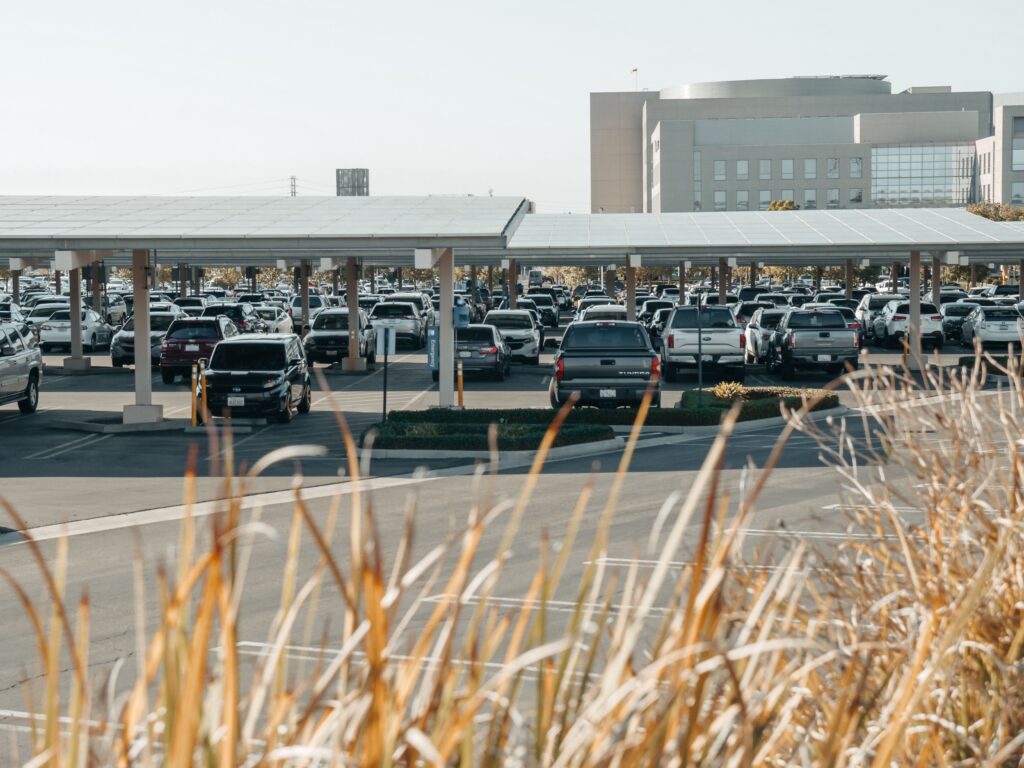
Transportation is perhaps the most visible, culturally scrutinized sector in the climate change dialogue. It encompasses the planes crossing our skies, the massive container ships maintaining global trade routes, the heavy freight trucks operating on highways, and the hundreds of millions of personal passenger vehicles idling in urban traffic.
While consumer electric vehicles (EVs) have made incredible market breakthroughs, a comprehensive systemic overhaul must extend far beyond swapping internal combustion engines for batteries. Long-haul aviation and maritime shipping cannot easily be electrified due to the strict energy-density limits of current chemical batteries. Resolving these sectors requires scaling up sustainable aviation fuels (SAFs), retrofitting cargo fleets with ammonia or green hydrogen fuel systems, and even re-introducing advanced automated sail technologies to harvest ocean winds.
Urban Geometry as a Climate Solution
At the civic level, the ultimate solution to transport emissions is not a better car, but a better city. The sprawling layout of modern Western cities is a deliberate design choice that mandates car ownership.
By redesigning our communities around high-density, mixed-use urban planning—often called “15-minute cities”—we integrate housing, commerce, healthcare, and recreation into tight, walkable nodes. Coupled with robust, electrified public transit networks and high-speed rail corridors, we can phase out the necessity of personal automobiles entirely.
Potential contribution toward climate reversal: Roughly 10% to 15% of global targets.
Buildings and Urban Infrastructure: 6%
The places where we live, work, and gather consume enormous amounts of energy just to remain habitable. The everyday operations of our built environment—heating spaces in winter, cooling them in summer, lighting interiors, and running appliances—create a continuous draw on regional energy infrastructure. Older, poorly insulated buildings leak thermal energy constantly, forcing HVAC systems to work overtime.
Retrofitting our built environment for true climate reversal requires a massive architectural wave of deep energy retrofits:
- Replacing old gas furnaces and inefficient boilers with high-efficiency electric air-source and geothermal heat pumps
- Upgrading urban building envelopes with triple-pane windows and advanced continuous insulation
- Deploying passive architectural design strategies that maximize natural cross-ventilation and solar orientation
- Enacting strict building codes that mandate net-zero or energy-positive construction for all new structures
While 6% may look like a minor slice of the overall global emissions pie, the long life expectancy of real estate makes building sector reforms incredibly high-stakes. A building constructed poorly today will lock in unnecessary energy demand for the next half-century.
Potential contribution toward climate reversal: Approximately 5% to 8% of the macro effort.
Specialized Sectors: Plastics, Chemicals, and Waste (8%)

When we look into the remaining corners of global emissions, we find a trio of specialized sectors that, together, have a massive impact on climate change: Plastics and Petrochemicals (~3%), Chemical and Fertilizer Usage (~2%), and Waste Management (~3%).
Plastics and Petrochemicals
Plastic pollution is widely recognized as a severe threat to marine biology, but it is equally a core driver of climate change. From the initial extraction of crude oil and fracked gas to industrial refining, cracking, cracking-tower operations, and ultimate incineration, plastic releases greenhouse gases at every single stage of its lifecycle. Curtailing these emissions requires an aggressive pivot toward extended producer responsibility laws, a near-total ban on single-use polymers, and the development of truly circular, infinitely recyclable alternatives.
Chemical Management and Agricultural Runoff
Beyond carbon, the chemical industry handles gases that are staggeringly destructive to our atmosphere. In modern industrial farming, the overuse of synthetic nitrogen fertilizers triggers massive soil off-gassing of nitrous oxide, a gas nearly 300 times more potent than CO2 at trapping heat.
Simultaneously, our global cooling systems rely heavily on hydrofluorocarbons (HFCs) and other synthetic refrigerants. When these chemicals leak during equipment maintenance or disposal, they act as ultra-potent greenhouse gases, possessing global warming potentials thousands of times higher than carbon dioxide. Phasing out these compounds in strict accordance with international frameworks like the Kigali Amendment is one of our fastest levers for preventing near-term warming.
Landfills and the Waste Stream
The final piece of this specialized trio lies in our waste management systems. When municipal solid waste is piled into massive, compacted landfills, it buries organic material under layers of trash. This creates an environment where bacteria break down food waste and paper products without oxygen, generating a continuous supply of landfill gas—which is roughly half methane and half carbon dioxide.
To eliminate this source, we must mandate regional composting networks to keep organic waste out of landfills entirely, while retrofitting existing waste sites with advanced methane capture systems to convert those escaping gases into usable electricity.
Combined potential contribution toward climate reversal: Approximately 8% to 12%.
Hidden Emissions and the Consumption Equation
As our world becomes increasingly digitized and globalized, a growing fraction of global warming is driven by hidden, indirect emissions embedded within complex global supply chains, international trade routes, and abstract computing infrastructure.
In recent years, the rapid rise of artificial intelligence, massive data centers, and decentralized cryptocurrency networks has introduced a highly energy-intensive digital layer to the global economy. These facilities run 24/7, demanding constant power not only to run millions of processors but also to power the massive industrial chilling units required to keep them from overheating. Decarbonizing this digital frontier requires absolute transparency in corporate reporting, hyper-efficient computing architectures, and a legal mandate that all data infrastructure be co-located with dedicated, newly built renewable energy sources.
The Underlying Drivers: Population and Consumption
Ultimately, any system-level analysis of climate change must confront the core mathematical relationship that dictates human environmental impact. This relationship can be expressed through the classic environmental science framework:
$$\text{Environmental Impact} = \text{Population} \times \text{Consumption} \times \text{Technology}$$
While population growth is a real variable in long-term infrastructure planning, the data reveals an extreme global imbalance. The richest 10% of the global population is responsible for nearly half of all consumption-based greenhouse gas emissions, while the poorest half of humanity contributes less than 12%.
Focusing solely on stabilizing population growth in developing nations misses the core systemic driver of our immediate crisis. To reverse climate change, the primary focus must be a deliberate reduction in the unsustainable hyper-consumption of wealthy, industrialized nations, combined with a rapid deployment of zero-emission technologies.
Carbon Removal: Essential for Actual Reversal

It is mathematically impossible to reverse climate change through emission reductions alone. Cutting our output to zero simply stops adding to the damage; it stabilizes the climate at its current, volatile elevated temperature. To achieve a true reversal of climate change, we must actively clean up the trillion tons of legacy carbon dioxide we have dumped into the atmosphere since the dawn of the Industrial Revolution.
True planetary restoration requires balancing our emission reductions with an array of biological and technological carbon removal strategies:
- Reforestation and Afforestation: Restoring degraded forest ecosystems and planting native trees on cleared land to utilize nature’s original carbon-capture mechanism: photosynthesis.
- Wetland and Mangrove Restoration: Revitalizing coastal ecosystems, which can sequester up to ten times more carbon per acre than terrestrial tropical rainforests.
- Enhanced Rock Weathering: Spreading finely crushed silicate rocks, like basalt, onto agricultural soils, which accelerates the natural chemical weathering process that locks atmospheric $CO_2$ safely into solid carbonate minerals.
- Direct Air Capture (DAC): Building industrial facilities that use chemical sorbents and massive fans to scrub carbon dioxide directly out of ambient air, concentrating it so it can be injected deep underground into basalt formations, where it turns to stone.
- Biochar Production: Pyrolyzing agricultural waste (heating it in an oxygen-free chamber) to lock its carbon into a highly stable, porous charcoal form that can be mixed into agricultural soils to improve fertility while keeping carbon locked away for centuries.
The primary obstacle holding back carbon removal is a mix of high energetic costs and economic incentives. Technologies like Direct Air Capture remain energy-intensive and expensive per ton of carbon removed, and there is currently no global market that pays to bury carbon underground. For carbon removal to play its vital role, it must be supported by a clear regulatory framework, carbon taxes, and direct public funding.
Potential contribution toward climate reversal: Essential for offsetting the final 10% to 20% of stubborn residual emissions and driving atmospheric carbon concentrations back down to pre-industrial levels.
The Path Forward: A Ranked Blueprint for Action
If we compile these systemic solutions into an actionable blueprint for global civilization, we can visualize where our collective focus and capital must be directed:
| Strategic Priority Area | Targeted Share of Needed Reversal Effort |
| Clean Electricity & Grid Modernization | 25% |
| Food & Agriculture Transformation | 22% |
| Industrial Decarbonization (Steel, Cement) | 18% |
| Transportation Reform & Urban Redesign | 12% |
| Carbon Removal (Biological & Technological) | 10% |
| Buildings & Energy Efficiency Retrofits | 5% |
| Waste Management & Landfill Methane Capture | 3% |
| Plastics & Petrochemical Reductions | 3% |
| Chemical & Refrigerant Management | 2% |
The defining insight of this systems-level breakdown is that climate change cannot be solved by consumer lifestyle tweaks like backyard composting or buying a hybrid car. While those actions are valuable culturally, the heavy lifting of climate reversal lies deep within our collective infrastructure: our energy systems, our industrial manufacturing processes, our agricultural networks, and our land-use policies.
The Real Challenge is Institutional, Not Technological
Technologically, the vast majority of the tools needed to heal the planet already exist. We know how to build ultra-efficient solar cells, we have engineered high-performance heat pumps, we understand how to re-wild degraded ecosystems, and our engineers have built functional direct air capture facilities.
The primary barriers keeping us from reversing climate change are political, economic, and social. Our global economic systems were built on the assumption that nature is an infinite source of raw materials and an infinite sink for our waste. Trillions of dollars of capital are locked up in fossil fuel infrastructure, and powerful political institutions are incentivized to maintain the status quo.
Reversing climate change requires us to look at the world through an interconnected lens. It demands that we intentionally design a global economy that aligns human well-being with the long-term health of our biosphere. No single policy, country, or invention can solve this crisis on its own. But if humanity coordinates an aggressive, simultaneous transformation of how we generate power, grow food, build cities, and manage land, we can shift from merely slowing down our planet’s decline to actively steering it toward full ecological recovery.
Sources
- IPCC Sixth Assessment Report
- UNEP Emissions Gap Report
- International Energy Agency Climate and Energy Data
- Our World in Data: Greenhouse Gas Emissions by Sector
- Food and Agriculture Organization Climate Resources
Explore more interconnected topics at Interconnected Earth and browse related categories including World, Climate, Technology, and more.
Climate Change on Interconnected Earth
World Events on Interconnected Earth
Technology on Interconnected Earth
Wealth and Labor on Interconnected Earth