

For more than six months, we have been hearing predictions that the artificial intelligence bubble is about to burst. Every earnings report, every data center announcement, every new AI startup funding round seems to generate a fresh wave of speculation. Some analysts insist a crash is inevitable. Others argue that comparing AI to the dot-com bubble is fundamentally flawed because today’s technology companies generate real revenue and profits.
The reality is that nobody knows exactly when an AI bubble would pop, whether it will pop at all, or what such an event would actually look like. This discussion is inherently speculative.
When we discuss the multi-billion-dollar artificial intelligence arms race, the conversation usually centers on Wall Street valuations, venture capital cash burn, or hypothetical economic meltdowns. It feels distant, a corporate chess match played out in glass towers and silicon foundries.
But the digital world cannot expand without consuming the physical one. Behind every effortless voice prompt, generated image, and automated corporate dashboard is a massive, unprecedented thirst for resources.
The speculation of an AI Bubble is no longer just an industry trend; it has become a physical current flowing through our neighborhoods. It is quietly altering the basic mechanics of daily life; altering our schedules, stretching local infrastructure, reshaping our career expectations, and fundamentally changing how we interact with the communities we live in.
1. The Friction in the Living Room: Grid Strain and Domestic Rhythms

For decades, the relationship between households and local utility grids followed a highly predictable, cyclical rhythm. Families woke up, turned on appliances, went to work, and returned home to cook dinner. Grids were engineered to handle these specific daily peaks.
The rapid proliferation of industrial data centers for AI which could cause an AI Bubble has shattered this predictable baseline. These facilities do not sleep; they pull massive, flat lines of high-voltage power 24 hours a day. According to a comprehensive global investigation by the United Nations University, data centers consumed an estimated 448 terawatt-hours of electricity globally in 2025, a figure projected to more than double to 945 terawatt-hours by 2030.
This relentless, round-the-clock demand creates acute grid congestion. To prevent localized brownouts, regional utility providers are increasingly forced to purchase expensive, last-resort power on the spot market during traditional family peak hours.
For the average person, this structural friction introduces a new kind of domestic anxiety. The simple act of running a dishwasher, cooling a home during a heatwave, or charging an electric vehicle is becoming caught in a regional tug-of-war with corporate server farms. In areas with high data center concentration, stretching from northern Virginia to central Oregon, residents are facing changing local guidance, with growing pressure to alter their daily routines and shift basic household chores to late-night or off-peak hours simply to maintain local grid stability.
2. Local Watersheds and Municipal Stress
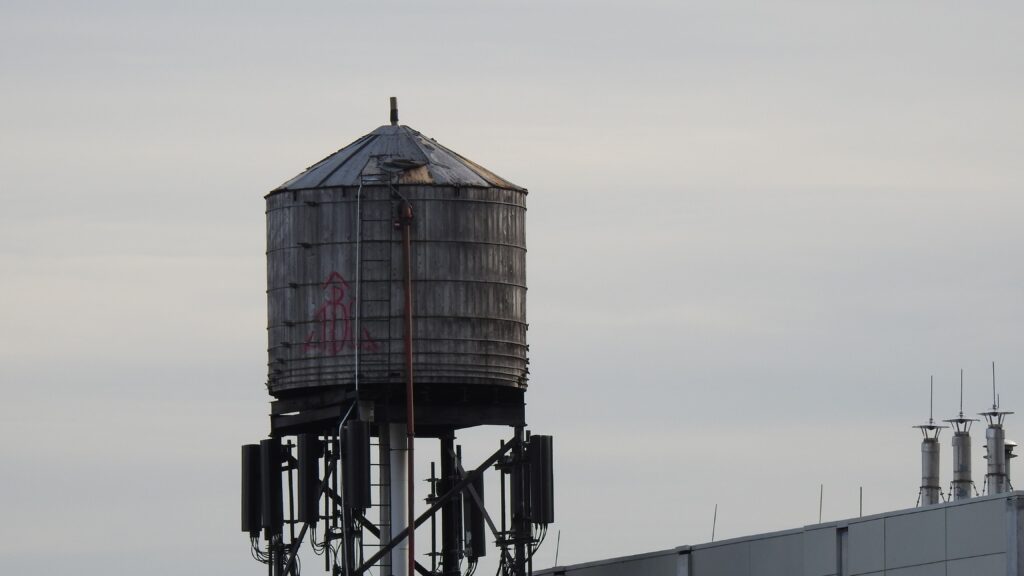
The physical footprint of the tech boom extends deep into our primary municipal resources: water. High-performance microchips generate immense heat. Keeping thousands of servers from melting requires continuous cooling, and the most cost-effective method is industrial evaporation using fresh water.
An environmental assessment by Food & Water Watch reveals the staggering scale of this localized drain: by 2028, AI infrastructure in the United States could require up to 720 billion gallons of water annually just for cooling. To put that into perspective, generating a single complex AI video can consume up to 4.1 liters of water; equivalent to a two-day supply of drinking water for an adult.
This water is not recycled into the local system; it evaporates into the atmosphere, completely leaving the local watershed.
For ordinary citizens, this translates into direct competition for a finite public resource. When a single data center complex consumes millions of gallons of water per day, it shifts the baseline of local municipal planning. Communities are quietly forced to recalculate their long-term growth boundaries. This structural stress influences local zoning laws, shapes restrictions on residential lawn watering, and impacts municipal approvals for new housing developments, community pools, and public parks. The digital expansion in the cloud is creating very real, tangible limits on how physical neighborhoods can expand.
3. The Shift in Career Psychology and Corporate Labor

Away from physical utilities, the tech boom has fundamentally altered the psychological landscape of the professional workplace. Over the last two years, white-collar professionals across marketing, compliance, legal analysis, and software development have operated under a cloud of transition anxiety, driven by the corporate narrative that generative tools would rapidly automate their core responsibilities.
However, as enterprise integration stalls due to high deployment costs, the nature of this threat has shifted from instant displacement to a subtle, continuous inflation of job requirements.
The New Workspace Reality: Companies are rarely replacing entire headcount with an AI model. Instead, they are quietly consolidating roles: expecting a single professional to manage the output of multiple generative workflows while maintaining absolute accountability for the results.
This reality introduces a distinct kind of workplace exhaustion. Employees find themselves transitioning away from deep, creative execution and moving toward a hyper-accelerated routine of text editing, code auditing, and administrative oversight. The daily workflow has become faster, more fragmented, and heavily optimized for volume. Professionals aren’t necessarily losing their jobs to algorithms; instead, they are watching the daily character of their labor transform into a high-speed, metrics-driven management of automated systems.
4. Local Policy, Political Fractures, and Civic Identity
The rapid, quiet buildout of the physical infrastructure required to run these models is reshaping the political landscape of local municipalities. Because data centers require massive physical footprints, they are increasingly being built near suburban neighborhoods, school districts, and rural agricultural zones.
This rapid expansion has turned local zoning boards and county commissioner meetings into intense civic battlegrounds:
- Industrial Encroachment: Subdivisions that were once bordered by quiet woodlands or farmland are now facing towering, windowless concrete structures that hum with industrial cooling fans 24 hours a day, causing localized noise pollution and altering the character of historic communities.
- The Tax Incentive Divide: Local governments frequently grant substantial tax breaks to tech conglomerates to secure data center construction. Residents are increasingly questioning these arrangements as they watch their local roads, emergency services, and public infrastructure handle increased industrial traffic without seeing a proportional corporate contribution to the local tax base.
- Sovereign Infrastructure Control: The tension is forcing a fundamental shift in local politics. Grassroots civic groups are forming not around traditional political divisions, but around resource preservation, pushing for strict noise ordinances, water-use caps, and data center zoning restrictions to protect their towns from turning into physical backdrops for the virtual economy.
The True Cost of a Digital Evolution: An AI Bubble?
We are often told that the digital world is weightless, frictionless, and completely decoupled from our day-to-day lives. But every breakthrough in the cloud requires a physical anchor on earth.
The true impact of the AI Bubble isn’t found in corporate financial earnings or the fluctuating stock prices of chipmakers. It is found in the quiet, gradual shifts occurring inside our own communities, the changing expectations at our jobs, the structural adjustments to our municipal water systems, the new landscape of local town councils, and the subtle pressures reshaping the stability of our neighborhood power grids.
As we look toward the future, navigating this technological evolution won’t just be a challenge for software developers and venture capitalists. It will be a daily exercise in adaptation for ordinary citizens, learning to live alongside an insatiable digital machine that is constantly rewriting the rules of the physical world.
Moving Beyond the Hype: The Systemic Ripple Effects of the AI Market Correction

The modern tech landscape has long been fueled by cycles of intense speculation, and the current conversations shifting toward an AI bubble bursting draw necessary, historical parallels to past economic corrections. Recognizing the fragile foundations of hyper-scaled valuations isn’t mere pessimism; it is a critical assessment of a market that has over-promised short-term transformations while under-delivering on sustainable utility. When the AI bubble undergoes a major correction, the impact will not remain confined to Silicon Valley boardrooms or isolated trading floors. Because our financial, social, and digital infrastructures are deeply woven together, the deflation of this specific market enthusiasm will trigger a series of systemic resets across multiple sectors of daily life.
Understanding what happens when this AI bubble loses its momentum requires looking at the broader picture. The rapid capital flowing into artificial intelligence has artificially altered job markets, skewed corporate media priorities, and drawn massive energy grids into the service of massive data processing centers. If the AI bubble deflates, we will likely see a profound shift in corporate spending, a stabilization of speculative tech investments, and a much-needed re-evaluation of what human contributions actually matter in an increasingly automated economy. The bursting of an AI bubble is less about the death of the underlying technology and more about the correction of the economic fiction built around it. When the hype recedes, we are forced to confront the tangible, real-world dependencies that data-driven automation relies upon—from the physical resources powering computation to the human labor organizing the datasets.
This transition marks a crucial pivot point for modern society. As the architectural framework of the AI bubble begins to show visible fractures, it opens up an essential space for deeper, structural critique. We must begin asking how these speculative tech waves reshape our collective well-being, our resource distribution, and our cultural definitions of progress. To explore how these technological shifts connect directly to broader global patterns, browse through our specialized analysis sections:
- Track the physical, emotional, and social consequences of rapid automation and algorithmic isolation by exploring our Mental Health coverage.
- Examine the invisible material footprint, data center energy demands, and ecological realities underlying the digital age within Climate Change.
- Dive into the foundational questions regarding automated logic, the illusion of choice, and what truly constitutes human judgment over machine outputs in Philosophy.
- Investigate the shifting paradigms of corporate consolidation, market monopolies, and automated content creation under Technology.
- Analyze the economic pressures of corporate speculation, shifting employment dynamics, and the value of human compensation in the age of artificial intelligence via Wealth and Labor.
- Understand how the rapid ascension and inevitable correction of major tech initiatives ripple across international borders, affecting policy and global markets in World Events.
Ultimately, the deflating AI bubble serves as a stark reminder that no single technological advancement exists in a vacuum. By shifting our focus away from the speculative frenzy and toward an evidence-based view of how structural systems interact, we can better prepare for the economic and societal realities that follow the end of the hype cycle. The burst of the AI bubble isn’t just an end—it is an invitation to rebuild a clearer, more honest map of our interconnected world.