
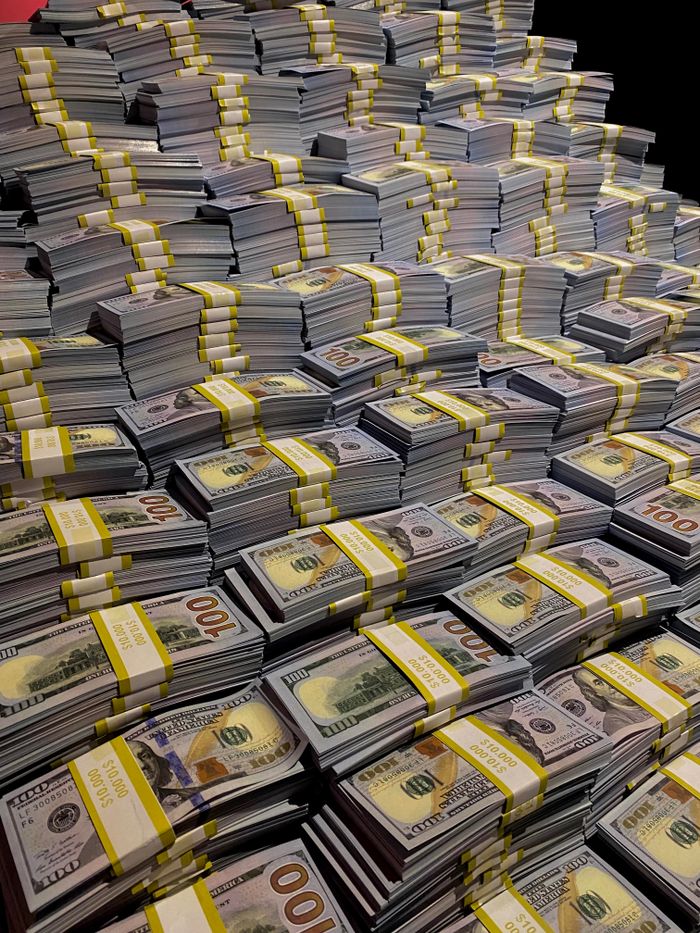
When we look up at the night sky, we are increasingly forced to look through a grid of artificial satellites. Promoted as the vanguard of human progress, these low-Earth-orbit constellations represent a singular vision of the future, one where humanity escapes its earthly problems by simply building bigger rockets. At the epicenter of this narrative sits Elon Musk, a figure whose staggering accumulation of capital has made him a central actor in modern economic life.
Yet, as climate feedback loops intensify, ecosystems collapse, and global inequality reaches levels unprecedented in human history, we must ask a fundamental question: What is the cost of concentrating hundreds of billions of dollars in the hands of one individual?
At Interconnected Earth, our work centers on ecological systems, socio-economic equity, and planetary health. True sustainability cannot exist when our shared global resources are siphon-filtered into private hoards. The sheer scale of wealth concentrated around Elon Musk isn’t just an abstract financial metric; it is an extraction of human potential, material resources, and global stability. By hoarding vast resources, avoiding structural philanthropy, and resisting systemic wealth redistribution, Elon Musk demonstrates how extreme wealth accumulation actively harms people and destabilizes the living systems of our planet.
The $6 Billion World Hunger Challenge: Calling the Bluff
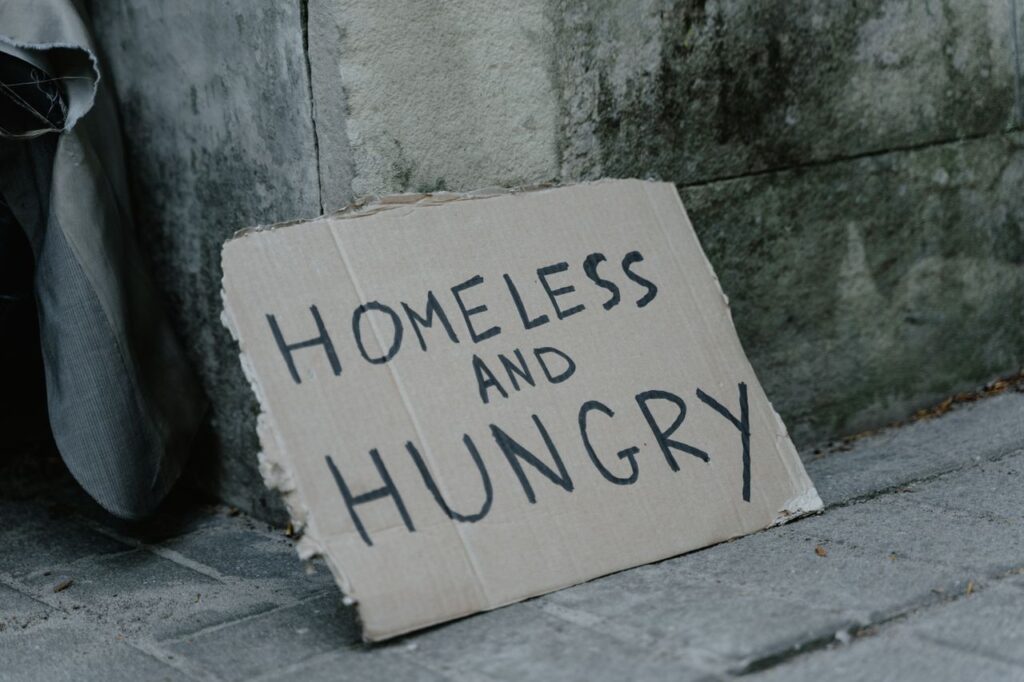
In late 2021, a revealing public exchange laid bare the ethical core of extreme wealth hoarding. David Beasley, then-Director of the United Nations World Food Programme (WFP), issued a public appeal to the world’s ultra-wealthy. Beasley pointed out that just a small fraction of the fortune held by Elon Musk could save millions of lives on the brink of famine.
Responding publicly, Elon Musk stated that if the WFP could describe exactly how $6 billion would solve world hunger on a transparent Twitter thread, he would sell Tesla stock “right now and do it”.
The UN accepted the challenge. The World Food Programme released a detailed, transparent operational plan titled An Appeal to Billionaires. The $6.6 billion strategy laid out an itemized roadmap:
- $3.5 billion for direct food procurement and last-mile delivery logistical costs.
- $2.0 billion for cash and food voucher programs to support local economies.
- $700 million for country-specific design, operational scaling, and security in 43 acute famine zones.
- $400 million for global supply chain management, oversight, and operational auditing.
The UN proved that $6.6 billion could prevent 42 million people across 43 nations from slipping into catastrophic starvation. The money requested amounted to roughly 2% of the overall fortune of Elon Musk at the time.
Yet, the promised stock sale to fund the UN plan never materialized. Instead, Elon Musk pivoted to disputes over administrative nuances and moved his capital elsewhere. The event illustrated a critical pattern: when forced to choose between systemic humanitarian intervention and retaining capital control, Elon Musk chose capital retention. For millions facing severe acute food insecurity, that choice carried real-world consequences.
Philanthropy or Tax Shelter? Inside the Musk Foundation

To justify vast wealth, proponents often point to private philanthropy. But an examination of the primary charitable vehicle controlled by Elon Musk reveals a system designed more for capital preservation and tax mitigation than broad public good.
The Musk Foundation maintains a stark, single-page website featuring basic text links outlining five broad focus areas: renewable energy, space exploration, pediatrics, science education, and safe artificial intelligence. Beyond this minimal exterior lies a massive financial apparatus. Investigated thoroughly by outlets like The New York Times and documented via IRS Form 990 filings accessible on ProPublica’s NonProfit Explorer, the foundation operates without a dedicated, professional grant-making staff.
By transferring billions of dollars in company shares to the Musk Foundation, Elon Musk avoids hundreds of millions, or even billions, in capital gains and income taxes. Under U.S. tax law, non-operating private foundations must pay out at least 5% of their asset value annually in charitable distributions to maintain tax-exempt status.
Investigations into the tax filings of Elon Musk show a recurring pattern:
- Underspending Assets: In multiple years, the foundation fell short of the 5% payout target relative to its rapidly growing endowment, risking tax penalties rather than distributing funds widely to community organizations.
- Self-Referential Giving: A significant portion of distributed grants flows to projects tied directly to the personal interests or operational ecosystems of Elon Musk. This includes tens of millions granted to private educational projects like Ad Astra/Astra Nova, schools created primarily to educate the children of Elon Musk and key corporate employees, or to funds managed by close associates and family offices.
- Hoarding Control: Unlike traditional mega-foundations that employ experts to evaluate grassroots ecological and human needs, Elon Musk retains direct, centralized control over foundation decisions alongside a small group of personal staff.
When a billionaire uses a charitable foundation as an asset repository, those funds are effectively removed from the tax base that builds public roads, funds public schools, and protects local ecosystems. The wealth of Elon Musk remains sheltered, serving as an engine of financial leverage rather than public restoration.
The Ecological and Social Cost of Extreme Concentration
Wealth does not exist in a vacuum; it represents a claim on Earth’s finite physical resources. The concentration of capital in the hands of Elon Musk extracts a heavy toll from the living systems of our planet.
Environmental Extraction
The industrial operations that build the fortune of Elon Musk rely on heavy natural resource extraction. Electric vehicle production demands lithium, nickel, and cobalt, driving mining operations in fragile ecosystems across the Global South. While renewable transit is essential, scaling private individual vehicles, rather than investing in robust public transit, maximizes resource extraction to preserve corporate growth targets.
Simultaneously, the aerospace pursuits of Elon Musk launch carbon, water vapor, and soot directly into the upper atmosphere. The construction of launch facilities in ecologically sensitive coastal wetlands, such as Boca Chica, Texas, has drawn continuous criticism from local communities and wildlife conservationists concerned about habitat destruction.
Suppression of Labor and Civic Power
Capital accumulation on this scale is made possible by capturing the surplus value created by thousands of workers. Throughout his enterprises, Elon Musk has actively resisted labor unions, opposed worker-led safety committees, and pushed back against regulatory oversight. When workers are denied equitable profit-sharing and collective bargaining power, wealth concentrates at the top while the workforce absorbs systemic economic risks.
What If That Wealth Was Distributed to the People?

To understand the sheer magnitude of the resources hoarded by Elon Musk, we can model what would happen if that wealth were decoupled from private control and redirected into public goods, ecological restoration, and community resilience.
If we take an estimated net worth for Elon Musk of well over $250 billion* (*now closer to an estimated 708 billion, and at one point over a trillion dollars), redistributing this capital reveals transformative possibilities across global systems:
| Sector | Allocation | Real-World Impact |
| Global Food Security | $60 Billion | Would fully fund the UN World Food Programme’s acute famine interventions for nearly a decade, stabilizing fragile agricultural zones affected by climate chaos. |
| Clean Water Infrastructure | $50 Billion | According to World Health Organization estimates, this could provide universal basic drinking water and sanitation services to every community currently lacking them worldwide. |
| Ecological Restoration | $50 Billion | Could permanently secure, protect, and restore hundreds of millions of acres of critical biodiversity hotspots, including the Amazon rainforest and African peatlands. |
| Public Transit & Decarbonization | $40 Billion | Could construct thousands of miles of electrified high-speed rail and zero-emission municipal bus networks, directly reducing reliance on private cars. |
| Community Trust Dividends | $50 Billion | Distributed directly to frontline communities impacted by extraction, providing direct financial autonomy to tens of millions of people. |
This comparison exposes a central structural reality: when Elon Musk retains $250 billion, society implicitly decides that one individual’s control over space vanity projects and private social media platforms is more valuable than clean drinking water for every human on Earth, the end of global famine, and the protection of threatened ecosystems.
Reclaiming the Commons from Billionaire Feudalism
The story of Elon Musk is not merely about one man; it is about a broken global framework that allows extreme capital accumulation at the expense of human well-being and planetary health. Wealth hoarding acts as a bottleneck on human potential. It deprives communities of the resources required to adapt to climate disruption, starves local economies of necessary investment, and replaces democratic decision-making with the whims of oligarchs.
At Interconnected Earth, we advocate for systemic solutions:
- Implementation of Wealth Taxes: Establishing progressive international wealth taxes on extreme capital to ensure that individuals like Elon Musk contribute their fair share to public infrastructure.
- Reform of Charitable Foundation Laws: Mandating higher minimum payout rates (such as 10-15% annually) for private non-operating foundations, closing tax-evasion loopholes, and requiring democratic community representation on foundation boards.
- Prioritizing Public Goods Over Private Technology: Shifting public subsidies away from private aerospace and luxury car companies and directing them toward public transportation, regenerative agriculture, and community-owned clean energy systems.
- And much more.
Earth does not belong to those who hoard its riches. The future of our planet requires moving away from the myth of the heroic billionaire and reclaiming our shared resources for the collective good of all living beings.