

We often hear that modern society is wealthier than ever before, but not about time poverty.
Technology has completely transformed our daily lives, and productivity has skyrocketed. Tasks that once took hours can now be completed in minutes. Groceries are delivered straight to our doorsteps. Artificial intelligence summarizes complex research instantly. Smartphones connect us to anyone on the globe in milliseconds.
Yet, despite these massive technological advancements, many people feel increasingly exhausted, isolated, anxious, and overwhelmed.
The explanation for this paradox is almost always framed in purely financial terms. Wages have not kept pace with inflation. Housing has become less affordable. Healthcare expenses continue to skyrocket. Economic insecurity remains widespread.
While all of these financial factors matter deeply, they may be masking another critical crisis unfolding alongside them.
We have started experiencing time poverty and have become time poor. And it isn’t just happening to us as individuals, it is happening collectively.
The true crisis facing modern society is not simply that you are working too much. It is that increasingly, everyone around you is working too much as well. The grandparents who once retired and helped care for grandchildren are remaining in the workforce longer. Friends who might have stopped by after dinner are too exhausted from long workdays and grueling commutes. Doctors have less time to spend with patients. Teachers are forced to manage growing administrative responsibilities. Service workers are constantly expected to do more with less.
The result is a dangerous feedback loop. Many people are not only losing time for themselves; they are losing access to the time of others.
In many ways, this systemic lack of availability may be one of the defining challenges of our era, and time poverty hurts us all.
The Shrinking Village Due to Time Poverty

The phrase “it takes a village to raise a child” reflects an understanding that human beings have historically depended upon robust networks of mutual support.
Extended families often lived nearby. Neighbors knew one another. Community organizations played larger, more active roles in daily life. Stay-at-home caregivers, most often women, performed enormous amounts of unpaid labor that held families and local communities together.
Those older arrangements were certainly not without problems. They often relied upon unequal expectations and restricted opportunities for women. Yet, they also provided something that has become increasingly scarce in the modern world.
Availability.
Today, the vast majority of households require multiple incomes simply to maintain financial stability. According to data from the U.S. Bureau of Labor Statistics, labor force participation among older Americans has risen substantially compared to previous generations.
Data shows that nearly one in five older Americans were in the labor force in 2025.
At the same time, family members are far more geographically dispersed than they once were. Modern economic opportunities frequently require relocation. As a result, the natural support networks that people could reliably turn to decades ago are no longer easily accessible.
The village has not disappeared entirely. It has just has experienced too much time poverty to function well.
Wealth, Labor, and the Cost of Time. Why Time Poverty Exists.

The relationship between wealth and happiness has long fascinated researchers, economists, and sociologists alike.
A frequently cited study by Nobel Prize winner Daniel Kahneman and economist Angus Deaton found that emotional well-being appeared to level off beyond a specific income threshold.
Yet, public discussions about money and happiness often miss a crucial structural point. Wealth does not merely purchase material goods.
Wealth can eliminate time poverty.
Higher incomes allow people to outsource domestic tasks, reduce long commuting burdens, access flexible work arrangements, or take vital time away from work without immediate, devastating financial consequences.
By contrast, economic insecurity forces a completely different reality: working multiple jobs, accepting unpredictable schedules, postponing vacations, and constantly sacrificing rest.
The issue becomes even more complicated when entire communities experience this time scarcity simultaneously. Even financially stable individuals now struggle to find childcare, maintain friendships, or access quality healthcare because the people providing those forms of support are stretched thin themselves.
Time inequality is quietly shaping the landscape of modern life.
Childcare and the Invisible Labor Crisis

For many families, raising children has transformed into a high-stakes logistical puzzle with no easy solutions.
Childcare costs have risen significantly across almost all regions, forcing parents to make incredibly difficult decisions regarding employment, career progression, and caregiving.
According to data compiled by Child Care Aware of America, the cost of childcare now rivals or exceeds housing expenses in several parts of the United States. Extended family members who might have provided assistance in the past are often still stuck in the workforce themselves. Others live too far away to provide regular help.
Parents frequently attempt to compensate for this systemic gap by sacrificing their own sleep, leisure, personal interests, and social connections. Over time, chronic exhaustion inevitably takes a toll on emotional availability, putting them even further into time poverty.
The issue is not that modern parents care less about their children. It is that they are attempting to provide the same level of intensive care with fewer structural supports and significantly less time.
Children, meanwhile, are growing up in households navigating extraordinary systemic pressures. The effects ripple outward into schools and communities.
Friendship in an Exhausted Society
Loneliness has officially emerged as a major public health concern, deeply impacting both mental and physical health.
In 2023, the U.S. Surgeon General issued a stark advisory highlighting the severe health risks associated with social isolation and loneliness, comparing its health impacts to smoking.
Genuine friendships require consistent investment. They require deep conversations, shared experiences, emotional energy, and reliability. Yet, maintaining these vital connections has become increasingly difficult within a culture entirely shaped by time scarcity. Many adults describe friendships as something they value deeply, but simply struggle to sustain.
Schedules rarely align. Unexpected work responsibilities arise. Distance complicates spontaneous connection.
Digital communication offers important benefits, but it cannot always replace face-to-face human interactions. Technology allows us to remain in constant contact, but it does not necessarily ensure that we feel truly connected.
Getting Less From Systems Designed to Help Us

Time poverty extends far beyond our personal relationships. It actively degrades the institutions upon which civil societies depend.
Patients frequently report feeling rushed and unheard during medical appointments. At the same time, physicians themselves describe skyrocketing burnout associated with crushing administrative demands, staffing shortages, and strict productivity expectations. The American Medical Association has identified physician burnout as a significant systemic concern affecting both healthcare providers and patient outcomes.
Teachers face nearly identical structural challenges. Larger class sizes, expanding administrative mandates, and increasing institutional expectations drastically reduce opportunities for individualized student attention.
Service workers encounter intense pressure to maximize corporate efficiency while managing increasingly difficult working conditions.
Mental health professionals are forced to navigate a massive spike in demand alongside widespread workforce shortages. These trends create a destructive feedback loop. People experiencing extreme stress seek support from institutional systems that are themselves under immense strain.
The resulting breakdown is not a lack of caring. It is a fundamental lack of systemic capacity.
Technology Promised Efficiency. What Happened?
One of the great promises of modern technological advancement was that it would free humanity from burdensome labor.
In many respects, it has. Tasks that once consumed hours can now be completed with the click of a button. Information is more accessible than at any point in human history. Remote work has eliminated grueling daily commutes for a portion of the workforce.
Yet, technological progress has also aggressively blurred the boundaries of life. Emails arrive long after business hours. Notifications interrupt family meals. Smartphones create a societal expectation of constant, immediate availability. Rather than translating massive productivity gains into widespread human leisure, many modern workplaces have used technological efficiency to simply increase output expectations. The question we must ask is: Who actually benefits from the time saved through innovation?
If technological progress results primarily in increased professional demands rather than increased personal freedom, its relationship to human happiness becomes highly complicated.
As artificial intelligence continues to rapidly evolve, societies will once again confront difficult questions regarding how these productivity gains should be distributed. Will technology create more space for human flourishing, or will it simply accelerate existing pressures?
Mental Health and the Loss of Self
Time poverty affects far more than our daily schedules. It fundamentally erodes our sense of identity.
People require opportunities for reflection, creativity, rest, play, and meaningful relationships to maintain psychological well-being. When time becomes scarce, these critical activities are almost always the first sacrifices.
Exercise disappears from the routine. Hobbies fade away. Sleep becomes inconsistent and disrupted. Preventive healthcare is postponed indefinitely. Inevitably, people begin to define their self-worth primarily through the lens of economic productivity.
Burnout has become an epidemic precisely because many individuals are attempting to meet growing societal demands without sufficient recovery time. The World Health Organization officially recognizes burnout as an occupational phenomenon resulting from chronic workplace stress that has not been successfully managed. Unfortunately, many people internalize these structural struggles as personal failures. They assume they are not disciplined enough, or that they simply need better time management skills.
Yet, structural conditions matter. No amount of individualized productivity advice can create additional hours in a day, nor can it restore community support systems that have gradually weakened over decades.
World Events and Collective Time Scarcity
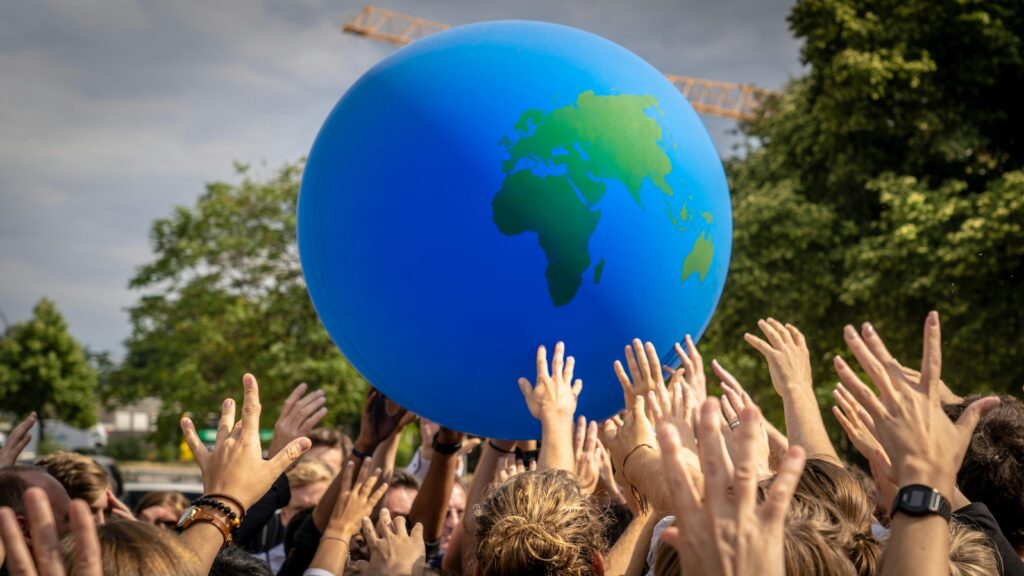
Global events heavily shape how societies experience and allocate time.
Economic recessions automatically increase financial pressures on households. Inflation forces families to stretch limited resources and work longer hours. Severe housing shortages contribute directly to longer commutes and geographic instability.
Climate disasters disrupt entire communities, destroying infrastructure and instantly increasing local caregiving and rebuilding responsibilities.
The COVID-19 pandemic exposed just how fragile our collective support systems had truly become. Parents suddenly became educators overnight. Healthcare workers faced extraordinary, traumatic demands. Essential service workers carried enormous burdens while receiving limited compensation.
The pandemic revealed an uncomfortable truth: modern societies depend heavily upon care work that is frequently undervalued, underpaid, or completely unpaid.
World events do not merely affect national economies. They influence whether human beings have the literal time and energy to support one another through crises.
Rethinking Prosperity
Gross Domestic Product (GDP) remains one of the most influential measures of economic success used by governments worldwide.
Yet, GDP entirely fails to capture the most vital aspects of human well-being. It does not measure the depth of a friendship. It does not quantify social trust. It cannot assess whether parents have enough quality time with their children, or whether neighbors know each other’s names. Financial wealth undoubtedly matters. Poverty creates immense, real suffering. Access to resources improves health outcomes and expands human opportunities. But if a society becomes materially wealthier while simultaneously eroding the exact conditions that allow people to connect, rest, and participate meaningfully in community life, serious questions emerge.
What exactly are we optimizing our systems for? What should prosperity actually mean?
Perhaps genuine wealth includes:
- Unhurried time with loved ones.
- Accessible, high-quality healthcare.
- Stable, affordable housing.
- Opportunities for unstructured creativity.
- Meaningful, dignified work.
- Active community engagement.
- Environmental security and climate stability.
- The ability to participate fully in civic life.
These forms of wealth are inherently harder to measure on a corporate spreadsheet. Yet, they shape human happiness far more profoundly than material possessions ever could.
Conclusion: The Resource We Rarely Measure
The core crisis facing modern society may not simply be an epidemic of loneliness or overwork.
It may be the growing structural difficulty of accessing care, attention, mentorship, friendship, and mutual support—simply because the people who provide those things lack the time themselves.
We have less of ourselves because chronic exhaustion narrows our worlds. We have less of each other because everyone around us is carrying heavier, systemic burdens. For generations, public conversations about happiness have focused almost exclusively on income. Income matters, and economic security is foundational. But another critical question deserves equal attention.
How much time do people actually have to be human with one another? A society can easily become richer on paper while its members become increasingly unavailable to themselves and to each other.
If human happiness truly depends upon deep relationships, belonging, purpose, and care, then protecting human time may be one of the most important environmental and social challenges of the twenty-first century.
The opposite of time poverty is not simply idle leisure. It is connection. And connection remains one of the most overlooked, interconnected forms of wealth we possess.
Explore more from Interconnected Earth: